Supreme Court Strikes Down Trump's Sweeping Tariffs in 6-3 Ruling

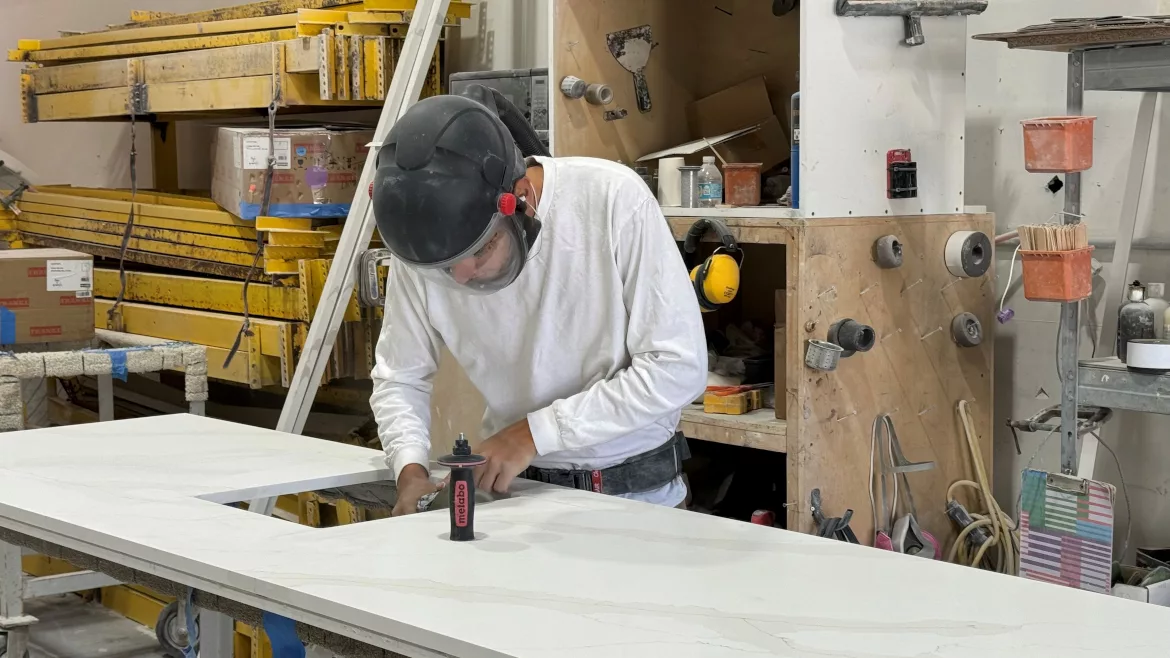
Photo by Jason Kamery
The U.S. Supreme Court on Friday, February 20, 2026, ruled that President Trump exceeded his authority when he imposed sweeping tariffs on nearly every U.S. trading partner, a decision with significant implications for the stone industry's supply chain. In a 6-3 decision written by Chief Justice John Roberts, the court found that the International Emergency Economic Powers Act — a 1977 law Trump invoked to justify the levies — does not grant the president the power to unilaterally impose tariffs without congressional authorization.
"Had Congress intended to convey the distinct and extraordinary power to impose tariffs, it would have done so expressly," Roberts wrote.
The tariffs in question include the broad duties Trump imposed on virtually all countries in April 2025, as well as targeted tariffs on Mexico, Canada and China enacted in February 2025, which the administration tied to fentanyl enforcement. Together, those levies were projected to raise roughly $1.5 trillion over the next decade, accounting for about 70 percent of the president's second-term tariff agenda.
What It Means for Fabricators
For stone countertop fabricators and distributors who import raw material from overseas suppliers, the ruling could bring relief. However, that relief may be temporary — the Trump administration has signaled it will move quickly to reimpose tariffs under different legal authority, though those alternative routes may not allow levies as broad as the ones struck down.
It also remains unclear whether importers will receive refunds for tariffs already paid. The Supreme Court did not address refund eligibility in its opinion, and that issue is expected to play out in lower courts. Hundreds of companies have already filed protective lawsuits to preserve their ability to claim refunds. Other, smaller tariffs enacted under different trade laws remain in effect.
What's Next
Industry stakeholders should watch for the administration's next move. The White House could seek to re-enact tariffs under laws with more explicit trade authority, though those statutes carry procedural requirements that could limit the scope and speed of any new levies. The president could also ask Congress for explicit tariff authorization, though that path appears politically uncertain.
Looking for a reprint of this article?
From high-res PDFs to custom plaques, order your copy today!

Jason Kamery is the Managing Editor and Group Digital Editor of Stone World. With more than a decade of experience covering the stone and countertop industry, he has conducted hundreds of interviews with fabricators, manufacturers, and industry leaders, and hosts the Stone World. podcast. He reports from events worldwide, including TISE, Coverings, and Marmomac, and his coverage extends to worker safety and silicosis, trade policy and tariffs, and fabrication technology. Kamery has also served as a speaker and panel moderator at The International Surface Event (TISE). He graduated from Purdue University with a B.A. in Mass Communication.
email: kameryj@bnpmedia.com | office: (248) 833-7356