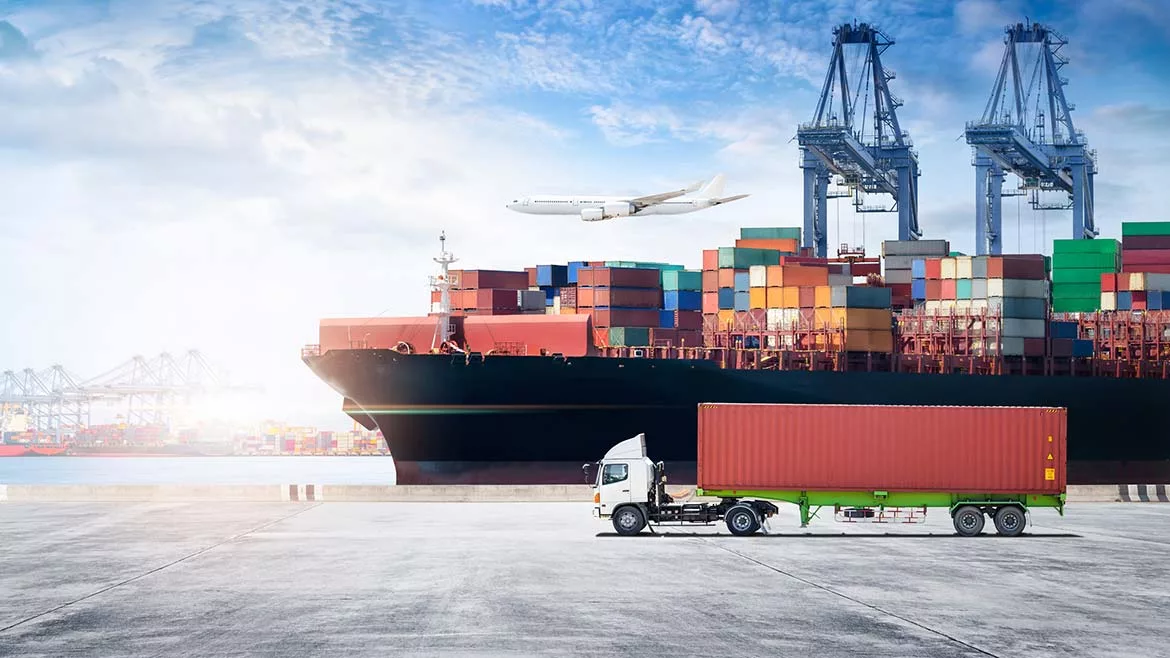
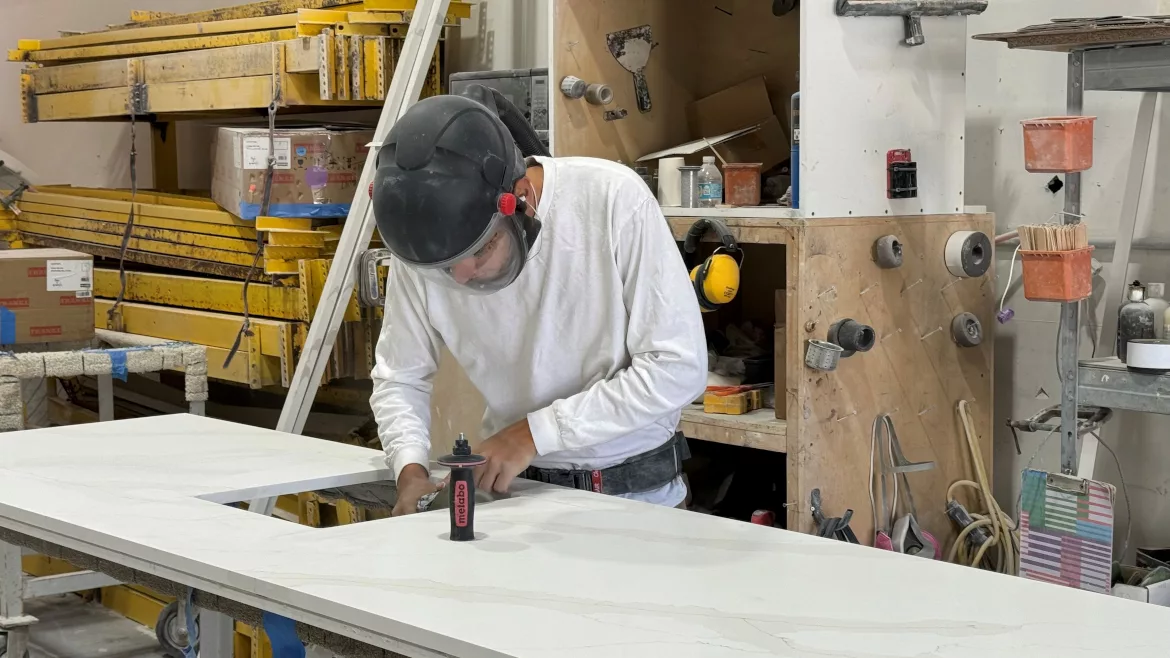
Despite the Overturn of Tariffs Stone Industry Leaders Remain Leary
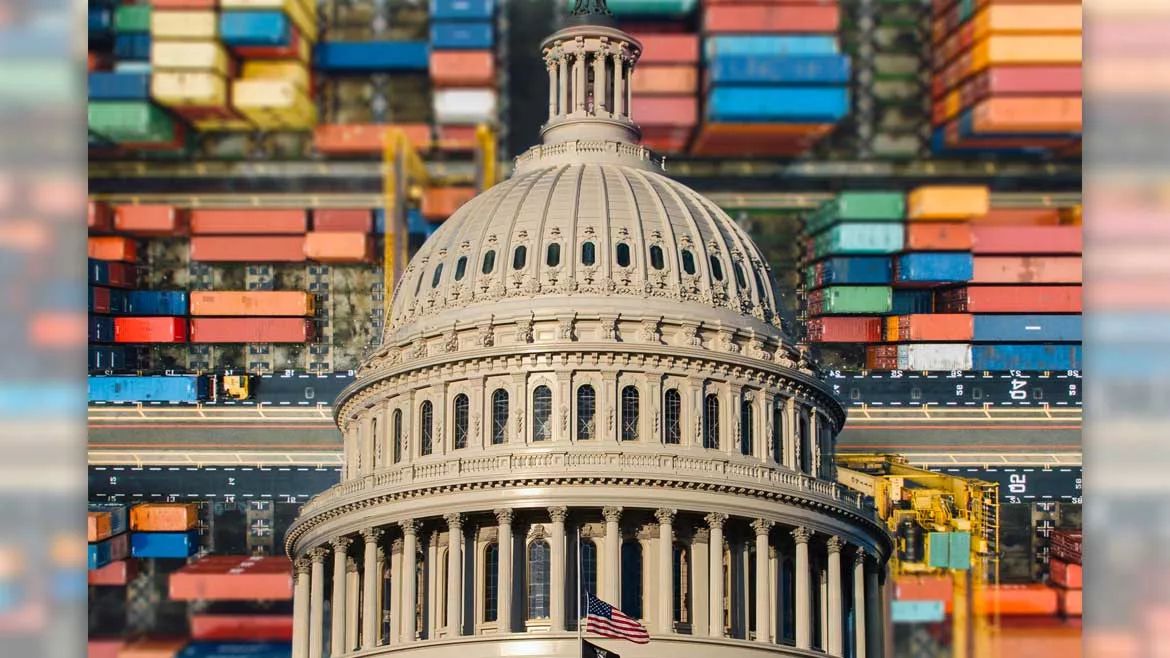
On Friday, February 20, 2026, the U.S. Supreme Court struck down the bulk of President Donald Trump’s sweeping tariff regime, ruling 6-3 that he exceeded his authority by using a 1977 emergency law to unilaterally impose import duties on nearly every American trading partner, a decision with immediate implications for industries reliant on imported raw materials, including the more than 20,000 stone fabrication and installation companies across the country.
Chief Justice John Roberts authored the majority opinion, joined by Justices Neil Gorsuch, Amy Coney Barrett, Sonia Sotomayor, Elena Kagan and Ketanji Brown Jackson. Justices Clarence Thomas, Samuel Alito and Brett Kavanaugh dissented. The decision could require the federal government to refund more than $130 billion in tariff revenue already collected from U.S. importers.
Trump called the ruling “a disgrace” and said he had a backup plan. The ruling does not affect tariffs imposed under other laws, such as Section 232 duties on steel, aluminum and automobiles.
The Legal Question
The case turned on whether the International Emergency Economic Powers Act (IEEPA), which allows the president to “regulate … importation” during a declared national emergency, grants the power to impose tariffs. The law does not mention the word “tariff” or “duty” anywhere in its text, and no president had ever used it this way in its nearly 50-year history.
Trump invoked IEEPA beginning in February 2025 to tariff Canada, Mexico and China, then expanded the program on April 2, 2025, “Liberation Day,” imposing a 10% baseline tariff on most countries and higher reciprocal rates on dozens more, declaring the U.S. trade deficit a national emergency. The impact rippled through material supply chains almost immediately. In the natural stone sector, IEEPA tariffs pushed duties on Brazilian granite and marble to 50%, while imports from India, another major stone source, were hit with rates that effectively collapsed that country’s stone exports to the U.S. Brazilian quartzite, which accounts for roughly half of Brazil’s stone exports to the U.S., received a tariff exemption, but granite exports from Brazil still fell 14.7% and marble dropped 9.8% in the months following the tariff announcements.
Lawsuits from small businesses, importers and 12 states followed. Both the U.S. Court of International Trade and the Federal Circuit Court of Appeals ruled against the administration before the Supreme Court took the case on an expedited basis last fall.
The Majority: ‘Those Words Cannot Bear Such Weight’
Roberts rejected the argument that “regulate” and “importation,” two words separated by 16 others in the statute, could be read to encompass taxation of imported goods. He wrote that the president had asserted “the extraordinary power to unilaterally impose tariffs of unlimited amount, duration and scope” but pointed to no statute where Congress had previously used such language to authorize tariffs. The Framers, Roberts wrote, gave the taxing power, including tariffs, to Congress alone.
Roberts noted that when Congress has delegated tariff authority in other statutes, it has done so expressly, with caps, timeframes and congressional review. IEEPA contains none of those guardrails. He acknowledged the court’s limited role, writing that the justices claim “no special competence in matters of economics or foreign affairs” but only “the limited role assigned to us by Article III.”
Justice Gorsuch concurred separately, emphasizing that legislative deliberation was by design. “Yes, legislating can be hard and take time,” he stated. “And, yes, it can be tempting to bypass Congress when some pressing problem arises. But the deliberative nature of the legislative process was the whole point of its design.”
Roberts also invoked the major questions doctrine, requiring clear congressional authorization for actions of vast economic significance, though the three liberal justices did not join that portion. Justice Kagan wrote separately that hundreds of federal statutes use the word “regulate” without ever being interpreted to grant taxing power.
The Dissent: ‘Clearly Lawful’
Kavanaugh’s dissent argued the majority got the plain text wrong. Tariffs, he wrote, are a traditional and common tool to regulate importation, just like quotas and embargoes, which no one disputes fall under IEEPA. He said “context and common sense” supported the administration’s reading.
He drew a sharp line between law and policy, writing that the tariffs “may or may not be wise policy” but “as a matter of text, history and precedent, they are clearly lawful.” The implication: the majority let the political controversy surrounding the tariffs color their legal analysis.
Most strikingly, Kavanaugh suggested the ruling may be a pyrrhic victory. He wrote that the court essentially concluded the president “checked the wrong statutory box by relying on IEEPA rather than another statute,” and that numerous other federal laws could justify most or all of the same tariffs, with a few additional procedural steps.
What It Means
The ruling invalidates all tariffs imposed under IEEPA, including the reciprocal tariffs on most countries and the duties on Canada, China and Mexico. It does not affect tariffs imposed under other authorities, including Section 232 duties on steel and aluminum or the longstanding antidumping and countervailing duties on Chinese quartz surfaces, which have added 242% to 314% to the cost of those imports since 2018.
For stone fabricators, the decision offers potential relief on a key cost pressure. According to the Natural Stone Institute (NSI) research, 85% of all natural stone consumed in the U.S. is imported, with Brazil serving as the single largest source. The IEEPA tariffs had forced distributors to raise slab prices, strained cash flow for companies required to pay duties upfront before goods cleared customs, and disrupted sourcing relationships that fabricators depend on to keep projects on schedule. Multiple industry and trade groups lobbied for tariff relief on Brazilian stone throughout 2025.
“This is certainly welcomed news by importers,” said Jim Hieb, NSI CEO. “However, as the courts continue to unravel how refunds might be distributed, the administration will likely continue to look for ways to maintain the use of tariffs which will continue the current business climate of uncertainty.”
Fábio Cruz, vice president of Centrorochas, the Brazilian natural stone exporters association, echoed the cautious optimism. “At the same time, we recognize this is not the end of the tariff discussion,” Cruz said. “Other trade mechanisms remain in place, and the policy environment is still evolving. That is why we have been actively engaged in Washington, underscoring the strategic role of Brazilian natural stone in the U.S. residential construction supply chain and advocating for decisions grounded in technical facts and a stable, mutually beneficial trade relationship.”
The refund question looms large. The government has collected an estimated $130 billion to $175 billion in IEEPA tariff revenue, and the majority opinion offered no guidance on how that money should be returned. Kavanaugh warned the process would be a “mess,” particularly because many importers already passed costs to consumers. More than 100 companies have filed refund lawsuits, and a coalition of 800 small businesses called for immediate, automatic refunds. Stone importers and distributors who paid duties on Brazilian, Indian and other foreign stone shipments will be watching the U.S. Court of International Trade, which will oversee the refund process.
Hieb’s prediction proved accurate within hours. On the evening of the ruling, Trump signed an executive order invoking Section 122 of the Trade Act of 1974 to impose a new 10% global tariff on most imports, effective on Tuesday, February 24, 2026. The next day, he raised the rate to 15%, the maximum allowed under the statute. Unlike IEEPA, Section 122 limits tariffs to 150 days without congressional approval, meaning the new duties are set to expire July 24, 2026. The proclamation cited the U.S. balance-of-payments deficit as justification, though trade economists have questioned whether a true balance-of-payments crisis exists under current floating exchange rate conditions. No president has previously invoked Section 122.
The White House also announced that U.S. Trade Representative Jamieson Greer would initiate Section 301 investigations against major trading partners, a process that could take months but would provide a more durable legal basis for country-specific tariffs. For countries that had already negotiated bilateral trade agreements with the administration under IEEPA, Greer said those deals remain in force, even where the negotiated rates exceed the new 15% baseline. Countries without deals, including Brazil, could see their effective tariff rates drop from IEEPA levels to the 15% Section 122 rate, at least temporarily.
The cases were Trump v. V.O.S. Selections, Inc. and Learning Resources v. Trump.
Looking for a reprint of this article?
From high-res PDFs to custom plaques, order your copy today!

Jason Kamery is the Managing Editor and Group Digital Editor of Stone World. With more than a decade of experience covering the stone and countertop industry, he has conducted hundreds of interviews with fabricators, manufacturers, and industry leaders, and hosts the Stone World. podcast. He reports from events worldwide, including TISE, Coverings, and Marmomac, and his coverage extends to worker safety and silicosis, trade policy and tariffs, and fabrication technology. Kamery has also served as a speaker and panel moderator at The International Surface Event (TISE). He graduated from Purdue University with a B.A. in Mass Communication.
email: kameryj@bnpmedia.com | office: (248) 833-7356