How to Grow a Countertop Fabrication Shop
During a recent Fabricator Forum moderated by the Natural Stone Institute, stone industry professionals shared experiences and advice about how to successfully expand their business
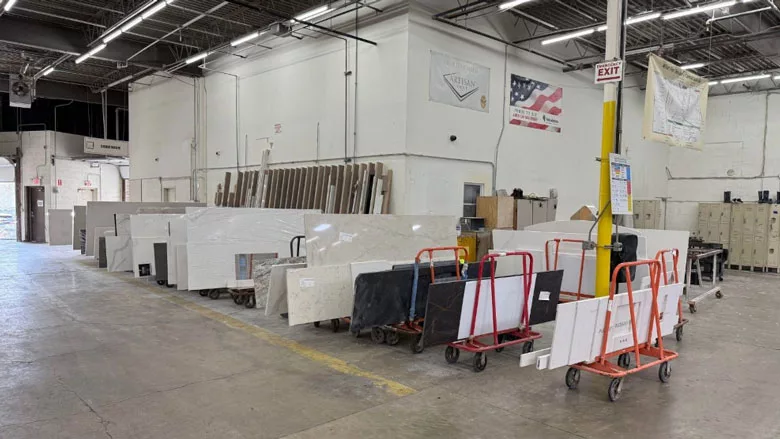
Ways to grow a fabrication business include setting a goal and tracking key metrics such as shop efficiency.
A group of fabricators gathered for a discussion about challenges they are facing during The International Surface Event (tise), which took place earlier this year. A subject on the top of minds of many in attendance was, What is the most efficient and financially sound way to successfully grow a fabrication shop? In this segment, Geoffrey Gran of The Countertop Factory (TCF) Midwest & Southwest and Robert Wiemann of Sarto Countertops in Saint Marys, KS, shared insight into how they navigated a path of expansion.
“Here’s a little background on my company,” said Gran, with locations in Chicago, IL, and Arizona. “We started our business as solid surface and laminate guys. We had a table saw, about a 6,000-square-foot warehouse and a van. [Today], we consider ourselves a sales and marketing company that happens to make countertops. We try to differentiate ourselves that way.
“As we grew and expanded, we always wanted to invest in the newest technology — both machinery and software — because the two biggest items that hit your P&L as a countertop fabricator are cost of goods/material and direct labor,” Gran continued. “If you cannot control those two, you will not be able to control your bottom line.”
Gran questioned the audience participants how many are shop owners. “What’s your number-one goal as an owner?” he asked. “To make as much money as possible. That doesn’t mean you get to keep it all — your employees think you do — but your number one asset is your employees. You have to make enough money to take care of them.”
When at capacity to grow, Gran explained the first question for a shop owner to ask themselves is “Are you utilizing your machinery correctly?”
“I’ve probably been in over 500 shops,” he said. “I see shops doing great things with machinery — and then I see machinery sitting idle. It’s a backsplash holder. It’s holding coats. The second thing is a lot of people are afraid to use second shifts. How many of you use second shifts?”
Gran told the audience that between his two locations, they cut approximately 4,000 square feet a day. “We have about 260 employees,” he said. “When we grow, instead of buying more machinery, we expand shifts.
“Another simple metric: How many of you are tracking shop efficiency?” Gran asked. “A simple way to do that is by square feet per man-hour. If you take the total square footage completed in a day and divide it by total labor hours, you get a score.”
“If you want to grow without adding machinery or square footage — which both cost money — figure out how to get more efficient.”
–Geoffrey Gran
The industry average is about 4.5 square feet per labor hour, according to Gran. “If you want to grow without adding machinery or square footage — which both cost money — figure out how to get more efficient. Everyone has bottlenecks. Figure out where you are slowing down. We talk about the efficiency of a saw but it’s only efficient if it’s working all of the time. If you walk into your shop and your machines aren’t running, you’re not efficient. Focus there first.”
A fabricator in the audience questioned if the 4.5 square feet Gran referred to was an internal number for his company or an industry-wide standard. “That’s an industry standard,” he told the fabricator. “We’re at 12.2. Now, that can vary based on shop size and type of work. There are plenty of small shops that are super-efficient but you have to be committed to it.”
Weimann also shared a few details about his company’s direction of growth. “I would say we went through a similar story,” he said. “We were in a small rundown shop outside of town and we were hitting on that upper ceiling — everything you mentioned came into play.
“I would say all those things Geoffrey mentioned — look into the bottlenecks first,” Weimann went on to say. “Explore what you can improve before making big moves. We built a new facility and added CNC equipment all at once when we were still a manual shop. It was a huge undertaking. If you can tackle improvements incrementally and prepare a year or two in advance, do that.”
Weimann also suggested to visit other shops. “This industry shares a lot,” he said. “I toured shops smaller than mine and shops much bigger than mine. Spend that time in advance and prepare for it because it is a big undertaking.”
Looking for a reprint of this article?
From high-res PDFs to custom plaques, order your copy today!