Fabricators Discuss Pros and Cons of Chip Repair
From workforce hurdles to revenue potential, countertop fabricators break down the realities of stone repair services
A group of countertop fabricators discussed the challenges and opportunities of offering repair services during a recent industry roundtable discussion, identifying workforce training, pricing strategy and the growing complications of porcelain countertops as key concerns. The roundtable was moderated by members of the Stone Fabricator’s Alliance’s (SFA) executive board during The International Surface Event (tise), which took place in late January 2026 at the Mandalay Bay Convention Center in Las Vegas, NV.
Training Remains the Industry's Biggest Hurdle
Multiple fabricators pointed to a lack of formal training resources as a persistent problem in the stone repair space. One fabricator said he employs several technicians skilled in repairs but has found no outside resources to help train new workers, noting that the industry has essentially no formal education infrastructure for this type of work.
The sentiment was shared across the room. Several participants said the subjectivity involved in stone repair, knowing when to use sandpaper versus a diamond pad, how much water to apply and how to match existing textures, makes the trade particularly difficult to pass on to less experienced workers. Most agreed that technicians develop repair skills only after years of hands-on experience and learning from mistakes.
One fabricator described the challenge of sending technicians to jobsites without direct supervision. Without the ability to assess the customer's expectations on the spot, whether the homeowner wants a quick affordable fix or a full restoration, an unsupervised technician will default to doing the most thorough job possible, even when the customer only wants to pay for a basic repair. That disconnect, the fabricator said, makes it difficult to delegate repair work to junior employees.
The workforce development conversation, participants agreed, has been ongoing for at least a decade with little resolution, whether the topic is edge polishing, seam work or field repairs.
Repair Services as a Revenue Channel
Despite the challenges, several fabricators said repair work has become a meaningful source of revenue. One Kansas City-based fabricator said he launched a dedicated repair company after recognizing that no one else in his market was offering the service. He described a flat-rate pricing model with a set service call fee and per-hour labor charges on top. For minor work such as small chips and scratches, jobs typically take 15 to 30 minutes. Larger repairs involving seam work or crack restoration run significantly higher.
Another fabricator outlined a tiered pricing structure, with chip repairs up to a quarter inch priced at roughly $100 to $125. Seam repairs and crack restorations tend to generate more revenue due to the complexity of the work, with typical invoices ranging from $1,300 to $1,800 depending on material type and scope.
A third participant said he uses a service-call model, a flat trip charge of $75 followed by $175 per hour, which he finds easier for both his team and customers to understand. He noted that a straightforward pricing structure eliminates confusion on both ends and reduces time spent quoting jobs.
Several fabricators also stressed the importance of pricing repair work in a way that reflects the technician's years of experience. One pointed out that fabricators operate in a specialized industry and should not undervalue their expertise by charging too little for skilled labor.
Repair Work Drives Repeat Business
Fabricators noted that repair visits frequently lead to additional work. One participant estimated that roughly 30 percent of repair clients eventually become customers for larger projects, including new countertops in other rooms, bathroom renovations or full kitchen remodels.
The consensus was that while repair work alone may not sustain a business, it serves as a reliable lead-generation tool and a way to maintain long-term customer relationships. One fabricator described receiving calls for minor chip repairs from homeowners who had recently purchased a house and ended up commissioning full countertop replacements once they saw the quality of the repair work.
Porcelain Countertops Present New Challenges
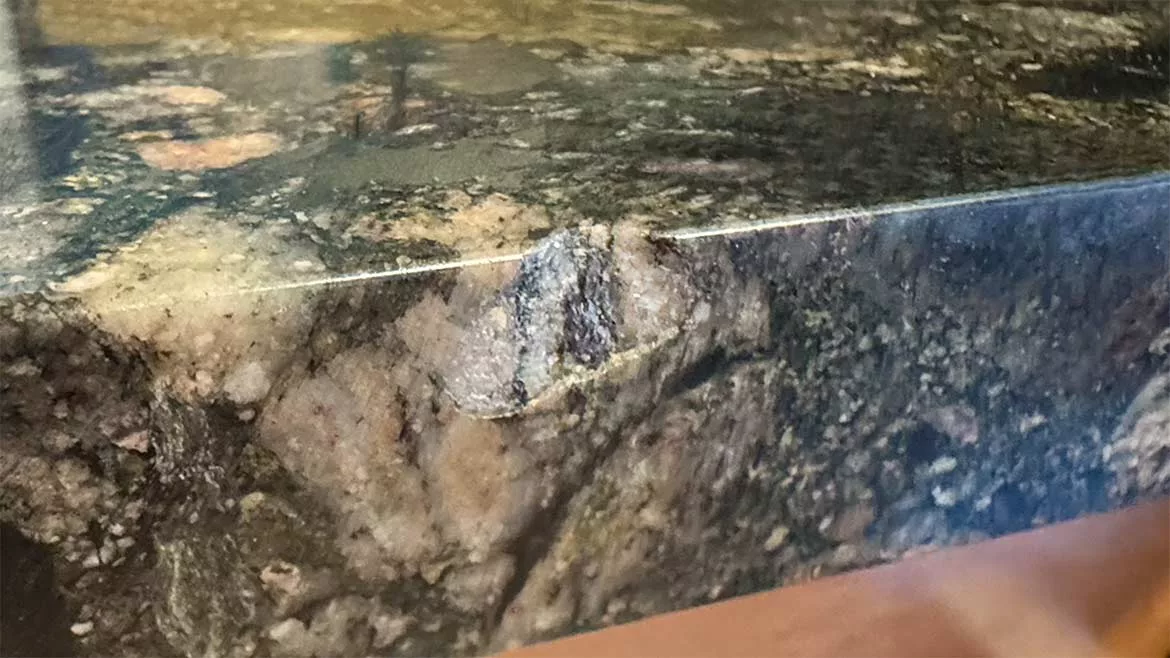
The conversation turned to porcelain countertops, which multiple fabricators described as an increasing source of repair calls and frustration. Participants cited chipping around sink cutouts, scratching and cracking as the most common failure points. One fabricator said improper installation is often to blame, noting that installers unfamiliar with porcelain's specific tolerances and substrate requirements are setting material that later fails due to hollow spots or inadequate support.
One fabricator recounted a case in which a homeowner hung something above a porcelain countertop, struck a hollow spot in the surface and shattered it. Another said he stopped recommending ultra-compact porcelain surfaces after his own kitchen countertop, installed as a test roughly 12 years ago, cracked at a hollow point under the weight of a stand mixer. He said he now steers customers toward other materials when possible and makes sure to explain porcelain's limitations to anyone who insists on it.
Fabricators in markets where porcelain is gaining share said they are seeing discounted slabs enter the market at increasing volume, with customers drawn to the material's appearance and price point without understanding its performance characteristics. Several noted that tile distributors have begun stocking porcelain countertop slabs, adding competitive pressure and putting material into the hands of installers who may lack fabrication experience.
Commercial Repair Work Requires a Different Approach
One fabricator in the audience explained he does commercial work, where repair and maintenance services are handled under contract. He described a model built around predetermined labor rates tied to specific material types, with contingency provisions for excessive or unexpected damage.
Commercial contracts, he said, typically run three years or more and include scheduled maintenance visits. The approach requires more upfront documentation and negotiation, but provides a steady predictable revenue stream. He noted that attention to contract language is critical and that most commercial clients follow through on their commitments when the terms are clearly defined from the outset.
Setting Customer Expectations
Across the board, fabricators stressed the importance of managing customer expectations before any repair work begins. Several said they require photos of the damage before quoting a job, which helps with both pricing accuracy and technician preparation.
One fabricator said he bundles repair visits with additional services, cleaning, sealing and minor touch-ups, to maximize the value of each trip and give the technician more opportunity to generate revenue on a single visit.
Others emphasized the need to communicate clearly that repairs, particularly on natural stone and engineered surfaces, will improve the appearance of damage but may not produce a perfectly invisible result. Fabricators said that setting realistic expectations upfront reduces callbacks and customer dissatisfaction, and that most homeowners are satisfied with the outcome when they understand the limitations before work begins.
Looking for a reprint of this article?
From high-res PDFs to custom plaques, order your copy today!

Jason Kamery is the Managing Editor and Group Digital Editor of Stone World. With more than a decade of experience covering the stone and countertop industry, he has conducted hundreds of interviews with fabricators, manufacturers, and industry leaders, and hosts the Stone World. podcast. He reports from events worldwide, including TISE, Coverings, and Marmomac, and his coverage extends to worker safety and silicosis, trade policy and tariffs, and fabrication technology. Kamery has also served as a speaker and panel moderator at The International Surface Event (TISE). He graduated from Purdue University with a B.A. in Mass Communication.
email: kameryj@bnpmedia.com | office: (248) 833-7356