All You Need to Know about Soapstone
Industry soapstone specialists share their knowledge on working with the material and provide insight about its growing popularity
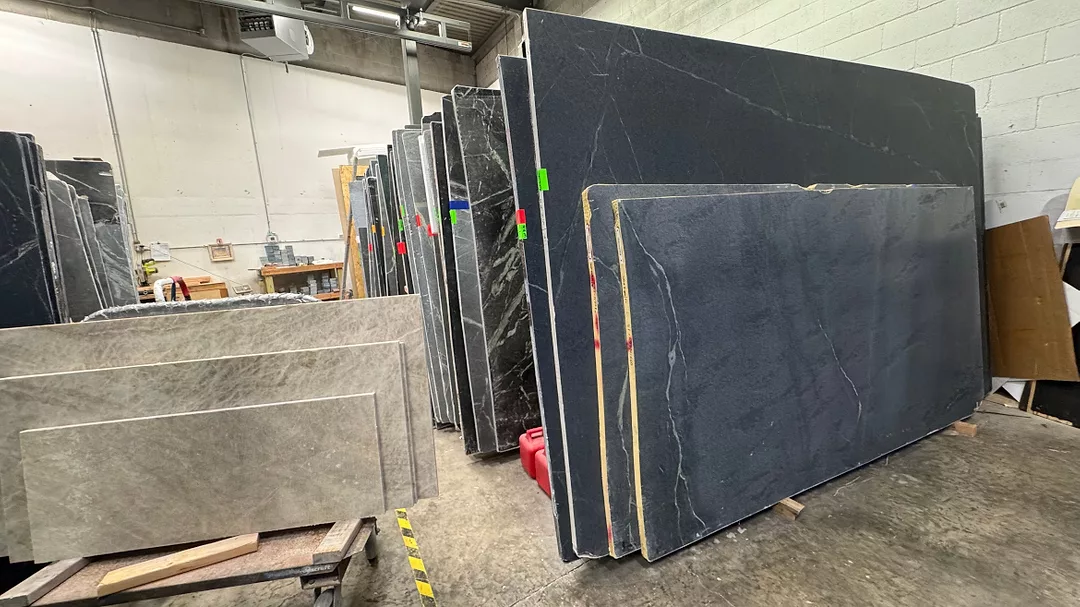
M. Teixeira Soapstone stocks a number of soapstone varieties at its facility in Glen Rock, NJ.
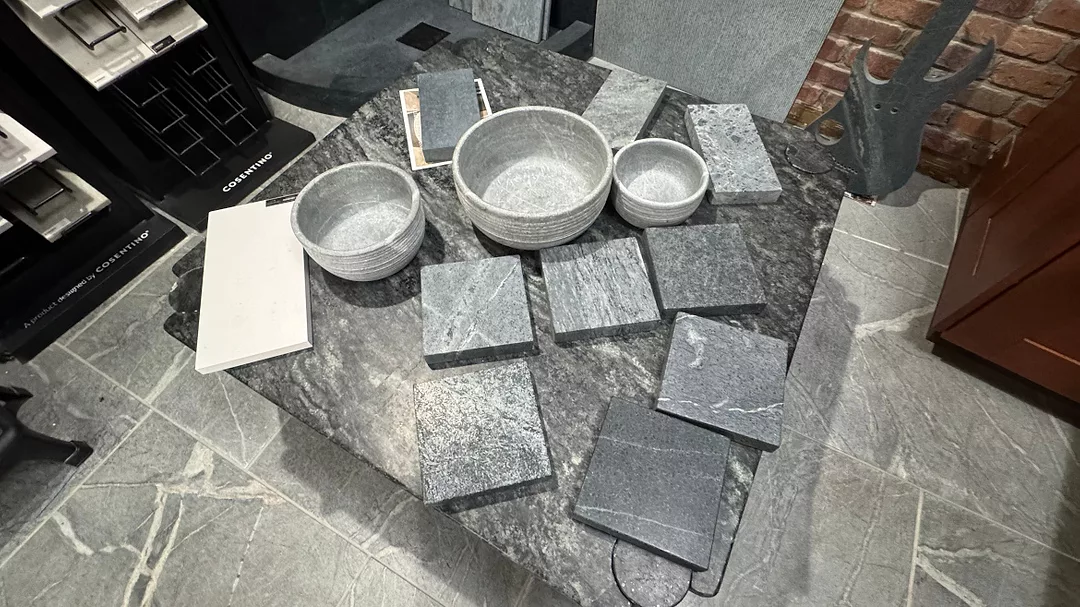
"I have watched plenty of trends come and go, and I always say: soapstone never goes out of style," said Roger Teixeira of M. Teixeira Soapstone.
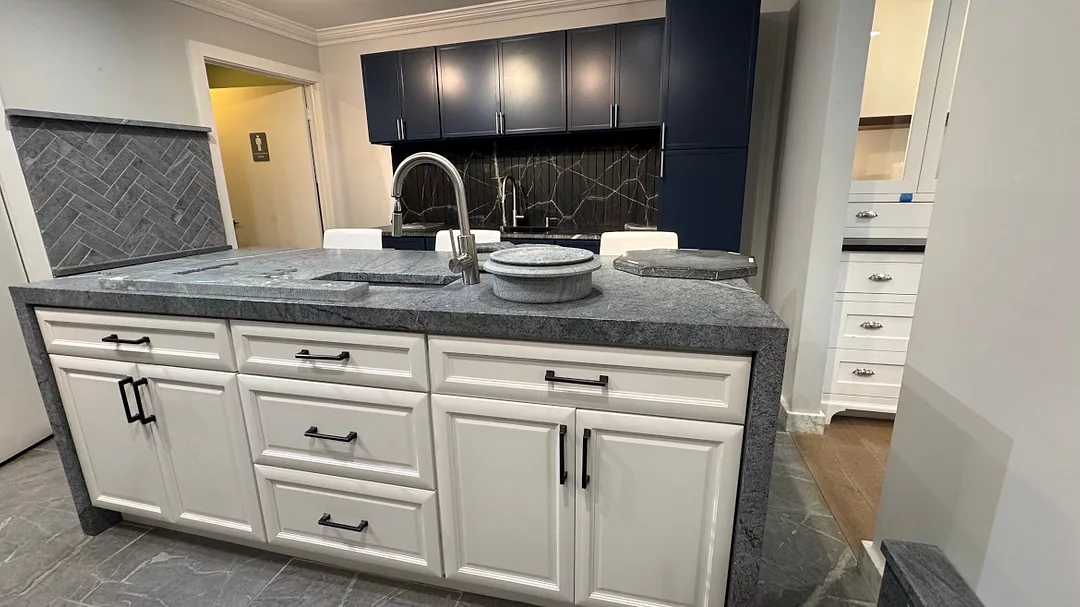
"When it is done right, soapstone allows for incredibly clean, nearly invisible seams -- ones that can even be sanded so you cannot feel them at all," explained Teixeira.
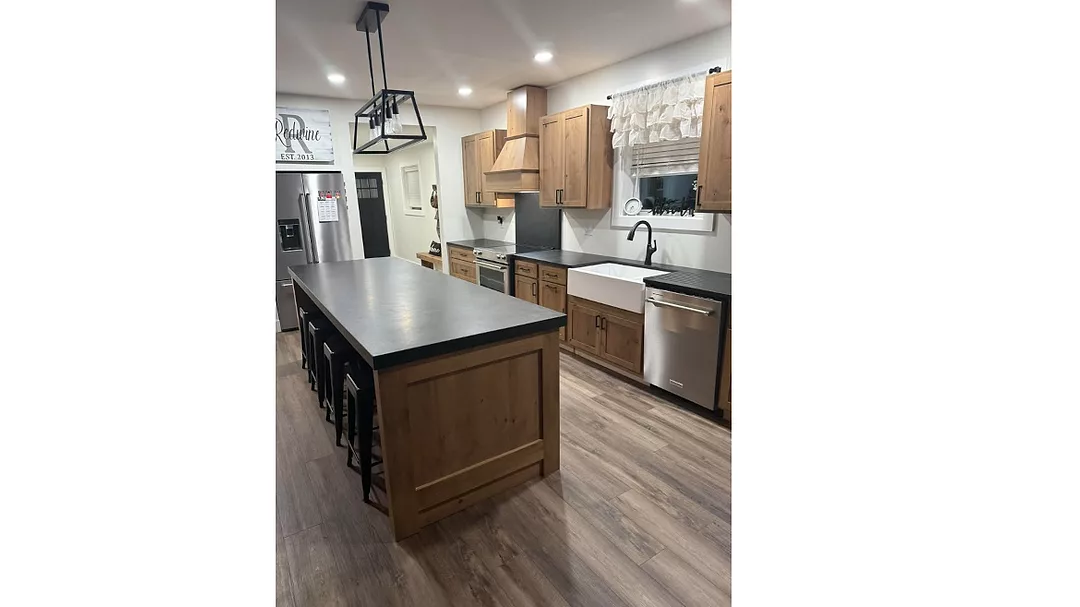
"People love soapstone for its natural beauty," said Angie Moster of The Stone Studio in Batesville, IN. "It has character, warmth and charm. Its smooth honed finish feels especially inviting, making people want to reach out and touch it."
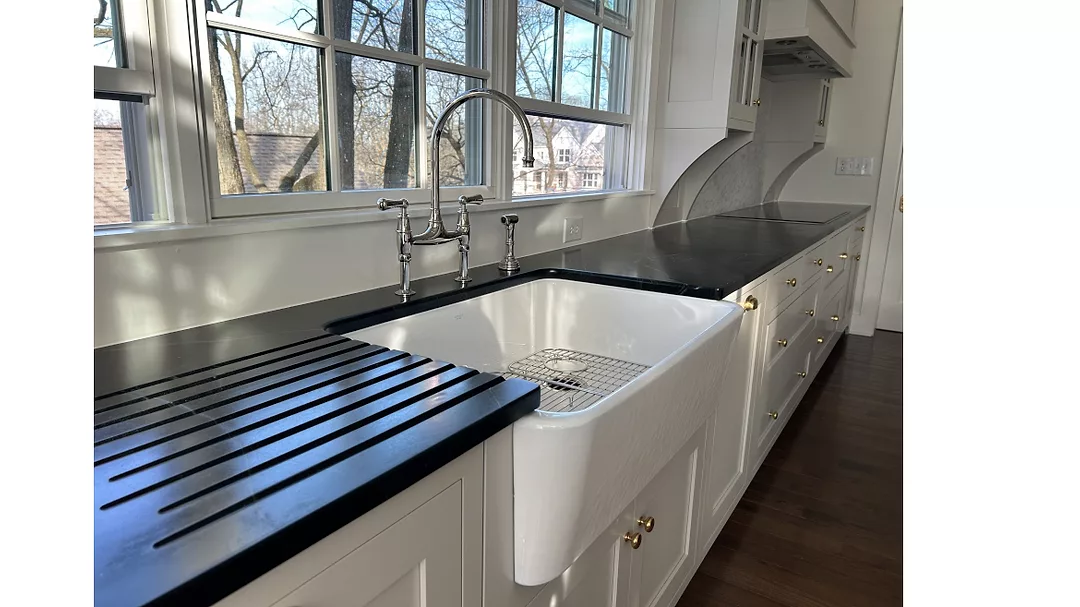
Soapstone is a beautiful, durable and easy-to-maintain option for countertops, and its ability to hold heat makes it an ideal option for flooring and fireplaces. We asked two fabricators who supply and cut this material to share insight into its properties, what customers should know before making a purchase and why it is not a current trend but an increasingly popular choice that is here to stay. Participants included: Angie Moster (AM) of The Stone Studio in Batesville, IN; and Roger M. Teixeira (RT) of M. Teixeira Soapstone in Glen Rock, NJ.
SW: What are some qualities of soapstone that you promote to your customers?
AM: People love soapstone for its natural beauty. It has character, warmth and charm. Its smooth honed finish feels especially inviting, making people want to reach out and touch it. Best of all, soapstone is timeless -- it grows more beautiful as it ages.
RT: The main thing that makes soapstone so special, and the part we love talking about most, is that it is naturally non-porous. Nothing actually soaks into it. Whatever lands on the surface can be cleaned right off.
People sometimes get confused when they see soapstone darken after an oil spill. Sure, it looks like a stain, but it is really just sitting on the surface. Geologists call this adsorption, basically a temporary cling, not a true stain. Most of the time, a little soap and water take care of it. And if something is extra stubborn, Windex, Acetone or Bar Keepers Friend will do the trick. Soapstone is great in other areas too. On floors, for example, its natural thermal properties make it a perfect match for radiant heat. It holds warmth longer, keeping spaces cozy in a way most materials just cannot.
SW: What are some benefits of soapstone that your customers or maybe other fabricators might not know?
AM: There are so many benefits of soapstone. First and foremost, soapstone is non-porous, so it will not stain, and you will never have to seal it. Soapstone is unaffected by heat -- you can set a hot pan directly from the oven to the stone surface. Finally, it is easy to repair chips or to refinish scratches, if you really want to; we find many people embrace the scratches as part of the natural patina.
RT: I think the most overlooked, and most misunderstood, thing about soapstone is that it is non-porous. A lot of people hear that it is a “soft” stone and automatically assume that must mean it is porous too. But softness and porosity have nothing to do with each other.
I still cringe when I hear fabricators say, “Soapstone is soft and will stain easily.” That is just not true. Soapstone does not absorb stains because nothing can actually seep into it. Whatever you see on the surface is on the surface, and it can always be cleaned off.
For fabricators, specifically, its softness is actually an advantage. It cuts faster, edges finish more easily, and overall, fabrication goes smoother. And when it is done right, soapstone allows for incredibly clean, nearly invisible seams -- ones that can even be sanded so you cannot feel them at all.
Scratches, chips and other minor damages can also be repaired fairly easily with great results, much easier than on let’s say a quartz, Dekton and quartzites.
Here are videos from me and one from Scott Seuren, from Bucks County Soapstone, about how to repair minor damages.
SW: How many varieties of soapstone do you carry?
AM: We have 10 to 12 different bundles of soapstone at our shop for people to choose from.
RT: If it is being pulled from the ground and used in our industry, we carry it. Fortunately (or unfortunately, depending on how you look at it), there are only a handful of architectural-grade soapstone quarries currently active in the world. We stock the American classic, Alberene soapstone, along with just under 10 varieties from Brazil: Stormy Black, Fantasia, Rainforest Green (not actually from the rainforest), Santa Rita, Ipanema Reserve, Fumaça (aka Smoke), Anastacia and New Barroca (also known as Barroca SB).
From India, we carry Mumbai Gray and Tamil, though these are only available as tiles, firebricks and wood-burning stove parts due to the limited block sizes. Finland is also a major producer of soapstone, but due to the limited block sizes they quarry, their material is primarily used for the large wood-burning stove market in Europe.
SW: Would you say soapstone is a consistent material regarding aesthetics?
AM: Soapstone comes in beautiful shades of black, gray and green. Its veining varies from one block to the next -- some slabs feature bold dramatic patterns, while others have softer, more subtle movement. Some varieties offer a deep rich black background, while others have more variation and texture. Every slab is completely unique.
RT: The main variation you will see is in the amount and style of veining. Take Stormy Black, for example. One block might have almost no veining at all, while another looks like it has run out of room for more veins.
SW: What type of maintenance does soapstone require?
AM: Soapstone is easy to clean and easy to maintain. It is important to know that soapstone is a changing stone, and over time, it will darken and establish a patina. To quicken the darkening process, we recommend that mineral oil be applied to the stone every week or so, for the first several months. After the stone begins to establish a patina, apply oil as needed to maintain the desired color. Daily, we recommend cleaning with a mild dish soap.
RT: For protection, soapstone requires no maintenance. It is non-porous and inert to acids, chemicals and heat, so there is nothing you need to seal or protect.
For aesthetics, if you prefer your soapstone to have a more even uniform look as it ages, we recommend applying mineral oil or a stone ager. The way a soapstone responds to these treatments can vary depending on its origin, mineral composition and talc content. Scratches can be sanded smooth by the homeowner.
SW: Do you find soapstone is a popular material choice in your area?
AM: Soapstone is our specialty, and people seek us out when looking for soapstone features for their home. We find that people appreciate its natural look and “touchable” feel. Its timeless quality, and the way it effortlessly connects indoor spaces with the beauty of the outdoors, makes soapstone especially desirable to our customers.
RT: Since we started in the late ’90s, we have seen steady consistent growth in demand. I have watched plenty of trends come and go, and I always say: soapstone never goes out of style. Anyone who has been in this business long enough knows exactly what I mean when I talk about “trends.”
Because soapstone sits in that perfect neutral zone, it works with virtually any design intent. From stone farmhouses in Pennsylvania to Brooklyn Brownstones, Miami Beach condos, Manhattan lofts and Vermont mountain homes -- you name it. No matter the style, color palette or type of cabinetry, soapstone just fits.
SW: Regarding material handling and installation, are there any necessary steps needed that might be different than working with other types of stone?
AM: Because soapstone is non-porous, there is no need to seal it.
RT: Nothing special about cutting it, although depending on the quarry, the hardness can vary considerably. It can be cut with a granite blade, no special tricks or techniques.
When it comes to seaming, the installer should always talk with the client ahead of time about whether they plan to treat the soapstone. That decision determines whether a gray or black epoxy should be used. A common mistake is when a fabricator matches the stone’s natural gray color, the client later oils it, and suddenly the tops turn black but the seam stays gray. Not good.
The seam areas should also be sanded, and the fabricator should check with the supplier about the level of honing on the slabs. That way, they can match the finish using the right abrasive when sanding the seams. It is also important that the fabricator be comfortable and knowledgeable when it comes to removing scratches from soapstone slabs. Whether the slabs arrive with minor scratches from a container or delivery truck, or they pick up a few marks while being handled in the shop, a scratch on soapstone is nothing like a scratch on quartzite, ultra-compact surfaces or polished marble. When you understand the material, fixing a scratch on soapstone is a simple straightforward task.
SW: Is there anything else you would like to share about soapstone?
AM: Soapstone is timeless and has character, warmth and charm -- what is not to love?
RT: Soapstone has become so popular that it is now the main selling stone and a major source of income for several large natural stone exporters in Brazil and Italy. Stormy Black soapstone (also known as Black soapstone) is in such high demand that the only materials really competing with it from Brazil these days are the various Taj Mahal quartzite varieties, according to exporters we talk to in the Vitória/Cachoeiro region.
If you walk into any Home Depot, you will see soapstone samples prominently displayed in their natural stone section as one of the highest-priced options. Home Depot recognized the value of carrying soapstone back in the days of their Home Depot EXPO stores, and it remains a core material for them even now.
But with that level of demand comes a downside. Some people are starting to label much less expensive, non-soapstone materials as soapstone to capitalize. Unfortunately, we are seeing more and more of this, which is why it is so important for consumers to be educated and know what they are actually buying. A few years ago, there were companies promoting a white marble from Portugal, as a " White soapstone." There is no such thing, and we have had to clarify this to clients hundreds of times over the years. A slate family material from India is now gaining ground, being sold as a Black soapstone.
Looking for a reprint of this article?
From high-res PDFs to custom plaques, order your copy today!