LX Hausys Unveils New Quartz Technology, Touts U.S. Manufacturing Amid Tariff Concerns

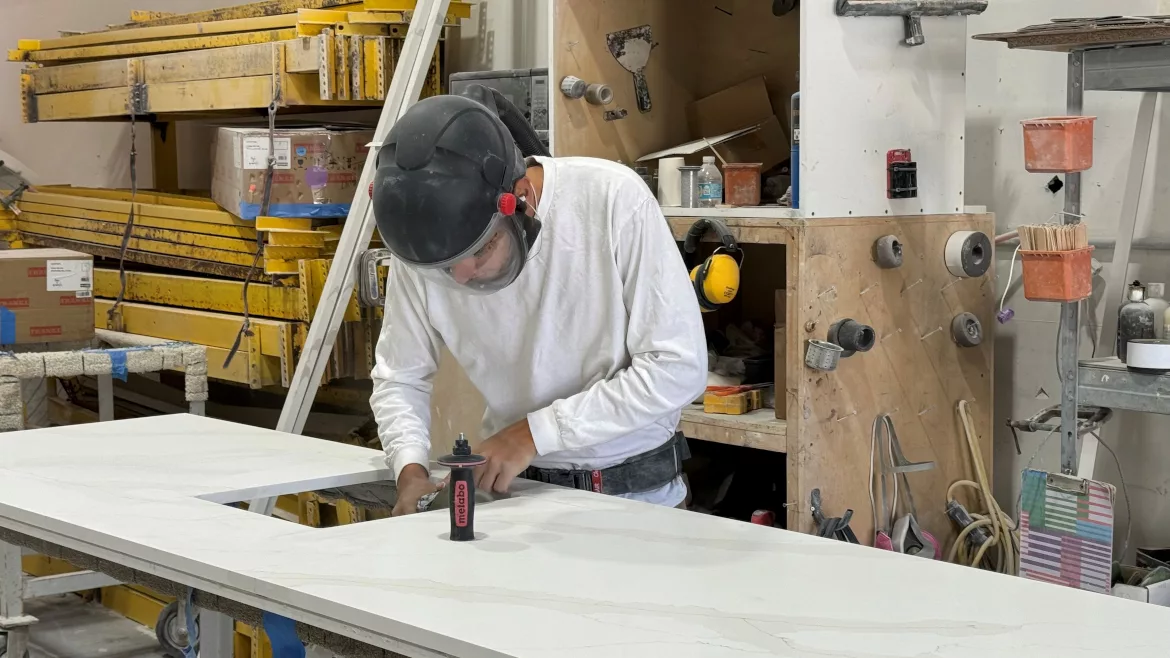
LX Hausys, the South Korean-based building materials manufacturer, is betting big on sustainability and domestic production as it prepares to launch new quartz surface technologies in 2026, company executives said. The company, part of the LG Group, operates three Viatera quartz manufacturing lines and one HI-MACS solid surface line at its Georgia facility, making it the only U.S. manufacturer producing both quartz and solid surface materials domestically.
"LX Hausys is heavily invested in manufacturing here in the U.S.," said Mike Morici, senior director of channel management, who has been in the industry for more than 15 years. "It's fun to be part of working for a company that is a global leader and manufacturer, but also invests here domestically."
The company's latest products, Cloud Ridge and Splendor, feature two proprietary technologies: NeoCube, which incorporates up to 90 percent post-consumer recycled glass, and TrueView, a design infusion process aimed at mimicking the appearance of natural stone.
"Cloud Ridge is an advanced technology that we call NeoCube," said Yael Goldshmid, director of surfaces product development. "It is a sustainable material. We're proud of our ability to continue the movement of sustainable materials."
Goldshmid said the company's product development process involves extensive collaboration with fabricators, distributors, kitchen and bath dealers, and architects throughout the design cycle, a process that already has the team working on 2027 collections.
"It's not just about the design, it's not just about how it's going to look," said Goldshmid. "It really is about understanding what the customer needs and how we can fulfill that. If it's fabricators, it goes into the very nitty-gritty details of the pattern; is the pattern that we're putting together going to make sense for fabricators?"
On design trends, Goldshmid noted a shift away from the stark white aesthetics that dominated the market in recent years toward warmer tones and natural stone looks, particularly quartzite-inspired designs.
"Everything gets warmer now," said Goldshmid. "The bright white is not as popular anymore. Five years ago, it was all about white on white -- I like to call it the hospital look -- that's the trend changing."
LX Hausys hosts six to seven large customer events annually at its Adairsville facility, bringing 70 to 100 attendees per event to tour the manufacturing lines and preview upcoming colors.
"The factory experience is second to none," said Morici. "The customers can touch the line, they can touch the material, they can smell it, they can taste it. They really get a feel of how the product is made."
The company also hosts large-scale promotional events, including a product showcase last year at Mercedes-Benz Stadium in Atlanta. A second event is planned for Allegiant Stadium in Las Vegas during the 2025 Coverings trade show.
With tariffs creating uncertainty across the stone industry, Morici said the company's domestic manufacturing footprint provides stability, though LX Hausys still imports some raw materials and maintains relationships with overseas partners.
"Being heavily invested here in manufacturing in the U.S. is fantastic," said Morici. "We try and source as much as we can here domestically to avoid tariff situations, but we also want to make sure that we multi-source."
Morici added that the company wants "to focus on domestic manufacturing and fair trade" and does not support "low-priced, dumping materials into this marketplace, which has affected all of us domestic manufacturers."
LX Hausys operates more than 12 warehouses across the United States and North America, with its central distribution center located along Interstate 75 in northern Georgia. The company recently opened a new warehouse in Charlotte, N.C.
The company's 2026 product line will be officially unveiled at KBIS, with previews available to existing customers at fall events. LX Hausys traces its roots to 1947, when the LG Group helped rebuild South Korea after World War II, and began producing solid surface materials in 1995 after DuPont's patent expired.
"We want to be a great manufacturer. We want to provide good pricing. We want to provide the latest designs and really support our key customers," said Morici. "Why are we in this if we're not motivated or having fun or being competitive?"
Looking for a reprint of this article?
From high-res PDFs to custom plaques, order your copy today!