Brazilian Natural Stone Association Calls for New Exemptions for Brazilian Materials
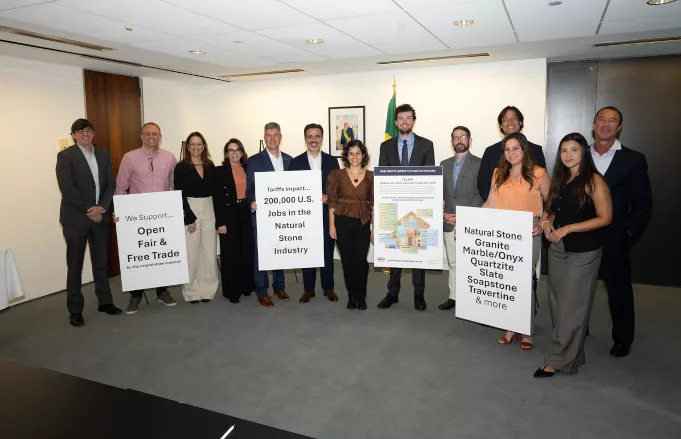
Photo courtesy of Centrorochas
WASHINGTON, D.C. -- On Friday, August 1, 2025, representatives of the Brazilian natural stone sector, led by the Brazilian natural stone association (Centrorochas), participated in an official agenda at the Embassy of Brazil in Washington, D.C. for the symbolic delivery of a letter to the National Association of Home Builders (NAHB) and the Natural Stone Institute (NSI). The document, jointly signed by the three entities, reinforces the request for the inclusion of additional Brazilian materials in the list of exemptions from the 40% additional tariff imposed by the U.S. on Brazilian imports.
The action marks another step in the ongoing advocacy efforts led by Centrorochas since the announcement of the measure on July 9th. Recently, the sector achieved a significant milestone with the confirmation of the exemption of HTSUS code 6802.99.00 – a category that includes quartzite, the main product exported by Brazil. Widely used in construction and high-end finishes, quartzite accounted for approximately 50% of Brazil’s natural stone exports to the U.S. market in 2024.
While the partial exemption brings relief, Centrorochas stresses that efforts must continue. “The letter emphasizes the need to expand the exemption list to include materials such as marble, granite and slate, which are all widely used by the U.S. industry and have no viable domestic substitutes,” stated Fábio Cruz, vice president of the association.
The tariff’s impact on the American market has also raised growing concerns among local stakeholders. According to preliminary data from NAHB, the new tariffs could significantly raise the average cost of new residential construction in the U.S. Maintaining the tariff poses a direct risk to more than 200,000 jobs in the U.S., spanning manufacturers, distributors and installers in the natural stone sector. The lack of alternative inputs and the rigidity of existing contracts further exacerbate the situation.
According to NAHB estimates, the proposed tariffs would add, on average, more than $10,900 to the cost of every new home built in the U.S. The organization estimates that approximately 7% of all building materials used in new single- and multi-family residential constructions in 2024 will originate from foreign countries. Moreover, the cost of construction materials has already risen 41.6% in the five years since the pandemic -- far outpacing the cumulative inflation rate of 21.9%. The imposition of tariffs on these materials, appliances and finishings threatens to disrupt supply chains and further increase housing costs for American families.
The ceremony at the Brazilian Embassy brought together representatives from Brazilian companies, local authorities, institutional partners and the president of Anfacer (Brazilian Association of Ceramic Tile Manufacturers), Maurício Borges. The event highlighted the potential direct impact the tariffs may have on the U.S. construction sector. While the final impact on consumers is still under assessment, the current outlook is already raising concerns among industry associations and finishing material distributors.
With the symbolic signing of the letter and the alignment of the three entities around a shared cause, the goal is to engage the U.S. Trade Representative (USTR) in recognizing the importance of maintaining strong trade flows between the two countries and avoiding negative repercussions on jobs, contracts, and investments on both sides.
Looking for a reprint of this article?
From high-res PDFs to custom plaques, order your copy today!