Tariffs Force Businesses to Reconfigure Supply Chain Strategies
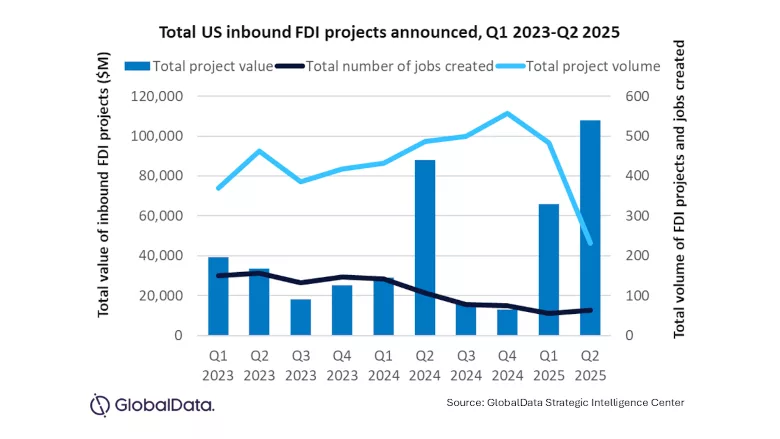
Photo Courtesy of GlobalData
SYDNEY, AUSTRALIA -- The U.S. tariffs are accelerating the breakdown of hyper-globalization, forcing companies worldwide to rethink their supply chain strategies. As protectionist policies take hold, supply chains are shifting toward localization to mitigate risk and rising costs. Global trade is entering a new era, defined not by efficiency, but by resilience, regionalization and strategic reconfiguration, reported GlobalData, a leading data and analytics company.
GlobalData’s latest Strategic Intelligence report, “Impact of Tariffs on Supply Chains,” reveals that even if the U.S. tariff rate ends up being lower than previously announced in April, an average 10% tariff rate on most U.S. imports will force companies to reconfigure supply chains.
“The uncertainty and unpredictability of U.S. tariff policy is discouraging companies from making any long-term investment decisions,” said Carolina Pinto, strategic intelligence analyst at GlobalData. “Instead, most companies intend to wait for the tariff situation to stabilize before finalizing any strategic shifts to their supply chains.”
Shift towards localization
Over the next five years, all major economies are expected to try to reindustrialize and stimulate domestic demand. Trade restrictions and stimulus packages will incentivize, or even force, companies to reconfigure their supply chains. There will be a shift towards localizing supply chains to avoid the financial and operational penalties associated with offshoring production.
“Reconfiguring supply chains is a lengthy, complex and expensive process that will have significant impact on businesses and consumers,” said Pinto.
There are already some signs of plans to reconfigure supply chains. This is substantiated by the foreign direct investment (FDI) figures, with the pharma sector seeing the highest value of U.S. inbound FDI in Q1 2025. FDI announcements by Big Pharma were made during tariff negotiations with the Trump administration. Companies hope that tariff levels can be partially lowered (below the assumed 25% tariff rate) if the industry makes U.S. inbound FDI commitments.
With the U.S. closing its doors to foreign goods, all major developed markets that have relied on U.S. foreign demand for the last 30 years, particularly China and Europe, will look to reindustrialize, stimulate domestic demand and diversify their supply chains.
“The shift toward localized supply chains is a structural reset of global trade norms,” said Pinto. “As geopolitical risks, policy uncertainty and economic nationalism reshape the landscape, companies will no longer optimize solely for cost. Instead, supply chain strategies will increasingly prioritize resilience, optionality and proximity to demand, marking a fundamental rebalancing of globalization.”
Looking for a reprint of this article?
From high-res PDFs to custom plaques, order your copy today!