Scott Carothers, academic director for the Ceramic Tile Education Foundation, solves the mystery of large-format tile terminology and explains how the established definition helped determine its subfloor requirements.
Floor flatness is imperative to the success of a tile installation. Scott Carothers, academic director, Ceramic Tile Education Foundation, gives an example of a tile installation that does not adhere to the industry standard required for flatness and how that can impact the installer and the customer.
As installers approach a floor tile job, there are numerous questions that need to be answered before the first tile is set. Is the floor substrate suitable for receiving tile and is it flat?
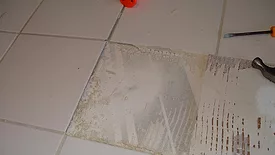
Often times, the builder, GC, or homeowner express that they need the job done quickly and to ignore the “harmless” paint on the substrate. ANSI says otherwise.
Many times, a jobsite is not well maintained or kept clean which can be an image and possibly a safety issue, but more importantly, when tile is being installed, the substrate must be clean.
Scheduled for the end of this month, The International Surface Event will surprise visitors with new show attractions
January 21, 2020
Soon the Mandalay Bay Convention in Las Vegas, NV, will be lined once again with seemingly endless displays of stone, tile and flooring materials, as well as machinery, tooling and other products related to these industries at the 2020 edition of The International Surface Event (TISE): Surfaces | StonExpo/Marmomac | TileExpo.
Every time an installer looks at a new job, the condition of the substrate needs to be reviewed thoroughly to determine if the surface to be tiled is adequate.
The expanded TEC® surface prep line includes 10 new products in five general categories: self-leveling underlayments; skimcoats; patches; crack isolation systems; and specialty products, including wear layer overlayments.