How Stone Fabrication Shops Can Fix Lead Leaks and Protect Their Marketing ROI
Stone shops are losing hundreds of thousands of dollars — not from a lack of marketing leads, but from broken systems that let them slip away

Need to Know
- "Lead leakage" occurs when an ad campaign drives leads that are not properly captured.
- Stone fabrication shops should think of their sales and marketing teams as a single connected system.
- Every touchpoint a customer encounters from the first ad impression to the signed contract contributes to marketing ROI. Fabricators need to find out where leads are leaking within this system.
The room went quiet for a moment. It was midway through a breakout session at a recent Rockheads Group conference in Annapolis, MD, and a shop owner had just shared something that stopped the conversation cold. After running an audit of their lead flow, they discovered that approximately 200 leads had never made it into their CRM system. Not because the leads were bad. Not because the marketing had failed. The leads had come in. They just never reached the sales team.
The math was immediate and brutal. At their average job value and close rate, those 200 missed leads represented over $300,000 in lost revenue. The pipeline opportunity was over $1,000,000. And the cost to acquire those leads in the first place? Approximately $10,000 in paid marketing spend — money they had already written the check for — that never had a chance to return anything.
"The problem isn't getting more leads," I told the room. "The problem is what happens after the lead comes in."
When Marketing and Sales Are Not Speaking the Same Language
Stone shops today are investing more in marketing than ever before. Google Ads. Search engine optimization. Meta campaigns. Call tracking. Agency partnerships. The spend is real and, in many cases, producing real activity at the top of the funnel.
But somewhere between the first click and the closed job, the handoff breaks down. Marketing generates the lead. Sales inherits it. And in between, if the two functions are not tightly integrated with shared processes and shared visibility, revenue falls through the gap.
During the session, owners shared scenario after scenario that would have been easy to dismiss as isolated incidents — until the pattern became impossible to ignore. Leads arriving through website forms that were never routing correctly. Phone calls being answered without any intake process to capture the information. Sales representatives and marketing teams operating without a shared CRM view. Automation workflows that had broken months prior, with no one noticing because accountability lived in neither department.
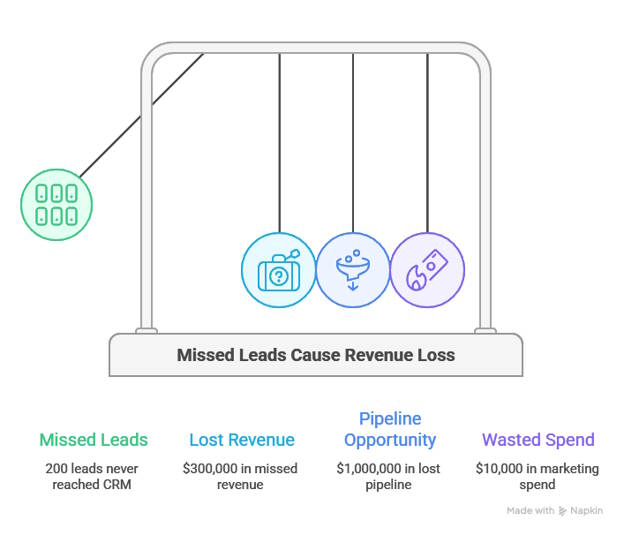
Graphic courtesy of Milia Marketing/AI-Generated with Napkin AI
One attendee shared that they had discovered 274 leads missing from their system due to a single broken integration. Another had no visibility into which marketing channel was actually driving their best customers. Several had never formally tracked their customer acquisition cost at all.
These are not small shops flying blind. These are established businesses with real marketing budgets and real teams. The opportunity is in building the connective tissue between those teams so that every lead marketing produced is fully supported by the sales process behind it.
The Hidden Cost of Lead Leakage
"Lead leakage" was a term that resonated immediately with the group. It describes the gap between the leads a business generates and the leads that actually receive a qualified sales response.
The leakage points we identified in the room were consistent across businesses of different sizes and markets:
- Missed or mishandled calls. In many shops, the front desk or receptionist is the first point of contact for inbound leads. Without call coaching, defined scripts or accountability for appointment-setting performance, a significant percentage of those calls end without a next step.
- No follow-up cadence. A lead that does not convert on the first contact is not a lost lead — it is an opportunity that requires follow-up. Most shops have no formal follow-up process, meaning unconverted leads are effectively abandoned.
- CRM gaps and broken automation. Whether due to human error, integration failures or simply no defined intake process, leads that do not make it into the CRM cannot be tracked, managed or closed.
- Lack of attribution. Without knowing which channels and campaigns are producing the best leads, shops cannot allocate marketing budgets effectively or identify where the system is breaking down.
The Experience Is the ROI
One theme emerged repeatedly throughout the day that went beyond the tactical discussion of CRMs and automation workflows: experience.
The customer experience. The sales experience. The marketing experience. As owners in the room began tracing their own lead journeys end to end, it became clear that marketing ROI is not a line item — it is the cumulative result of every touchpoint a customer encounters from the first ad impression to the signed contract.
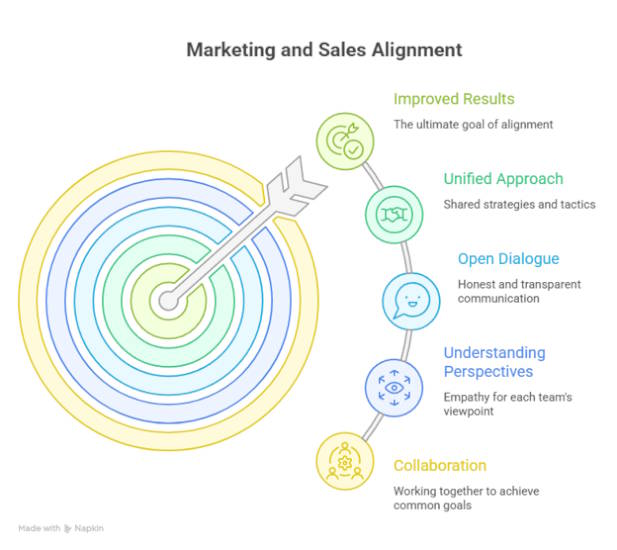
Graphic courtesy of Milia Marketing/AI-Generated with Napkin AI
A well-executed digital campaign that drives a customer to a poor phone interaction, or a slow follow-up, or a salesperson who is unprepared will never produce the return the marketing investment deserved. The investment and the experience cannot be separated.
This reframe shifted something in the conversation. Owners stopped thinking about marketing and sales as separate departments with separate problems and started thinking about them as a single connected system — one that either retains value or loses it at every step.
Where to Start
The practical takeaways from the session were straightforward, but meaningful:
- Audit your lead flow before increasing your ad spend. If leads are leaking from the system, adding more volume will only increase the loss. Understand where leads are entering, where they are dropping and whether your team has visibility into the full pipeline.
- Treat your CRM as the foundation of your sales operation. A CRM that is not being used consistently is not a CRM — it is a liability. Define intake processes, assign accountability and review it regularly.
- Invest in phone performance. For most shops, the phone is still the most critical conversion point in the sales process. Call coaching, defined scripts and receptionist accountability are not overhead — they are revenue protection.
- Know your numbers. Customer acquisition cost, close rate, average job value and lead source attribution are not vanity metrics. They are the inputs that allow a business to make intelligent decisions about where to invest and where to fix.
The Revenue Was Already There
The conversation in that room in Annapolis was one of the more honest and productive discussions I have been part of at an industry event. Owners came in thinking they needed more marketing. They left with a different question: how much revenue is already sitting in my system that I am not capturing?
For most of them, the answer was significant. And the path forward was not a bigger ad budget. It was a better system.
If you want to understand where your business is leaking revenue and what it would take to close the gap, reach out to Milia Marketing. We work exclusively within the stone industry and this is exactly the kind of work we do every day.
Visit miliamarketing.com or connect with Anthony Milia directly on LinkedIn.
Looking for a reprint of this article?
From high-res PDFs to custom plaques, order your copy today!




.webp?height=200&t=1755627454&width=200 "AI Integration Strategy Chart")
---visual-selection.webp?height=200&t=1774541772&width=200 "The black hole in your sales and marketing")