Reasons Fabricators Must Stay on Top of Design Trends
Industry experts share insight into managing customer expectations and the importance of becoming an authority on material performance
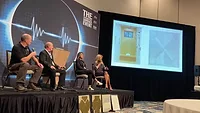
From meeting customer expectations and educating them on the performance of materials to determining if a designer’s vision can be a reality, fabricators play a critical role in a design. For these reasons, it is important that they stay abreast of current trends so that they can serve as a valuable source of insight to their clients. At the recent Fabricator Exchange (FABX) in Springfield, NJ, hosted by Park Industries, Rosie Nunez and Insaf Khriss from Atlas Marble & Granite presented “Design Trends 2026” during a breakout session – sharing what trends are expected to influence countertop projects this year.
“We are not just sourcing material,” said Nunez. “We are fabricators, so we have to understand the material. We are problem solvers. We have to be able to shift clients in another direction. Explain to them the reasoning, because they do not understand the material. They see something pretty and they want it, but they do not understand the execution behind it.”
Nunez and Khriss told the group of fabricators in attendance that they are sure many of them have had a client request that they immediately knew was not going to work. “Clients do not always understand what is wrong,” said Nunez. “They just see something beautiful online and want it.”
The Atlas team pointed out that as fabricators, you need to:
- Understand materials deeply
- Understand fabrication and installation
- Guide clients away from ideas that won’t work
- Explain why a different direction is better
They gave an example of a client who wanted a specific sink design, but the vanity height made it impractical. Instead of flat out saying “no,” as a fabricator you should explain:
- Usability issues
- Proportions
- Long-term function
The design experts explained that their CEO, Marcus Duran, is diligent about staying on top of trends. They said he thinks like a designer, which is helpful because when dealing with clients as a fabricator you often deal with expectations versus reality. “Clients come in with ideas -- usually inspired by something they have seen and expect it to translate directly into their project,” said Khriss. “But as professionals, we know that is not always possible.”
Nunez and Khriss cited that trends are driven heavily by Instagram, Pinterest, TikTok and influencers. “We are in the era of social media,” explained Khriss. “People are still driven by what other people are seeing. We are in the influencer era. An influencer has 2 million followers. They say a certain stone they used for their kitchen and then everyone wants that stone.
“You have talk to your clients/designers,” she went on to say. “Some ideas have to be organic. You have to come up with trends. That is what sets you apart from other people. If you do everything based on what is out there, it does not make you special.”
The Atlas team explained they try to take five minutes at each meeting with a designer to talk about what is trending. They want to find out, “How they can help them?” “How can we evolve?” “How can we make fabrication better for them as designers?”
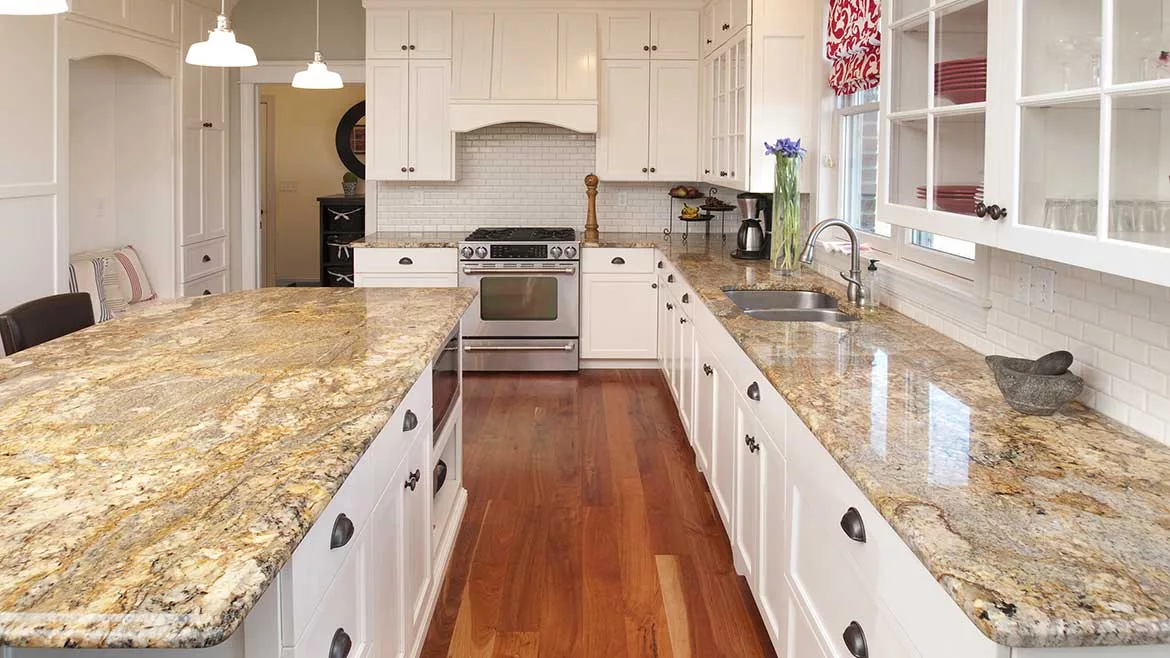
One noticeable shift in trends is that homeowners are seeking natural and personalized living spaces rather than a “perfect” look. They are looking for materials that will bring character, uniqueness and authenticity to their home. As a result, they are gravitating towards natural materials because no two slabs are the same, imperfections create character and it feels personal. In comparison, engineered materials are consistent but can feel repetitive.
“A major shift we are seeing in 2026 design is moving away from quartz, repetitive patterns and flat finishes, and gearing more towards natural stone and warm tones,” said Khriss. “Gray on gray is going out the door. We are seeing a lot of the characteristics of projects that are personal to clients. They want everything to feel like it is theirs -- from slab selection to execution. We are seeing a lot of textures, and honed and leathered finishes.”
The design experts also stated that the popularity of bookmatching slabs has worn off because it is seen as a more common application and less creative. They said trends are shifting toward vein matching, more complex and organic layouts and designs that feel less symmetrical and more natural.
“Clients are prioritizing things that seem more authentic and organic, as opposed to things that look perfect,” explained Nunez. “They are mainly seeking something that feels natural to them verses things that look like they were meant to be -- or robotic. They want more character.”
Looking for a reprint of this article?
From high-res PDFs to custom plaques, order your copy today!