High-Level Economic Indicators for Fabricators to Be on Alert
During a recent presentation during Park Industries FABX, the company’s Chief Financial Officer shared insight into the current state of the economy and how it affects fabricators
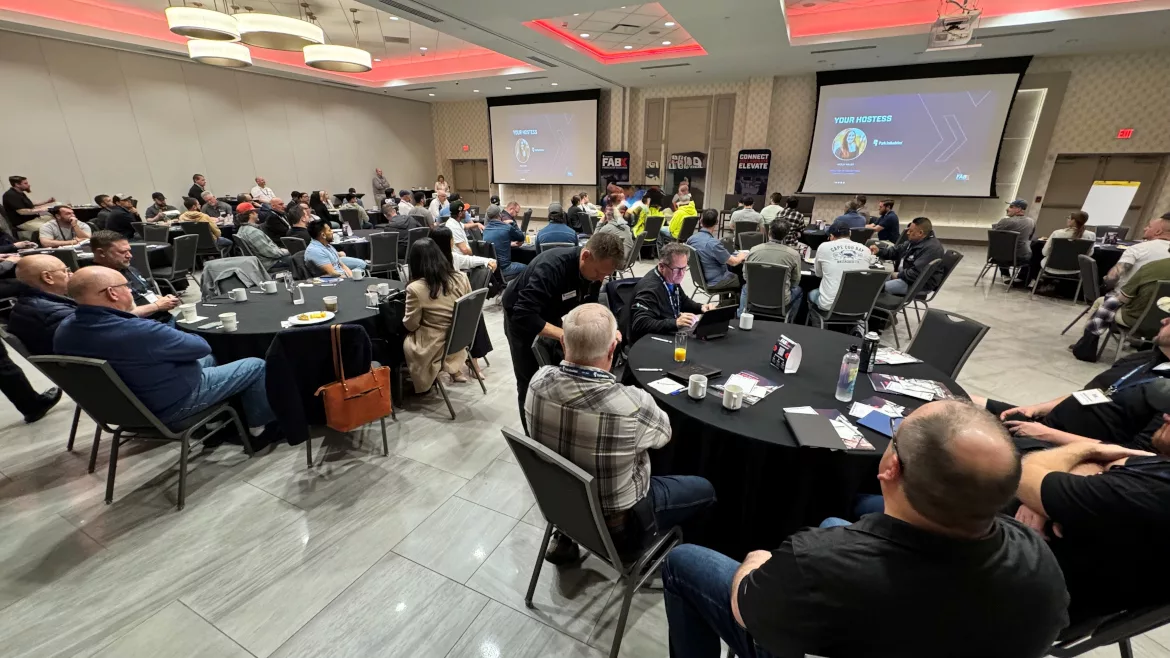
As an introduction to a State of the Industry panel discussion given during Park Industries’ Fabricator Exchange (FABX) in Springfield, NJ, on April 30, 2029, Dave Amelotte, Park Industries CFO, presented an overview of the current market trends.
“We are going to get you excited with some economics, but what I want to kick it off from a very macro-level lens,” said Amelotte. “I know economics sounds boring, but it really is that macro foundation that feeds into our industry’s fabricators. So, I think it’s important to ground everybody here before we get into those questions.
“These are high-level indicators that Park Industries looks at,” Amelotte went on to say. “We monitor this. We try to follow trends, and we use that to make informed decisions. If you take anything away from this, there are a lot of variables in the higher economy. It may not directly impact your business today. It may not in three months or six months. But eventually, the broader economic environment starts to filter down into our industry so it’s important just to ground the room on those dynamics.”
Amelotte told the audience that when thinking about today’s market, there is a significant amount of noise out there. “From Park’s perspective, the market isn’t great right now, but it’s not horrible,” he said “As you think about it, there are some strong fundamentals. We are working through this period of time where the market was jolted through COVID, has been coming back down for the last few years and is really trying to find that equilibrium. And that’s what we’re all feeling.”
According to Amelotte, geographic divergence is something worth taking note of. “I think this is really important,” he said. “One thing COVID did is it sort of broke up the market a little bit. If you think about it, people left the West Coast and the Midwest and went down to Florida and Texas. Everybody was building in Texas and the Southeast. The Northeast, where we are, inventories are tighter so every shop and geography may be behaving a little bit differently. I’d just keep that in mind as we talk through this panel.
Housing Affordability
Housing affordability is less adverse, but still far from favorable, Amelotte told the audience. “Interest rates - everybody hears about interest rates,” he said. “They’ve hovered around the low 6% range for maybe two years now. I think this is going to be the norm for us as we look out over the next 12 to 18 months. With that said, I think what you’re starting to see is people are getting used to living in a world with a 6% interest rate. You see that in home prices, inventory movement and industry pricing coming down.
“Many of you have probably heard about the ‘interest rate lock effect,’ where people don’t want to move because they’re sitting at 3% interest rates,” Amelotte continued to explain. “People are starting to move on with life. So what you’re seeing in the broader market is inventory levels creeping up. And what does that do? It eases price affordability and starts to loosen up our market. That’s a positive sign for us in this industry.”
Builder Sentiment and Housing Shortage
There is roughly an estimated 4 to 6 million home deficit across the country, according to Amelotte. This can be attributed to factors such as:
- Regulatory barriers
- Builder costs
- Inflation
- Tariffs
- Labor shortages
“The construction industry as a whole is about 8 million workers,” said Amelotte. “Residential construction is about 4 million. We need roughly half a million people to fill all the open roles. What does that do? It delays builds, delays projects and creates penalties for builders -- especially large builders.
“You may not feel it if you’re in high-end custom building -- it’s a different dynamic -- but generally speaking, builders are feeling some of that pain,” Amelotte went on to say. “Labor continues to be a challenge. Everybody is struggling with labor because of skills gaps, administrative policy and immigration impacts. It’s becoming difficult to get good people and keep good people; and that impacts all of us in this room. We’re all going to have to continue navigating this and finding ways in our shops and companies to drive more operational efficiencies and do more with less.”
Amelotte advised the fabricators in the room that as they step back, consider the following points:
- They have strong fundamentals.
- Continue to play the long game.
- The market will continue to recover.
- Markets always ebb and flow.
“My advice is to tune out the noise because that can distract you from keeping your eye on the long-term success of your business,” he concluded.
Looking for a reprint of this article?
From high-res PDFs to custom plaques, order your copy today!