Why Sealing Quartzite the Proper Way is Important
An industry expert shared tips and demonstrated techniques on how fabricators should handle the moisture-sensitive material
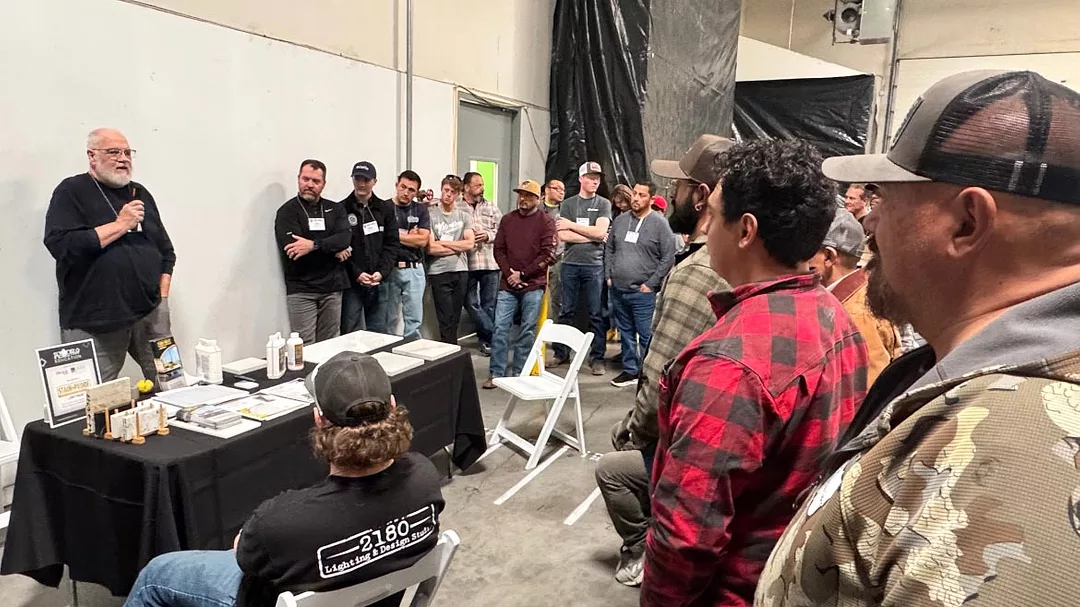
“Quartzite is not granite,” O’Reilly told the fabricators. “It is not cut and turn and get out the door. It is moisture sensitive.”
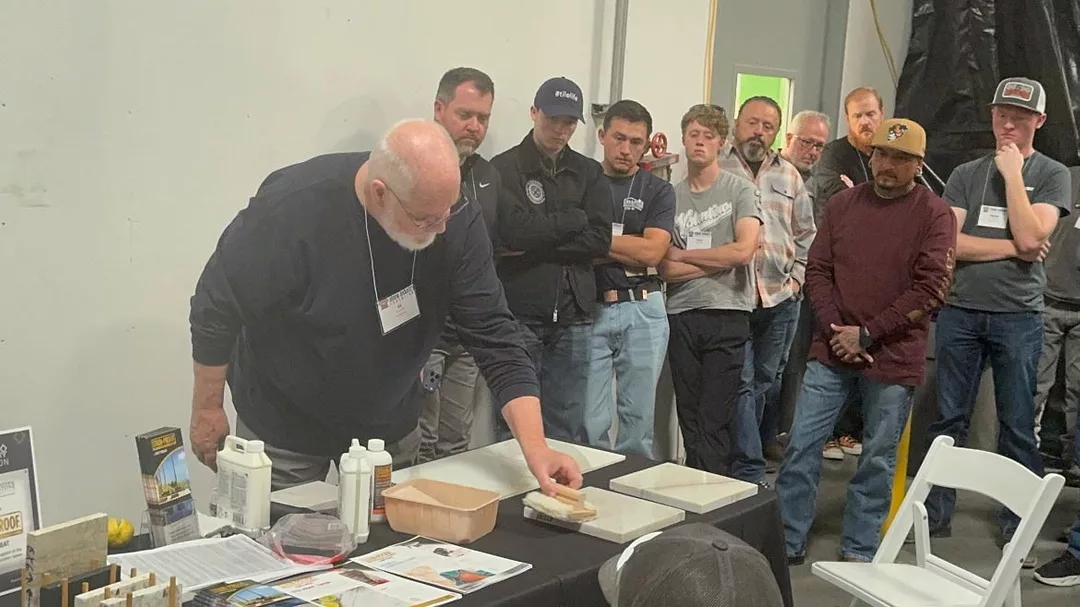
In his demonstration, Ed O’Reilly, territory sales manager at Dry-Treat, illustrated how the motion of sealing is a long straight stroke.
A group of fabricators intently listened to a demonstration given by Ed O’Reilly, territory sales manager at Dry-Treat, on how to properly seal natural stone. In particular, he addressed issues that could arise with quartzite and how to prevent them. The presentation took place during a Stone Industry Education event last month, which was hosted by Arizona Tile’s Albuquerque, NM, location and organized by Stone World in partnership with the Natural Stone Institute.
“The prep is the most important thing when sealing,” said O’Reilly. “Make sure the stone is dry and it is dust-free.”
In his demonstration, O’Reilly illustrated how the motion of sealing is a long straight stroke. He also explained to the group of fabricators that the rule of thumb with quartzite is to not seal it before two weeks after fabrication.
“Quartzite is not granite,” he said. “It is not cut and turn and get out the door. It is moisture sensitive. We have seen water pop up on quartzite six months later. A moisture meter will help. When working with designers and general contractors, you want to make sure you add two weeks to the delivery date.”
Watch the video to learn more helpful tips on sealing quartzite.
View the 2026 Event Schedule and learn more about the upcoming seminars at stoneworld.com/stone-industry-education.
Looking for a reprint of this article?
From high-res PDFs to custom plaques, order your copy today!