Federal, State Researchers Map Nation’s Stone Countertop Shops to Combat Rising Silicosis Cases
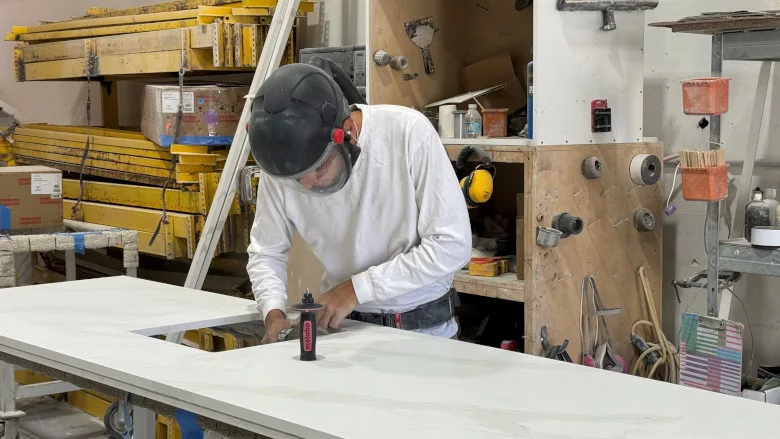
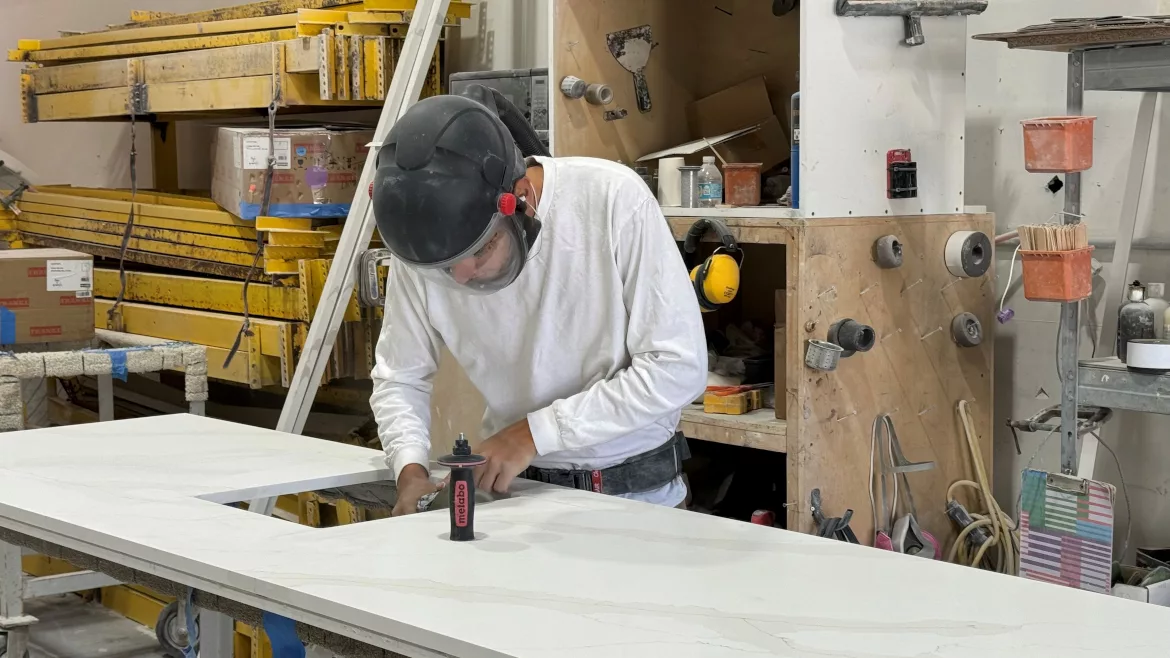
Photo Courtesy of ISFA
Federal and state health researchers are working to build the first comprehensive national list of stone countertop fabrication companies, part of a broad effort to reduce worker exposure to respirable crystalline silica and prevent silicosis, according to a blog post published on January 27, 2026, by the National Institute for Occupational Safety and Health (NIOSH).
The initiative, led by NIOSH’s Respiratory Health Division in Morgantown, builds on work by the California Department of Public Health to locate and catalog fabrication businesses in that state. Researchers said the effort is critical because engineered stone, also known as artificial stone, manufactured stone or quartz, typically contains more than 90% respirable crystalline silica, putting countertop fabricators who work with the material at elevated risk for the irreversible lung disease.
The work traces its roots to early 2019, when CDPH identified the first two engineered stone countertop worker fatalities due to silicosis in the United States, along with four other cases among California workers. Since then, CDPH research has found that 51% of inspected stone fabrication shops had at least one employee exposed to respirable crystalline silica above the permissible exposure limit of 50 micrograms per cubic meter.
To locate at-risk businesses, CDPH mailed a health advisory to countertop manufacturing companies in March 2019 using a commercial database cross-referenced with North American Industry Classification System and Standard Industrial Classification codes. Researchers identified nine eight-digit NAICS codes and six six-digit SIC codes associated with businesses likely involved in countertop fabrication or installation, spanning categories such as granite wholesale, marble contractors, stone installation services and kitchen counter retailers.
By 2022, CDPH had used those codes to compile a list of 1,564 California businesses. After conducting internet searches to confirm each business was a fabricator of quartz countertops and was still in operation, researchers confirmed 653 were fabricators, of which 480 had fewer than 10 employees and 291 had five or fewer. The remaining businesses included 200 installers, 206 sales or showroom operations and dozens of companies in related fields such as headstone manufacturing and restoration work.
The researchers noted that more than 90% of the businesses identified through the classification codes appeared to be related to the countertop fabrication industry, suggesting other jurisdictions or researchers can use the same approach. However, the codes did not capture all businesses. CDPH’s supplemental internet searches identified an additional 199 fabricators not included in the commercial database.
NIOSH is now scaling that methodology nationally. Researchers are using web-scraping tools, which are automated software applications programmed to extract data from the websites of relevant industry groups and manufacturers, combined with automated internet searches to build a more inclusive list. The initial national list includes 19,316 companies, and nearly half, or 9,410, have associated email addresses, allowing NIOSH to distribute a workplace survey.
The survey is designed to characterize materials, workplace practices and controls in place at fabrication facilities to better understand factors that contribute to respirable crystalline silica exposures, according to the blog post. NIOSH also said it is working to share education and outreach materials, including best practices, to reduce worker exposure to silica.
Silicosis is an irreversible occupational lung disease caused by exposure to respirable crystalline silica. The combined federal and state efforts will provide a clearer picture of the potential burden of worker silicosis in this country and where resources should go to reduce exposure, identify factors affecting worker exposures and improve prevention outreach to companies and workers potentially affected by silicosis, the researchers wrote.
Looking for a reprint of this article?
From high-res PDFs to custom plaques, order your copy today!