Massachusetts Issues Safety Alert After State's First Confirmed Silicosis Case in Stone Countertop Worker
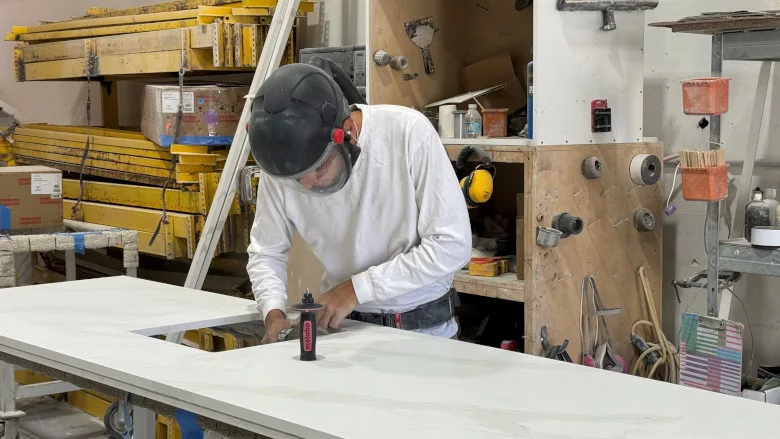
Photo Courtesy of ISFA
Massachusetts health officials issued a safety alert to stone countertop fabrication employers after confirming the state's first case of silicosis in a worker in the industry, the Department of PuCblic Health announced Dec. 9.
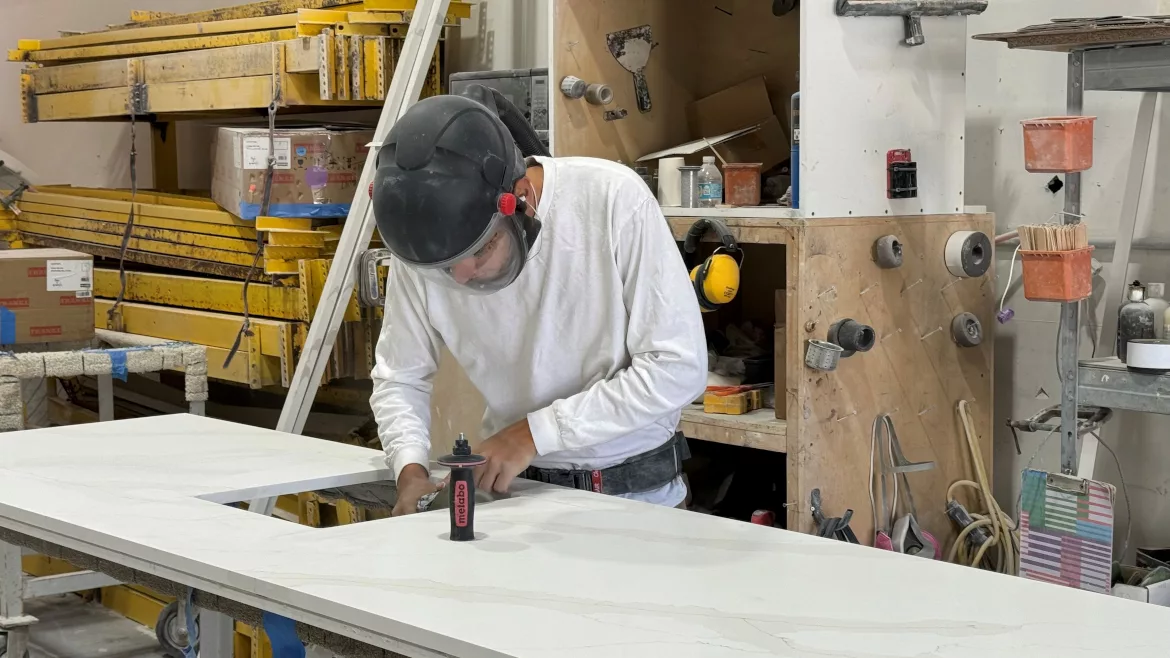
The case involves a Hispanic man in his 40s who was diagnosed in early 2025 after working 14 years for two stone countertop fabrication and installation companies in the state. His work involved cutting and shaping quartz, granite, marble and porcelain.
The worker reported that conditions at his first employer, where he spent 12 years, were "very dusty." Wet cutting methods were not routinely used, and the company provided only thin surgical masks rather than proper respiratory protection, according to the DPH safety alert.
His symptoms, including cough and shortness of breath, began about 10 years into his career as a fabricator. After four years and multiple medical visits, he received a silicosis diagnosis. By that point, he was also experiencing fatigue and weight loss and expressed concern about his ability to continue working.
Silicosis is an incurable, progressive lung disease caused by inhaling crystalline silica, which occurs naturally in granite and other stone. It is characterized by scarring of the lungs and can be fatal. There is no cure, but workplace controls can prevent exposure.
The disease has become increasingly prevalent among stone fabrication workers as demand for engineered stone countertops has surged. Engineered stone, also known as quartz or artificial stone, contains more than 90% crystalline silica, compared with less than 45% in granite, according to the Occupational Safety and Health Administration and the National Institute for Occupational Safety and Health.
"Silicosis is a devastating, life-altering disease — and one that is also absolutely preventable," Public Health Commissioner Robbie Goldstein said in a statement. "No worker should have to suffer from a chronic and insidious lung disease or possibly die because of a preventable exposure at work."
While this is the first confirmed case in Massachusetts, officials warned that additional unconfirmed cases could exist in the state. There is a long latency period between silica exposure and the onset of symptoms, and diagnosis is often delayed.
The first U.S. case of silicosis linked to engineered stone was identified in Texas in 2014. Since then, hundreds of cases and dozens of deaths have been reported nationally, with California documenting the largest numbers. Australia banned the use, supply and manufacture of engineered stone in 2024 in response to rising silicosis rates. California approved a bill expanding regulations in October 2025.
Most U.S. engineered stone workers diagnosed with silicosis are relatively young, male and Hispanic or Latino, reflecting the demographic composition of the industry's workforce. According to 2023 U.S. Census Bureau data cited by DPH, more than half of workers in the industry were under 45, nearly three-quarters were men and more than one in three were Hispanic or Latino.
OSHA updated its respirable crystalline silica standards in 2016, requiring ventilation and other controls to limit worker exposure.
In its safety alert, DPH recommended employers use wet cutting and proper dust collection systems, ensure fabrication takes place in well-ventilated areas, conduct periodic silica dust assessments and enroll workers in medical surveillance programs. The department also urged employers to provide proper respiratory protection, develop written exposure control plans and train workers in their preferred languages on silica hazards.
DPH issued hazard alerts for countertop workers in English, Spanish and Portuguese.
Emily Sparer-Fine, director of DPH's Occupational Health Surveillance Program, said the case should serve as a warning to the broader supply chain.
"Beyond the critical role employers play, everyone involved in the supply chain — from consumers and designers to contractors — can help reduce the danger by opting for materials that contain less silica and pose fewer health hazards," she said.
Health care providers were also urged to ask adult patients about their work history, particularly those presenting respiratory symptoms. Silicosis is a reportable condition in Massachusetts, and providers are required to report suspected cases to DPH.
Looking for a reprint of this article?
From high-res PDFs to custom plaques, order your copy today!