Understanding the Practical Implications of Slab Thickness
An industry expert provides valuable insight into when to specify 2cm vs. 3cm quartz slabs
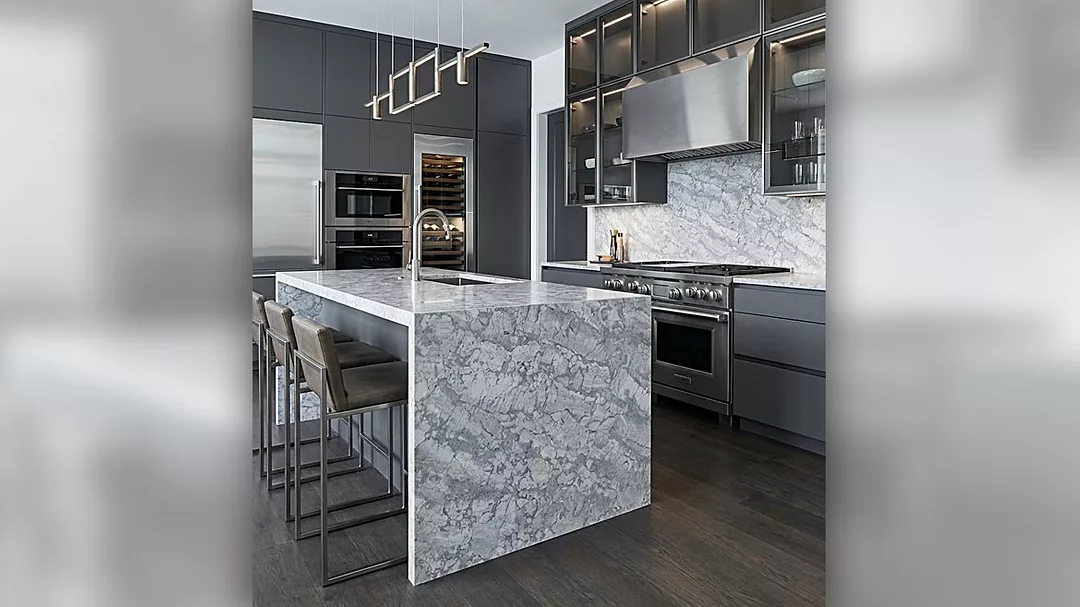
In addition to structural considerations, slab thickness has a direct impact on edge profile options.
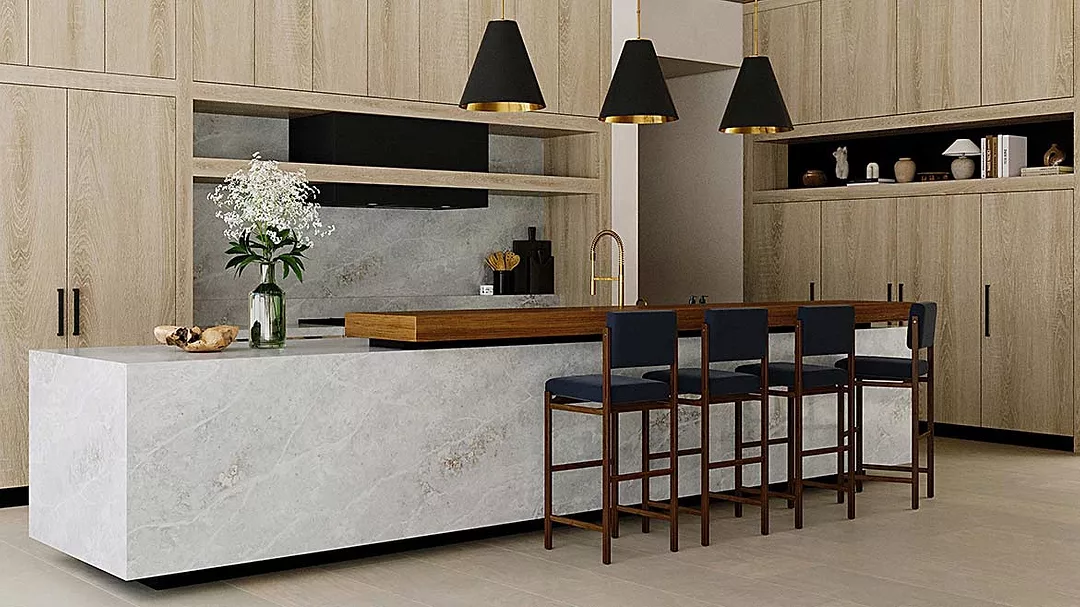
Span length is another key factor in thickness selection.
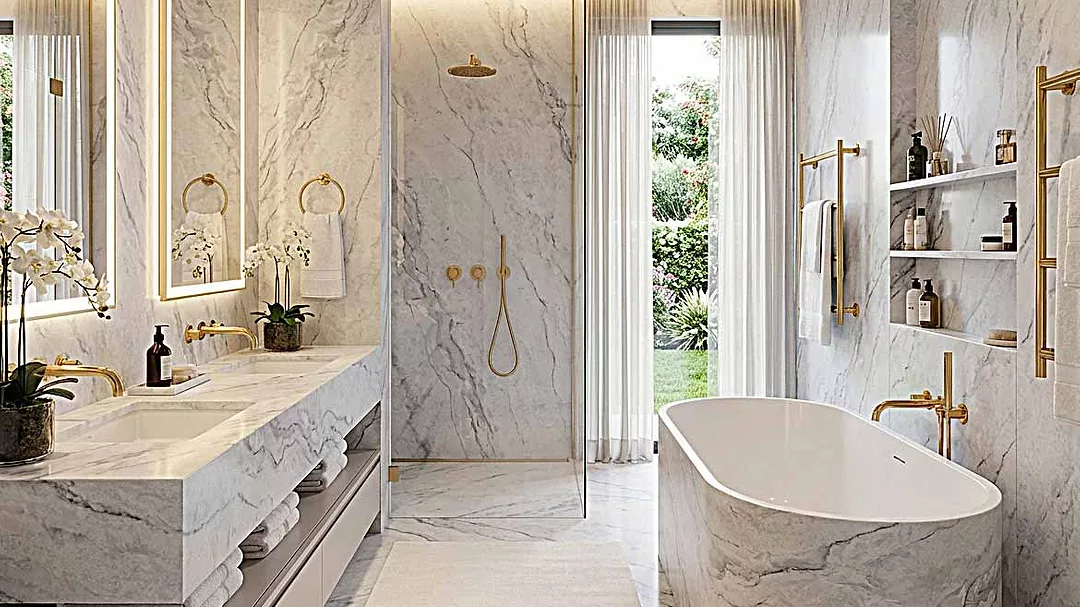
Vertical installations such as backsplashes and wall cladding that do not have to support surface loads perform well with 2cm slabs.
Building on its track record as a durable high-performance material, quartz slabs continue to make regular appearances in kitchen islands and countertops while expanding into new territories such as feature walls and interior vertical surfaces. Likewise, quartz manufacturers are doing their part to meet a wider range of uses, offering a menu of slab sizes and thicknesses and introducing new colors and patterns.
While quartz color and pattern often guide initial decision making and influence slab size for pattern consistency, slab thickness is equally critical to how quartz is fabricated, how it performs and how it visually impacts a space.
For architects and interior designers, understanding the practical implications of slab thickness and when to specify 2cm versus 3cm slabs leads to better alignment throughout the project -- from fabrication and installation to fulfilling the design vision and performance over time. To support this alignment, the following guide offers an introduction to specifying thickness, focusing on common application features and how they influence the choice.
It’s All About the Application
One of the most common misconceptions about quartz specification is that slab size automatically dictates slab thickness. Best practice, however, looks to the application as the primary driver, using these key features to determine 2cm or 3cm thickness.
Vertical or Horizontal Installation
Vertical installations such as backsplashes and wall cladding that do not have to support surface loads perform well with 2cm slabs, and some manufacturers produce even thinner 1.2cm slabs specifically for this purpose. For more substantial vertical looks, 2cm slabs are preferred. Comparatively, horizontal installations such as countertops, kitchen islands and reception desks need a combination of quartz thickness and structural support to handle surface loads. Choosing between 2cm and 3cm for horizontal applications depends more on the application’s size and design details, such as span lengths, overhangs and edge profiles discussed later.
Generally, the orientation-based rules of thumb are:
- Specify 2cm quartz when the slab is vertically oriented or when the horizontal design permits full support. 2cm quartz performs well in horizontal applications when it is continuously supported by a substrate such as cabinetry and when it is not required to resist bending along long spans or overhangs. The lighter thinner material is easier for fabricators and installers to handle, and designers can deliver a refined appearance that is gentler on the budget.
- Specify 3cm quartz for horizontal applications where the slab must notably span, overhang, or carry a load. 3cm quartz is better suited to applications where the slab must act more like a structural element. Horizontal surfaces with longer spans or overhangs introduce stress and deflection risk over time. The 3cm thickness increases stiffness and edge durability, helping the slab perform reliably with less reinforcement. It also reduces the risk of cracking or sagging in high-use or public-facing environments.
These orientation guidelines establish an essential principle: slab thickness must match how the quartz will be used and supported to ensure design intent and in-service performance align from the start.
Span Length
Span length is another key factor in thickness selection. Span refers to the distance a slab must bridge between structural supports such as cabinets, framing or other substrates. Longer spans increase gravitational stress and deflection risk, which directly affect the long-term performance of the slab.
For fully supported surfaces such as countertops resting on cabinets or a solid substrate, 2cm quartz is typically safe for spans up to 24 inches. In these cases, the load is carried by the support rather than the quartz itself, making thinner slabs more practical, easier to handle and less costly.
When slabs must bridge longer spans, 3cm quartz is generally preferred, with practical spans ranging from 30 to 36 inches between supports. The additional thickness increases stiffness, minimizes deflection and helps maintain the level surface over time, which is especially important for high-use, high-visibility applications.
Overhang
Where span length addresses the distance between structural supports, overhang introduces a different set of demands. An overhang is when a portion of the slab extends beyond its supporting structure, creating a cantilever that increases bending stress and deflection risk.
For 2cm quartz, overhangs should generally be limited to 12 to 18 inches, depending on use. Beyond this range, the thinner slab may flex under load, leading to potential edge stress or long-term sagging. Designers can mitigate these risks through concealed supports such as brackets, corbels or laminated edges that add stiffness while maintaining a clean visual profile.
3cm quartz allows for longer overhangs of up to 24 inches. The increased thickness helps maintain flatness and edge durability, making it the preferred choice for heavily used horizontal surfaces. Even with 3cm slabs, deeper overhangs may still require reinforcement or mechanical supports to ensure performance.
Overhangs illustrate why thickness selection is not solely about slab size: even a smaller slab can demand 3cm thickness if it extends beyond its supports.
Edge Profile
In addition to structural considerations, slab thickness has a direct impact on edge profile options. The edge profile is the shape and finish applied to the exposed edge of the slab. It defines how the edge transitions from the top surface to the vertical face, and it plays both a functional and aesthetic role.
From a functional standpoint, an edge profile can affect durability and safety, such as providing softened corners that reduce chipping risk and improve resistance to everyday wear. From a design perspective, an edge profile helps control how delicate or substantial the slab appears. Common edge profiles include simple eased or pencil edges as well as dramatic bevels, bullnoses, and ogees.
2cm quartz is ideal for eased or pencil edges that deliver a crisp contemporary look. When a 2cm slab is suitable for an application’s performance requirements but a thicker edge design is desired, fabricators can also laminate or miter edges to make them appear thicker. Laminated edges use multiple layers of bonded quartz to build thickness, while mitered edges wrap the slab pattern around corners for a continuous monolithic look.
3cm quartz is favored for satisfying both surface strength and substantial edge profiles. The 3cm slab simplifies fabrication by eliminating laminating and mitering when a thicker profile is needed. It is also the go-to choice for waterfall edges, islands and other focal-point applications. Visually, the 3cm edge conveys weight and permanence, reinforcing it as a primary design element and the added thickness improves edge durability, helping it resist chipping and damage.
As with spans and overhangs, edge profiles require the appropriate thickness to ensure the design is achievable without compromising performance.
While it is impossible to capture every design scenario, reviewing industry guidelines like these works as a solid starting point for anyone who wants to make better informed decisions. And since performance specifications and fabrication requirements vary by brand, architects and designers should always consult the quartz manufacturer for thickness, span and support guidelines specific to the product being specified.
Smarter Specification Through Collaboration
Even when equipped with a basic understanding of the part quartz thickness plays in a project's success, specifying is rarely a simple choice. Collaborating with a knowledgeable quartz slab manufacturer that provides clear technical guidance and responsive customer support is the best first step toward success. Engaging a reputable manufacturer early in the process helps ensure that design goals are supported by realistic fabrication and installation capabilities and that the final project will be built to last.
Looking for a reprint of this article?
From high-res PDFs to custom plaques, order your copy today!