Learn the Holy Grail for Leadership Mastery
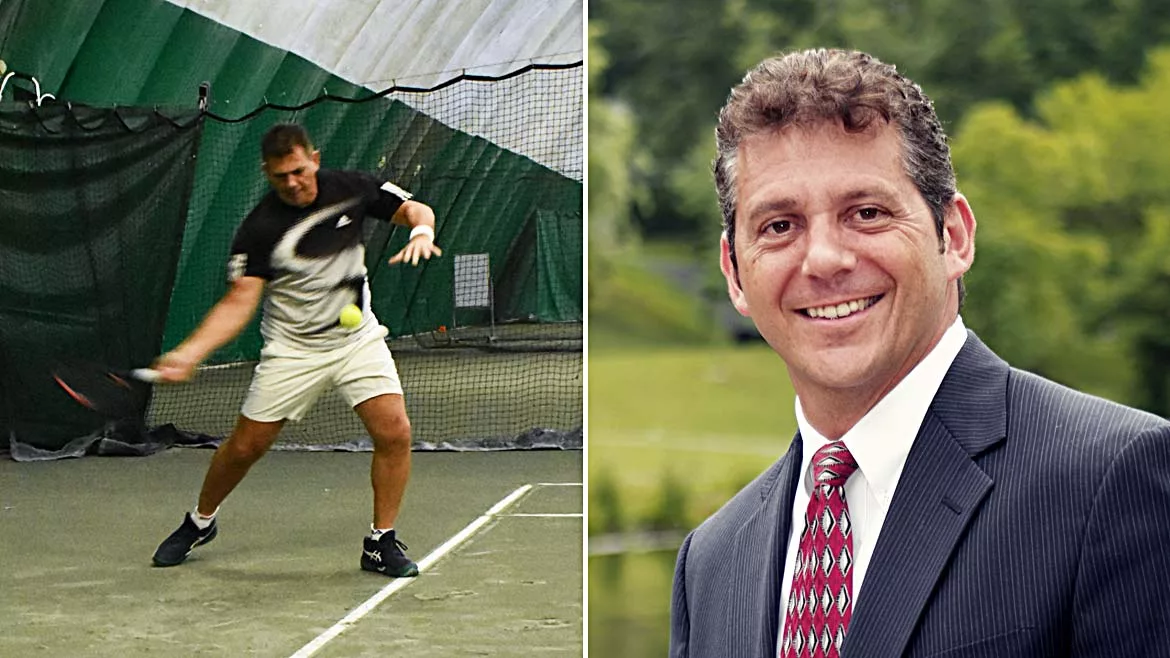
Emotional Intelligence (EI) and Mental Toughness (MT) are two distinct and (largely) independent psychological skills whose applications are compulsory for sustainable super-performance. Separately, each has been written about profusely by some of the most accomplished scholars. Today, I am here to meld these “megaliths” into an epic symbiotic dynamic known as “T.I.M.E” (Toughness & Intelligence of Mentality & Emotions); whose balanced mastery may just be the most defining skill one could ever possess.
Owning and operating a business has countless parallels to being an athlete, many of which include competition, teamwork, strategy, nimbleness, problem solving, pressure, challenges, discipline, passion and continuous improvement. While exceptional physical development and skill mastery lead the way to the possibility for professional advancement, what separates amateurs from the pros (and even exceptional pros amongst the pros) is the degree to which one is able to respond to and perform under pressure.
It is uncanny how many times, for example, a golf, tennis, football or basketball tournament has been won by one shot! Hours and/or days of competing and one single solitary double fault, missed catch, putt pushed wide or free-throw bounced out off the rim, and that was the difference of winning and losing?!?!? Yes, and all too often.
To further exemplify the importance of performing when it is needed most -- tennis is a sport where, at the end of a match, the loser could have actually won MORE total points than the winner -- and yet, still lost, and why? It all has to do with the timing of when the points were won.
I have intentionally created an atmosphere here of business owners, leaders and athletes all requiring an exceptional set of skills to “super-perform” that sets you up with the greatest probability of winning. Remember, while we cannot absolutely control winning per se, we can control our T.I.M.E; i.e., performing our best when it counts the most; this is all we can do and what successful sustainable leadership requires.
A Forensic Dive
To fully appreciate the epic nature of EI and MT symbiosis, let’s look at each skill’s constituent parts and the efficacy therein. This should elucidate then how mastery of both is any “performer’s” Holy Grail.
Mental Toughness (MT)
MT is a psychological edge that enables one to perform at or near their best, consistently and confidently under pressure and through adversity. When faced with hardship, MT’s building blocks of discipline, strength, focus, positivity and composure keep you steadfast regardless of situation or emotion. Persistence and resilience are at the very core of MT.
The Athlete
This dynamic of having to perform at your best when it counts the most can be exemplified in most any sport -- football’s last-minute drive; basketball’s shot at the buzzer, tennis’ second serve on match point, a bowler’s third throw in the 10th frame. Those who learn to control their thoughts and remain unshaken and access their super-performing state when the situation demands, have achieved some mastery of MT.
The Leader
A business person requires all the same skills, as to not cower under competition; to find ways to become better when the heat is on, to push through and even embrace the stress of write-offs, strikes, lost jobs, stolen employees, mistakes and the like. Being at your best when it is needed the most requires focused training. And the best news for leaders is this: as much as leaders are made, not born, MT is a learned skill, it is not genetic.
MT people are driven by achievement; they have done the work so when stress and adversity arrive, they are not shaken. In fact, they invite and embrace the challenge. It is not cockiness, it is a mindset to say, “I am a rock, and I will plow through any obstacle; I will never give up and when I am under pressure, I am at my best, so Bring It!”
It’s not that MT people do not feel stress or get nervous, they sure do! It’s all about their learned response to stress and nerves that transform these energies into fuel vs inhibitors.
Consider this remarkable dynamic -> we already have what we need: During high stress and intensely competitive situations, the body releases neurochemicals such as epinephrine (adrenaline), norepinephrine and cortisol (plus others) as an automatic response. Each neurochemical provides the body with what it needs (glucose, blood flow, dopamine, etc.) to respond to the real or perceived threat.
Suddenly, you have a pharmacy of performance enhancement chemicals at your disposal – the question is, what are you going to do with them? Do you recall the story of the mom who got a surge of “hulk-energy” to overturn a car where her child was hurt and stuck within?
There is much work to do and practice to become MT and that is subject for a future article, however, for now, understanding that MT people can funnel and leverage these neurochemicals to their command versus being indiscriminately led by them, is the key.
It is my pure conjecture that tennis stars such as John McEnroe and Jimmy Connors, both known to be volatile and hot-headed at times, seemed to play better once “something or someone” set them off in a match. Once triggered, they learned to utilize the “free drugs” the body created (because of the stress or anger) and use them as performance enhancers as they (intentionally or not) trained their brain to perform under pressure.
The flip side is, without training this way, natural responses to stress include tanking and choking. Tanking is a sort of ego-saving/half effort behavior that effectively says, “You’re not better than or beating me – I am just not trying.” Choking, of course, is an over analyzing --getting tight and deathly afraid to lose, response to anxiety. It is purely psychological and can be overcome with help and practice. The higher the level of skill and mental toughness one possesses tends to dictate at what point the choking effect could kick in. I have seen tennis matches where one dominates until it’s late in the final set where it comes time to “close the deal” and the wheels come off. The closer to the “finish line” the greater the probability the choking or response kicks in.
I highly suggest researching Dr. Jim Loehr -- a sports psychologist whom I met decades ago during my very brief run for the pros. A true-blue, kind and brilliant man; his passion for his work afforded him vast successes. Do yourself a favor and check out his library of books, but especially, The New Mental Toughness. https://www.amazon.com/New-Toughness-Training-Sports-Psychologists/dp/0452269989 Dr. Loehr details the journey to become mentally tough for any age or discipline. This work is as much a guide to becoming mentally tough as it is framework for anyone wanting to do and be their best at whatever they champion in life.
Hopefully by now I have made it clear how being a leader/business owner and being an athlete are incredibly similar. Both require toughness through adversity; strength to perform as long as is needed; and resilience to get up when knocked down. We now have a firm understanding of the role MT plays – however, as you will see in this next section, I elucidate that while MT is compulsory for sustainable super-performing, it is only half the story. MT is the “brain-muscle,” but now we need, Emotional Intelligence, the “heart-muscle,” to complete the megalith meld.
Emotional Intelligence (EI)
Emotional Intelligence (EI) is a learned psychological (and social) skill yielding ability to discern and manage your own emotions, as well as perceiving and understanding the emotions of those around you. The whole construct of EI is built on four pillars known as, “M.E.S.S.”
- M -- Motivation: A robust intrinsic drive that fuels the persistence to achieve desired goals. (Note: This drive is NOT based on rewards for achievement but IS based on a yearning to achieve what they set their heart to.)
- E -- Empathy: The ability to understand someone’s response in a situation, to feel what another is feeling and to respond to other people’s emotions appropriately. Empathy allows one to understand, see and feel a situation from another person’s perspective.
- S -- Self-awareness: The ability to understand your own actions, responses, feelings and thoughts and how they affect you. Equally vital here for EI is how your self-awareness helps you see how others perceive you.
- S- Self-regulation: The ability to manage your emotions, thoughts, actions and responses to adapt to change and achieve your desired goals.
The Leader
Highly effective and sustainable, leaders exhibit a high degree of EI. They can truly understand your perspective and how you feel; this allows a sincere connection with your teammates and helps build trust and a strong culture. Additionally, an EI leader is most cognizant of their behavior and reactions when stress, anxiety and difficulties mount and even become relentless, making them a safe and trusted resource. The EI leader has made enormous strides in managing and overcoming the adverse psychological effects (mental fog, impulsivity, irritability etc.) of the very same neurochemicals released under high-stress situations mentioned previously. Being EI allows them to stay calm under pressure; make rational thoughtful decisions; to stay the course as long as needed without panicking; regulate their emotions to serve them and their teammates (versus undermine or sabotage) for whatever the situation demands. Let’s sum this up as “Grace Under Pressure.”
The Athlete
Top and consistently high-performing athletes have high EI -- i.e., they have learned the ability to understand their emotions and the changes their bodies feel when under stress. This cognizance encourages focus and sound decision making when it is needed the most, which is critical to thriving under pressure situations.
Hands down, the ability to stay calm, think clearly/rationally and evaluate strategic alternatives are all crucial for any athlete. In a solo sport, you are managing your mind and emotions for staying under control and making good decisions; if you are the leader of a team sport, you’re doing the same but also, instilling confidence, motivation and calmness to your teammates which then allows them to more optimally perform.
Skill Summary
- MT focuses on resilience vs. EI focuses on emotion
- MT pushes through stress through discipline vs EI uses understanding and awareness
- MT people are driven by achievement and growth through struggles vs. EI people are driven by empathy, purpose and meaning
In short, emotional intelligence provides the why and how behind responses; mental toughness provides the strength to act on them consistently. Together, you can now appreciate how priceless and T.I.M.E.-less both skills are.
The T.I.M.E. “Meld”
In combination, these unique skills breed a calm and resilient performance, capable of understanding, enduring and thriving through business and athletic complexities. The sustainable super-performer does not choose between emotional intelligence and mental toughness; they proactively develop both.
Where MT keeps one committed despite obstacles, EI keeps one in harmony with others and ourselves. Together, they represent the harmony between one’s mind and one’s soul; being able to stand strong while deeply feeling.
Whether you are a business owner, leader of any sort, or amateur or professional athlete, you have more in common than you realize. It is your ability to make T.I.M.E. develop and hone both your emotional intelligence AND mental toughness that will significantly shape, and ultimately determine, your chances to reach and surpass your goals.
Looking for a reprint of this article?
From high-res PDFs to custom plaques, order your copy today!