Protecting Wet-Area Walls: Avoiding Gypsum Board Failures
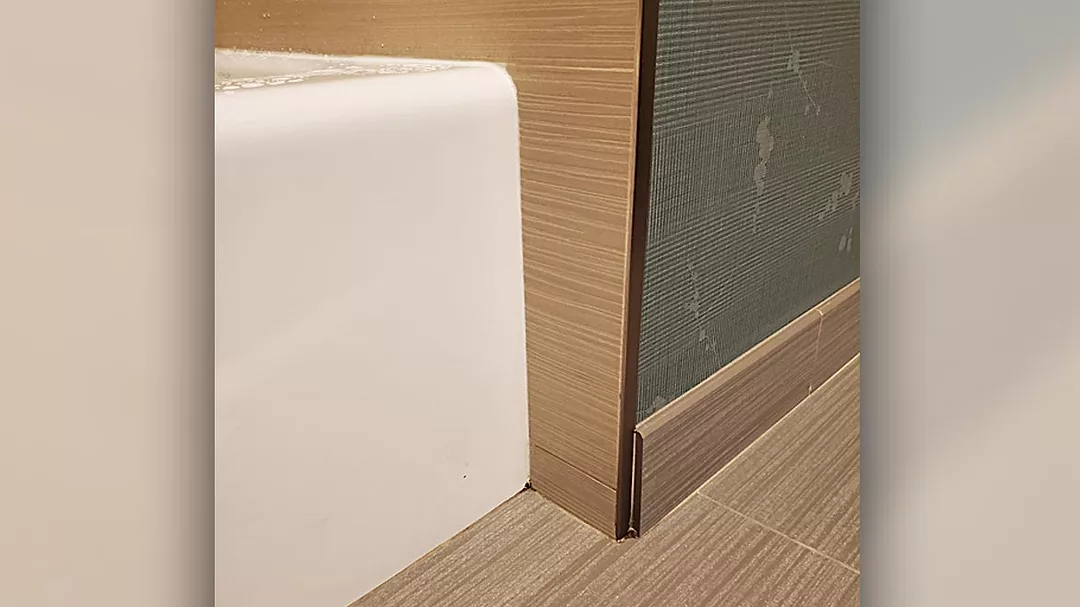
The installer can suggest continuing the tile beyond the edge of the tub or shower by two or three inches, along with extending it down to the floor.
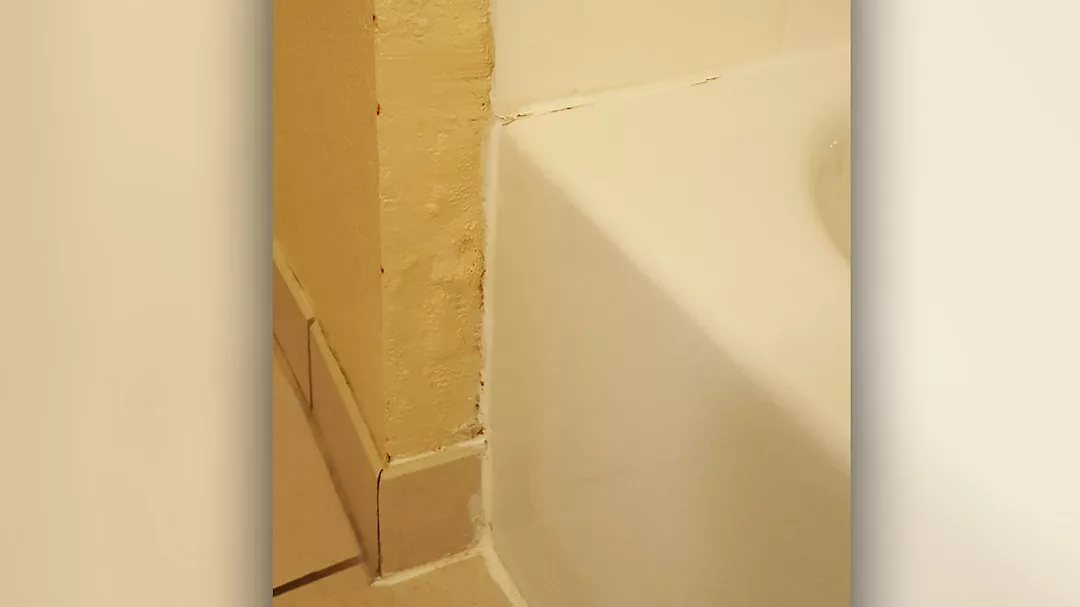
Water damage to the drywall tub apron.
When it comes to the decision of what substrate material should be used on wet area walls, the selection and preferences are widely varied. Some installers only use an American National Standards Institute (ANSI) A118.9 cementitious backer unit, while others want one of the recently approved foam boards included in ANSI A118.18, an ANSI A118.10 Load Bearing, Bonded, Waterproof Membrane over an approved substrate, or some other manufacturer-recommended product. Once the appropriate product is chosen and professionally installed, the installation should last a lifetime.
With the tub or shower area properly installed, the problem occurs just outside the edge of the tub or shower base. This area is often covered with gypsum board, which is butted tightly against the shower wall material. In this scenario, the shower water can get outside the wet area, especially when a shower curtain is not used properly. The water travels beyond the tiled area onto the gypsum board, which may be painted or, in commercial settings, covered with heavyweight vinyl wallcovering. Either way, the water will eventually compromise the gypsum board, causing it to swell and turn soft. The only repair option is to cut out the affected area and replace it, or use joint compound to sloppily hide the problem and paint it, as seen in image # 1.
The difficulty here is that even though the specification called for the gypsum board to stop at the edge of the tub or shower base or the homeowner didn’t want tile in this area, the tile installer is seen as providing a faulty installation. However, there is a way that the installer can be protected. If during the pre-job discussions, the installer can show the owner that the ANSI guidelines speak about this issue. ANSI A108.02-2.2.12.2 states, CAUTION: Gypsum board (ASTM C1396/1396M), including water-resistant gypsum backing board, shall not be used in critical exposure area such as exteriors, showers, saunas, or steam rooms.
Additionally, the installer can suggest continuing the tile beyond the edge of the tub or shower by two or three inches along with extending it down to the floor as seen in image # 2.
This protects the gypsum board from moisture while also yielding an attractive and functional finish. But use caution. In some part of the United States, the local code may require the tile to extend beyond the unit as just described, so always check the local code requirements in the area where the tile is being installed before proceeding.
This article was originally posted on www.floortrendsmag.com.
Looking for a reprint of this article?
From high-res PDFs to custom plaques, order your copy today!