Ways AI Can Improve a Fabrication Operation
From the showroom to the shop floor, artificial intelligence (AI) has the potential to transform every aspect of a countertop fabrication business

The “future” is here. The countertop fabrication industry, long rooted in traditional craftsmanship, is now facing a digital transformation driven by artificial intelligence (AI). As customer expectations for speed, precision, customization and cost-effectiveness rise -- and as the industry continues to grapple with labor challenges and growing health risks -- AI presents a compelling path forward. For countertop fabricators, incorporating AI technologies can improve operational efficiency, enhance product quality, reduce material waste and bolster workplace safety.
AI is not just for tech giants or data-driven startups; it is becoming increasingly accessible for small- and medium-sized businesses. While ignorance, fear and tradition are powerful combatants to AI acceptance and implementation in a fabrication business, it can mean the opportunity to turn what has often been a labor-intensive, manual processes into a smarter, faster and more scalable operation.
One of the most immediate and practical uses of AI in countertop fabrication is in the design and quoting phase. Traditionally, quoting requires either hours and hours of manual take-offs and calculations or a visit to the customer’s home, measuring, drafting designs and manually calculating costs -- both can be a time-consuming and error-prone process. AI-enabled software can streamline this workflow.
For example, AI-driven design tools can use customer-uploaded photos, room scans or blueprints to automatically generate accurate 3D models and measurements. These systems can suggest optimal material choices based on usage, budget or aesthetics, and generate instant quotes with detailed breakdowns of labor, fabrication and installation costs. Speed, presentation and professionalism of a job quote can say a lot about your company – it is a differentiator and speaks volumes to your culture of adopting best and growing practices. Quoting this not only improves accuracy but also accelerates sales cycles -- critical in a competitive market where customer response time can determine who gets the job.
One of the most wasteful -- and costly -- aspects of countertop fabrication is material waste, aka, yield loss. I have often called yield loss the “silent killer” in the fabrication business. It is a slow strangle hold on cash, accrues high costs for disposal and consumes potentially valuable square footage for storage.
Nesting algorithms analyze the shape and size of required countertop pieces and optimize how they should be laid out on a slab to minimize waste. These tools not only account for the shape and vein direction, but also defects in the stone, like fissures or discolorations. Some systems use computer vision to analyze digital slab scans, identifying ideal cut paths automatically.
The one caveat here of course is that regardless of how efficiently a slab can be utilized, it MUST conform to the wishes of the buyer; that said, the greatest yield approach offered can be offered at Price Point X and if the client chooses a different layout and or seam location where the yield loss or even the number of slabs needed increases, you at least have the basis to say that layout can be done at Price Point X + some amount to compensate you accordingly. The efficacy of the slab optimization program translates to more countertops per slab, lower material costs and a more sustainable and cash-rich business.
We have all heard the phrases, “time is money” and “while the presses are down, we are not making money.” These could not be more applicable to any fabrication business. We all know, downtime can cost thousands of dollars per hour. AI can help fabricators stay ahead of equipment failures with predictive maintenance tools. These systems monitor machine data -- such as vibrations, motor performance, tool wear and usage patterns -- effectively, detecting signs of wear or mechanical issues before they become serious problems.
For example, with AI, a waterjet cutter or CNC machine can alert operators days or weeks in advance of a potential malfunction. This proactive maintenance prevents unexpected breakdowns, extends equipment lifespan and ensures a smoother production schedule.
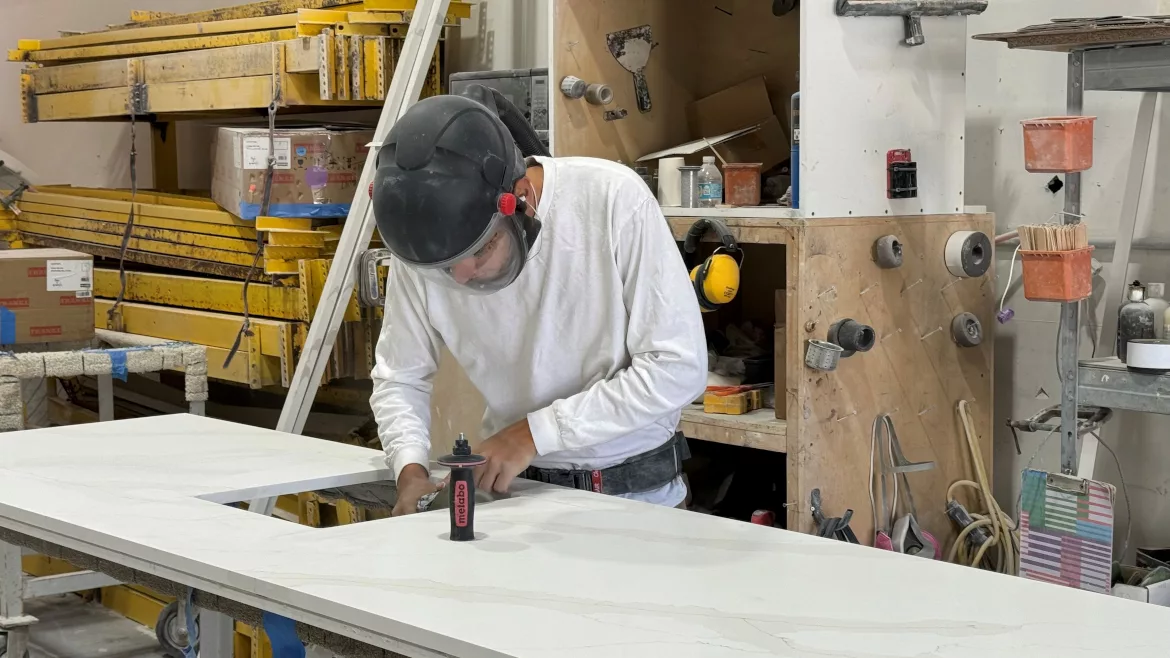
AI can also provide extremely powerful leverage in managing workplace safety and compliance. What better time than “yesterday” to champion this? As we know, workplace safety is a growing concern in the countertop fabrication industry, especially in light of the silicosis epidemic caused by exposure to crystalline silica dust during dry cutting and polishing. AI can help fabricators better monitor and manage shop environments.
Using AI-integrated sensors and computer vision, shops can track air quality, monitor dust levels in real-time and ensure that workers are wearing protective equipment. Cameras can detect unsafe behaviors (e.g., operating machinery without PPE) and alert supervisors instantly. These tools also generate compliance reports that can be used for internal audits or regulatory inspections.
Fabrication shops will continue to become under significant scrutiny by OSHA. Part of ensuring your business is indeed a valuable “going concern” is ensuring fabrication best practices when it comes to safety in general -- but specifically with any and all respirable “dust.” Gearing up to optimum safety, precautions and protocols is compulsory at this point. These “expenses” are not expenses per se -- they are investments in your businesses ongoing viability. Quite simply stated: “By integrating AI into safety protocols, businesses not only protect their workers but also reduce the risk of fines, lawsuits or shutdowns due to non-compliance.”
Presentation speaks to your brand. Much like a high-end restaurant will focus on colorful and odiferous garnishments to heighten the emotional experience of a meal, AI can also play a role in customer-facing applications to heighten the sales experience. Chatbots, virtual showrooms and recommendation engines can be used to guide customers through material selections, edge profiles and finish options based on preferences, budget and trends.
For example, AI can analyze thousands of customer choices and design styles to suggest the most popular combinations of stone and cabinetry or recommend complementary backsplashes. Augmented reality (AR) tools powered by AI allow homeowners to visualize how a specific slab would look in their kitchen -- increasing engagement and closing rates.
While many fabricators have their preferred vendors and stock materials that they may want to “push,” at the end of the day, getting the customer the product (color and brand) that fits their lifestyle, personality, peripheral décor and more, will ultimately create the MOST satisfied customer who then will speak volumes as to their happiness and pleasurable experience in working with you. You will be able to find a balance in totally objective AI analysis and offering what you the fabricator would like to incentivize for a host of reasons.
Remember, presentation is part of your branding. It creates emotional memories which last many times longer than if you were to just provide an emailed quote. The level of personalization, driven by AI insights, enhances the customer’s experience and creates a competitive edge for fabricators offering more than just a product -- but a complete design solution and experience.
Your operations are like the blood flow of your business. The smoother, tighter, more efficient they are, the less waste, issues, redundancy and “issue management” is needed. As such, AI algorithms can also assist with scheduling production runs, managing inventory and allocating labor. These systems assess job timelines, material availability, machine capacity and worker shifts to create optimized production schedules. They can automatically reorder supplies based on usage patterns and current inventory, reducing the likelihood of delays due to stockouts.
This is especially helpful for shops handling multiple projects simultaneously or managing custom orders with tight deadlines. With AI, bottlenecks are easier to avoid and on-time delivery becomes the norm -- not the exception.
We are in the digital age, and while classic fabrication shops will always remain hands-on, custom and customer focused AI has the potential to transform every aspect of a countertop fabrication business -- from the showroom to the shop floor. By integrating AI tools for design, optimization, safety and customer interaction, fabricators can improve efficiency, reduce costs and deliver a better product and experience.
The best part is, AI is far from replacing skilled labor. In fact, the fear that AI will govern the world is based largely on ignorance and paranoia as there are many things AI cannot replace. We should understand that AI augments human expertise, allowing fabricators to focus on creativity, craftsmanship and client relationships while letting machines handle the tedious, repetitive and data-heavy tasks. As the countertop industry becomes more competitive and complex, embracing AI is not just a smart move -- it may be the key to long-term survival and success.
Looking for a reprint of this article?
From high-res PDFs to custom plaques, order your copy today!