Innovative Surface Materials Enhance Durability and Design
From natural stone to engineered quartz and porcelain, there are broad range of sustainable materials available that are visually appealing as well as functional
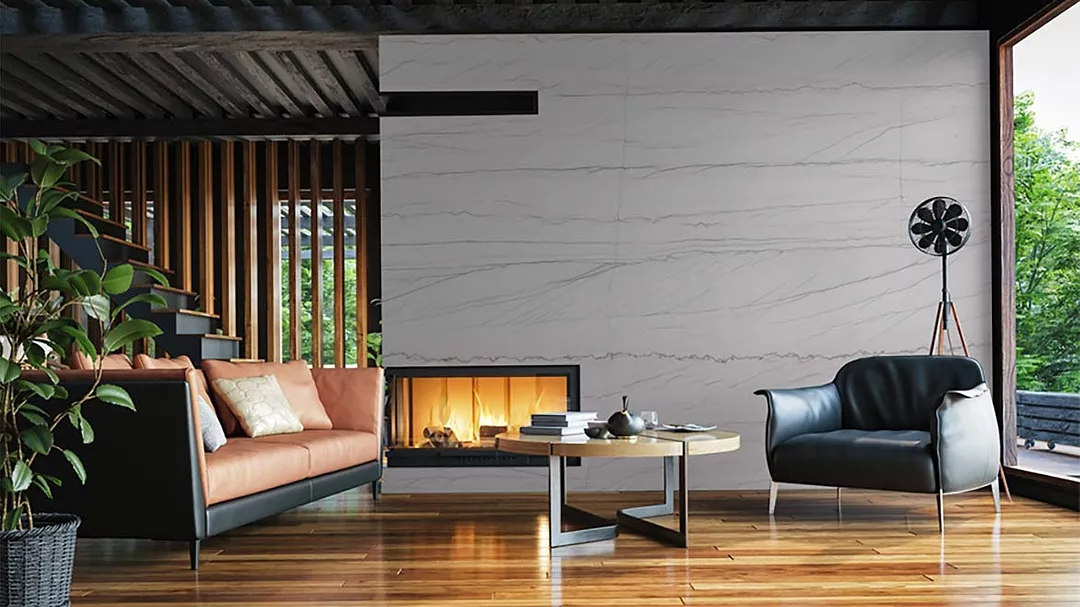
Quartzite delivers a luxurious aesthetic and it stands up to real-world use by resisting stains, scratches and chipping. (Shown: Yosemite Falls quartzite)
Photo courtesy of UMI Stone
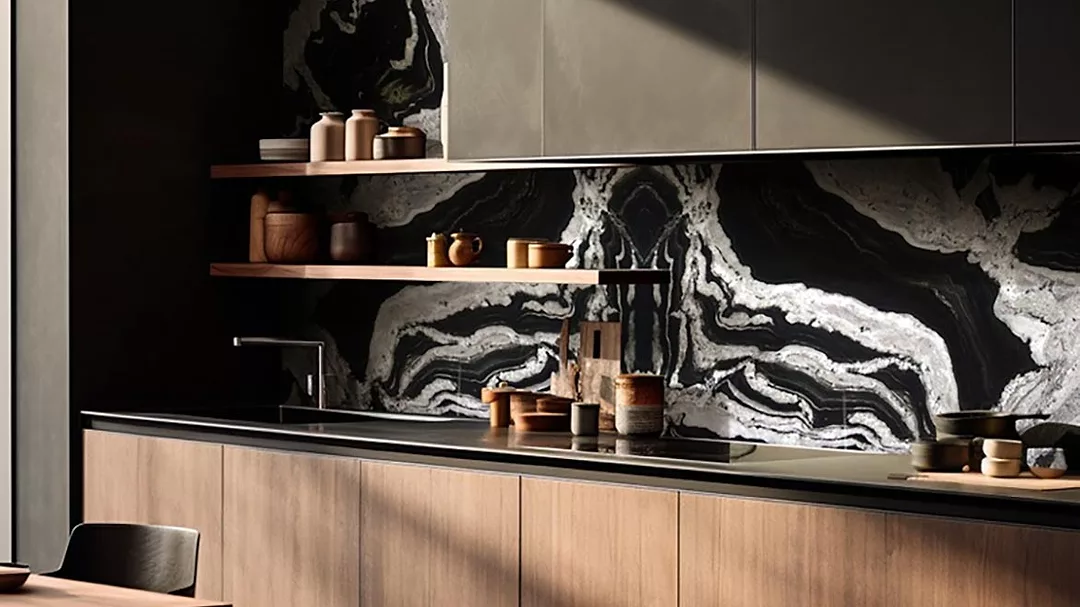
Granite offers rich colors and dynamic patterning, with mineral flecks and swirling veins that add depth and texture.
(Shown: Eclipse White granite)
Photo courtesy of UMI Stone
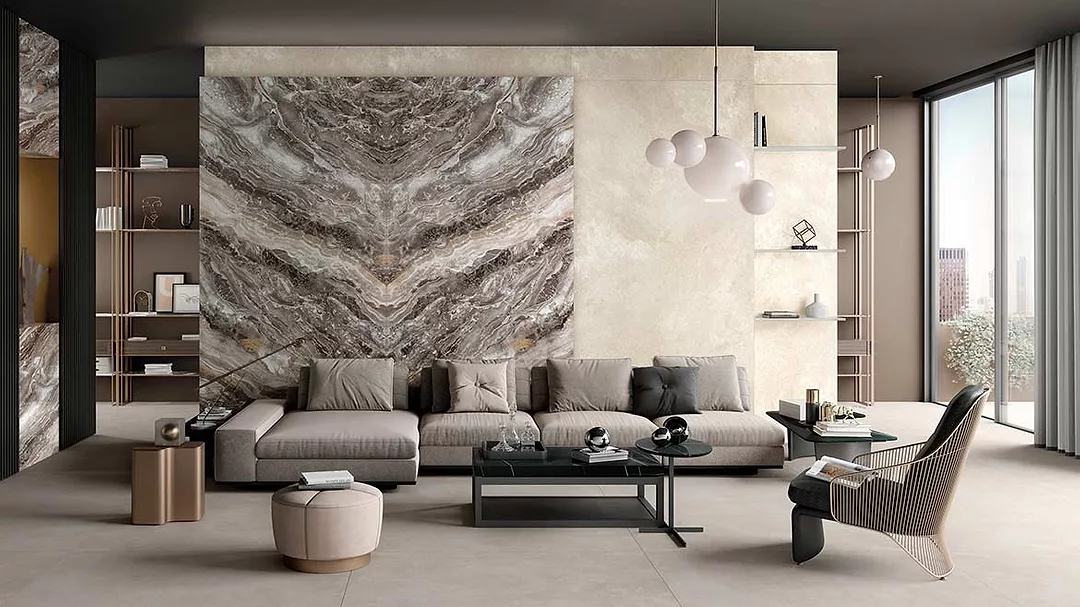
Porcelain takes surface aesthetics to a different level with digital printing and glazing techniques. (Shown: Infinity porcelain - Orobico Luxe)
Photo courtesy of UMI Stone
For decades, surface materials like laminate, marble and ceramic tile were go-to choices in residential and commercial design. While these materials were popular for applications like kitchen countertops, bathroom vanities and flooring, their tendency to scratch, stain and crack meant frequent repairs and often shortened the time between replacements. Now, thanks to the latest innovations in engineered stone and other natural surface materials, architects and designers have more durable longer-lasting options accompanied by broad design palettes -- a big step forward in the march toward smarter more sustainable building materials.
The Science Beneath the Surface
Surface materials have come a long way from the days of laminates that struggled to survive past the 10-year mark. Engineering innovations in quartz and porcelain have produced surfaces that can last 20 to 30 years, and advances in sealants for natural stone like granite and quartzite can extend their lifespan up to 50 years with proper care. From the lab to the quarry, each material owes its long-term performance to its composition and formation and understanding how each is created helps explain why it outlasts, and outperforms, some traditional options in real-world conditions.
Engineered quartz is a textbook example of material science meeting design and performance demands. It is made by combining 90 to 95% crushed natural quartz with 5 to 10% resins, polymers and pigments. The mixture is poured into molds, compacted under vacuum and cured to form dense uniform slabs. The result is a non-porous surface that is heat tolerant to around 150°F and highly resistant to staining, cracking and scratching. From a design perspective, quartz slabs offer the advantage of consistent coloring and patterning that eliminate the complicated matching that comes with large-scale projects using natural materials. And unlike natural stone, quartz never needs to be sealed -- making it ideal for applications where low-maintenance is required.
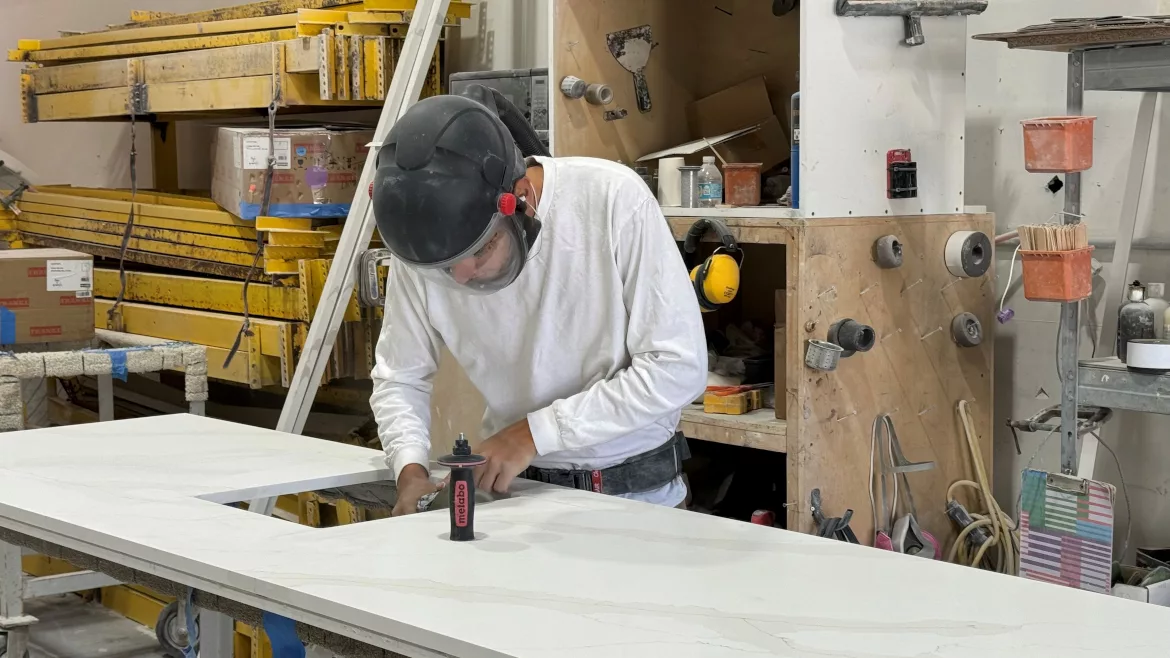
Porcelain surfaces are manufactured through a process known as sintering. Natural clay and minerals are pressed into large slabs and fired at extremely high temperatures exceeding 2000°F. This extreme heat fuses the particles at a molecular level, creating an ultra-dense non-porous material. The process makes porcelain highly durable and virtually impenetrable to surface stains, even from notorious substances like red wine and coffee. Porcelain does not require sealing and is exceptionally heat resistant, making it ideal for heat-intense applications like fireplace surrounds and countertops. It is also UV resistant, so it remains color stable in outdoor settings, and it is lightweight, so it can be easily installed over existing surfaces like walls and floors without adding significant structural load.
While engineered quartz and porcelain gain durability from the manufacturing process, granite and quartzite get their durability naturally. Formed over millions of years under intense heat and pressure within the Earth’s crust, their strength is geologically inherited. Granite is an igneous rock composed mainly of quartz, feldspar and mica, and it is known for its grainy speckled appearance that showcases these elements. Quartzite starts as sandstone and transforms under extreme pressure and heat into a dense metamorphic rock. It is harder than granite and mimics the aesthetic of marble with dramatic veining and coloration.
With proper sealing, granite and quartzite can last for decades, and recent advances in sealing technologies have simplified their maintenance. These improvements include sealers that penetrate deeper into the stone to enhance protection against stains, moisture and bacterial growth and all-in-one products that clean, polish and seal. Collectively, these innovations have made granite and quartzite more resilient and easier to maintain, removing a potential barrier for designers and end users who prefer the durability and aesthetic variation each provides.
How durable surface materials are shaping design durability matters, but in architecture and design, aesthetics is non-negotiable. Whether mimicking more expensive natural stone or delivering bold finishes, materials like quartz, porcelain, granite and quartzite give designers the freedom to create spaces that are both visually striking and functionally resilient. Some manufacturers of engineered stone have also introduced extra-large slab sizes, inviting designers to explore new ways to make grand statements in a variety of spaces. A look into the creative spirit of these versatile surface materials highlights each material’s aesthetic and design palette, ideas for where it can be applied and why it works in these spaces.
Engineered Quartz
Engineered quartz offers a sleek consistent appearance that features subtle to bold veining in a wide range of colors and designs. Some colors and speckling can also be made to resemble concrete or imitate the qualities of natural stone. One of the biggest design advantages of engineered quartz is its consistency, as its manufacturing process allows for precise control over its appearance from one slab to the next. Designers can choose from many hundreds of colors and patterns that vary from solid whites and deep charcoals to patterns that resemble marble, quartzite, concrete and wood. For bolder designers, some manufacturers offer dramatic reds with sparkles and vibrant blue terrazzo designs with reflective elements that create a shimmer.
Where engineered quartz is used: Kitchen and bathroom countertops, waterfall islands, backsplashes and wall cladding -- anywhere a clean controlled aesthetic is desired.
Why engineered quartz works: Quartz’s visual predictability simplifies fabricating and installation techniques like bookmatching. It is ideal for commercial spaces like offices and multi-unit properties that require a cohesive look. Its durability and double-decade lifespan make it a practical and sustainable choice with extra-long periods between replacements.
Porcelain
Porcelain takes surface aesthetics to a different level with digital printing and glazing techniques. High-definition printing allows manufacturers to replicate the look of natural materials right down to their veining, texture and reflective qualities. Aesthetic effects include marble-look porcelain, weathered concrete and wood grains, as well as a full spectrum of colors from blacks, browns and grays to multicolor, purples and reds.
Where porcelain is used: Large-format flooring, shower walls, fireplace surrounds, exterior facades and anywhere a seamless high-end finish is needed.
Why porcelain works: Porcelain’s ability to mimic the delicate elegant appearance of other natural stones with greater durability and none of the maintenance makes it a designer favorite. Its light weight makes it a quick easy fix for covering existing surfaces, and its UV resistance means it can be used inside or outside without fear of fading or yellowing.
Granite
Granite’s visual appeal lies in its natural complexity, and no two slabs are alike. It offers rich colors and dynamic patterning, with mineral flecks and swirling veins that add depth and texture. Popular themes include naturally occurring speckled black and gray slabs for contemporary looks, warm golden tones for classic or rustic spaces and bold blues, greens and reds for grabbing attention.
Where granite is used: Kitchen countertops, outdoor kitchens, fireplace surrounds, bar tops, flooring and entryways.
Why granite works: Granite adds natural visual movement and interest to spaces with a weight and structure that have a presence all their own. In traditional, transitional or earthy design schemes, granite grounds the space with authentic texture and tonal variation that makes a grand statement.
Quarzite
Quartzite offers the high-end look of marble but with dramatically better durability. Its long flowing veins and soft tonal variations make it a favorite for upscale spaces. Visual highlights include soft gray and white slabs with dramatic marble-like veining, creamy beige backgrounds with subtle gold veining and cooler tones with dynamic blues and pearls.
Where quartzite is used: Statement kitchen islands, hotel lobbies, bathroom walls and commercial bar tops.
Why quartzite works: Designers love quartzite for projects where a classic marble look is desired, but actual marble would be too risky or costly. Quartzite delivers a luxurious aesthetic and it stands up to real-world use by resisting stains, scratches and chipping.
When designing with stone, these surface materials provide the ideal combination of durability and aesthetic range. They also give designers a set of flexible tools that can help them manage other project needs such as material costs, interior versus exterior performance demands and installation requirements.
Designing with the Future in Mind
The shift toward more durable low-maintenance surface materials is bigger than manufacturing and product innovations. It is part of a broader industry-level response to the growing demand for smarter more sustainable spaces. By choosing materials that last longer, require less time and effort to maintain, and support greater creative freedom, architects and designers can create new features that look good and perform well day to day, and make sense for tomorrow.
Looking for a reprint of this article?
From high-res PDFs to custom plaques, order your copy today!