Redefining What a Stone Fabrication Business Should Be
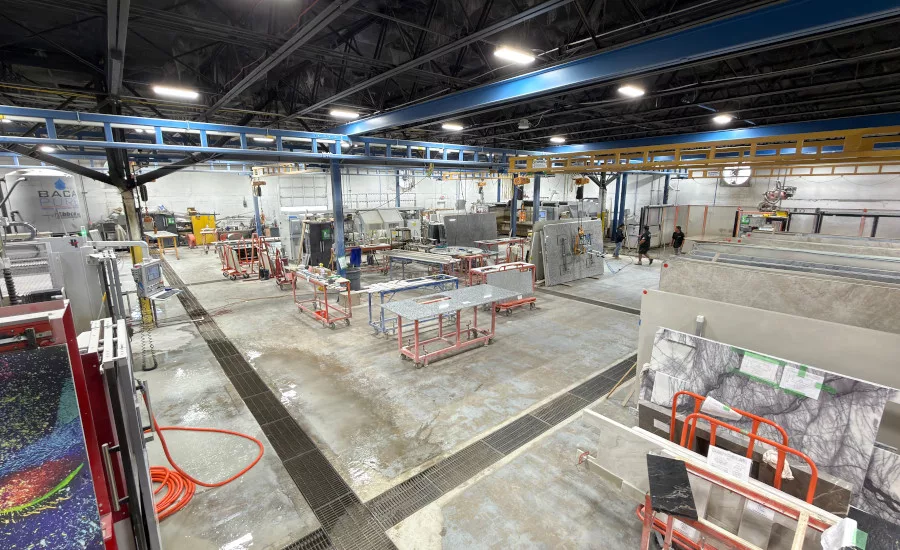
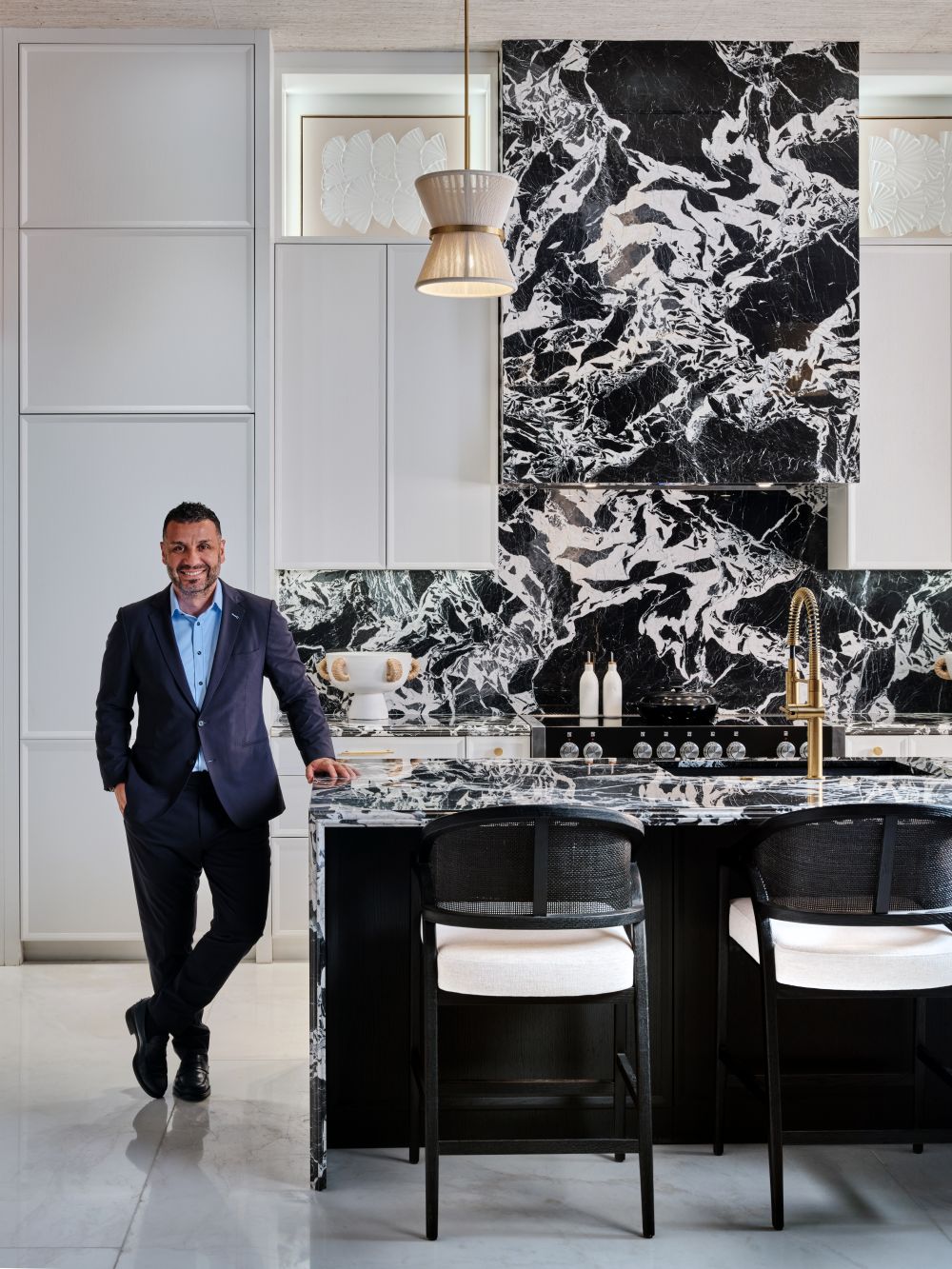 Image Credit: Cutrona
 Emre Basman founded Armina Stone in Pittsburgh, PA, a decade ago. Since that time, the fabrication company has expanded significantly to include several locations, including a new high-end showroom, Armina Luxe, in Miami, FL. The company prides itself on its craftsmanship – producing top-quality stone and quartz products for both residential and commercial designs. Armina Stone’s locations include:
- Miami (Hialeah) – Stone gallery and fabrication facility: 35,000 square feet
- Armina Luxe (Miami Design District - 1800 W. 4th Ave.) -- Bespoke showroom: 3,250 square feet
- 115 NE 36th St.-- Focused on Italian-crafted cabinetry and curated stone
Pittsburgh region (showrooms):
- Cheswick – Original flagship with a 100,000-square-foot expansion and outdoor remnant pavilion.
- Robinson – 10,000-square-foot slab showroom at The Plaza at the Pointe
- Cranberry Twp. – 25,000+ square-foot showroom
- Pittsburgh Fabrication Hub – Warehouse/fabrication shop expanded to 60,000 square feet during the company’s early scale-up.
Basman took the time to talk with Stone World about his experience in the stone industry and the evolution of Armina Stone. Read the interview below:
SW: I understand Armina was founded in 2015. Please provide a little bit about your background and why you decided to start the fabrication business.
EB: My background has always been rooted in design and craftsmanship. Before founding Armina in 2015, I worked closely with quarries and suppliers overseas and saw firsthand what separated good fabrication from great fabrication, attention to detail, precision and pride in the work. When I came to Pittsburgh, I saw an opportunity to bring a higher level of quality and professionalism to the stone industry to create a company that could handle everything in-house -- from sourcing to fabrication to installation. I wanted clients to have a seamless experience and to know that every surface we touch reflects the same level of care and craftsmanship. That is what led to Armina Stone.
SW: The company has expanded dramatically during the past decade. Was this your plan from the start?
EB: From the very beginning, the vision was bigger than stone. We wanted to redefine what a stone company could be, to blend craftsmanship, technology and design into a seamless experience for our clients. Growth was always part of that vision, but it had to happen with purpose. Each new location was not just about geography; it was about opportunity. Could we elevate the customer experience? Could we build a team that shared our values? Could we bring something new to that market? Those were always the guiding questions. Our expansion has never been about chasing numbers; it has been about creating something lasting, a brand known for integrity, innovation and excellence in every detail.
SW: What machinery do you have and what were some factors you thought about before making the investment?
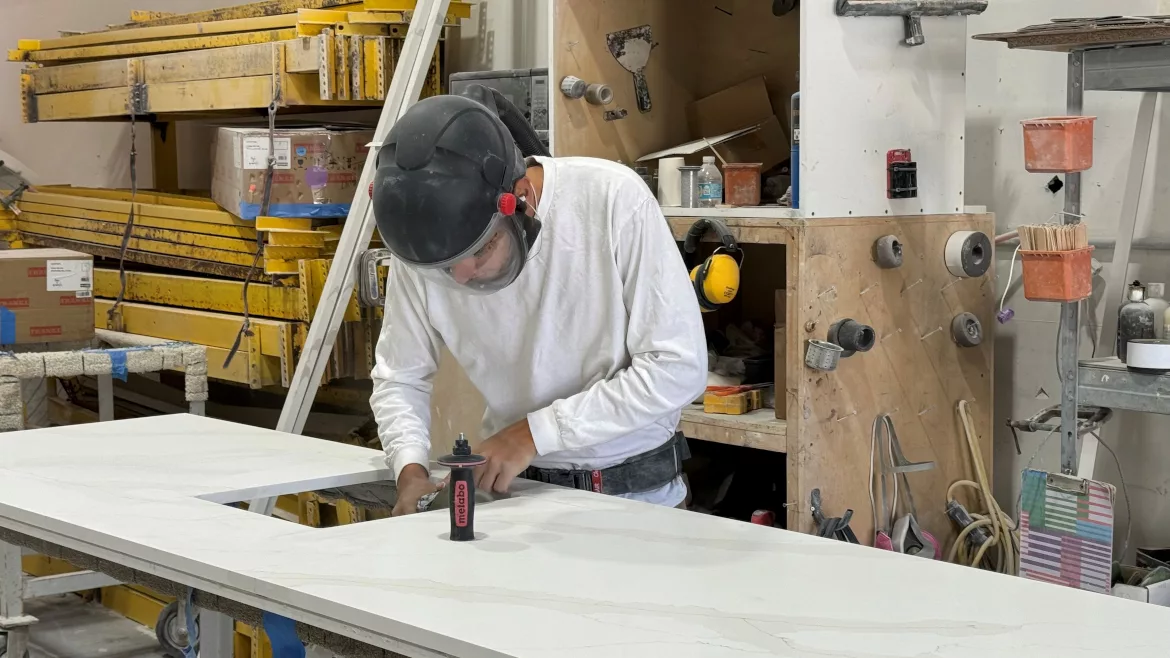
EB: Technology has always been a major part of our success. From the start, we knew that if we wanted to achieve the precision and consistency we envisioned, we had to invest in the best equipment available. Our shops employ laser templating, scanners, CNCs, waterjets, robotics, surface polishers and water recycling systems. We invested for repeatable precision, safer dust control and throughput -- letting complex curves, miters and large-format porcelain be routine work, not one-offs. Every investment was made with the intention to improve efficiency, enhance safety, reduce waste, and ultimately, give our clients a better product and faster turnaround.
SW: What do you like most about the capabilities of the machinery you have?
EB: What I love most is how technology allows us to push the boundaries of what is possible in stone. With our machinery, we can achieve precision cuts, intricate details and complex edge profiles that simply were not possible by hand. It gives us the freedom to explore creativity without compromising quality. It really comes down to consistency and transparency. Our laser templating gives us CAD-level precision, and clients get to sign off on every 2D/3D layout before we make a single cut. From there, barcode tracking connects every slab and production step and our robotic systems ensure the same accuracy job after job. We like to say, “We cut what we drew,” and the technology makes that promise possible.
SW: What shop/management software and digital templating equipment do you use? What are some benefits of each?
EB: We use laser templating and 12K HD Slab Scanner that ties directly into our CAD system, so clients can actually see their project in 2D or 3D before we ever start fabrication. From there, every slab and every job is barcode-tracked through production, which keeps our team connected from sales to installation. It really streamlines everything: approvals are faster, the vein and book-matching are exact, and there is complete transparency at every step of the process.
SW: What is your production rate per week/month?
EB: We do not typically publish production numbers, but I can tell you that both our Miami facility, a 35,000-square-foot operation, and our Pittsburgh hub are built for high volume. Our workflow -- from laser templating to digital rendering to robotic fabrication -- allows us to manage large-scale commercial and multi-unit projects while still delivering the same level of craftsmanship for custom residential work.
SW: What percentage of stone, quartz, sintered stone and/or porcelain are you cutting?
EB: The material mix really depends on the market and project type. In South Florida, luxury projects lean heavily toward Italian marble and large-format porcelain. We also work extensively with Laminam surfaces. In Pittsburgh and across the Mid-Atlantic, natural stone and quartz continue to be strong performers. Overall, we import marble, granite, quartzite, porcelain and quartz from around the world, curating materials by project rather than by quota. Every selection is driven by design intent, not percentage.
SW: As a large importer of natural stone, how have the tariffs affected your business?
EB: Tariffs have definitely been a factor from the anti-dumping and countervailing duties on Chinese quartz surfaces back in 2018–2019 to the more recent actions in 2025 that impacted Brazilian stone before quartzite was later exempted. We have managed to stay ahead by diversifying where we source from -- Italy, Brazil, India, Turkey and other regions -- and by expanding our inventory to cushion against sudden policy shifts. It is all about adaptability and keeping supply chains flexible so our clients are not affected by geopolitical changes.
SW: What would you say are several top challenges you face as a fabricator today? What are some ways you are combatting them?
- Labor & Training: Skilled craftsmanship is everything in this business. To keep quality high, we created the Armina Academy, an in-house onboarding and training program that develops new talent and supports long-term growth.
- Quality & Safety: We go beyond OSHA standards, maintaining strict dust control and digital workflows that reduce rework and protect our team.
- Market Volatility: Tariffs, freight and logistics can shift overnight. We mitigate that risk with diversified sourcing and strong local inventory.
- Complex Projects: Luxury condos and hospitality spaces demand absolute precision. Our templating-to-approval-to-robotics pipeline is designed specifically for that level of complexity.
SW: What are some best practices you adhere to that help your company’s production, efficiency and profitability?
EB: Our philosophy is simple: digitize first, cut second. Every project starts with laser templating and detailed 2D/3D renderings that clients sign off on before fabrication begins. From there, robotic and CNC systems take over.
SW: What markets do you cover and what type of work do you primarily do?
EB: Our core market is the Pittsburgh and Mid-Atlantic region, where we operate three showrooms. In South Florida, we serve Miami-Dade, Broward and beyond through our Hialeah fabrication facility and Armina Luxe showroom in the Design District. We work across retail, homebuilding, multifamily and commercial sectors -- from airports, stadiums and hotels to national retail programs. That diversity keeps our business balanced and resilient.
SW: How has your staff grown since the start of Armina? What do you consider to be important ways to maintain a healthy company culture?
EB: We started in 2015 as a small team, today, we have nearly 200 employees in the Pittsburgh region alone. Growth brings challenges, but culture scales when you invest in your people. For us, that means formal training through Armina Academy, transparent systems that empower teams and a workplace that celebrates craftsmanship and pride in every project.
SW: What do you like most about the capabilities of Armina Luxe — and how does it relate to Armina Stone?
EB: Armina Luxe is our bespoke Italian cabinetry + design house in the Miami Design District, where clients get photorealistic renderings and curated materials -- then we chauffeur them to Armina Stone Miami to choose slabs from our in-stock inventory. It is a single brand experience from concept to installation.
SW: Is there anything else you would like to share about Armina or being a fabricator?
EB: Great fabrication is invisible. The client just feels that every line, vein and joint is where it belongs. Whether it is a luxury residence, a multifamily rollout or a hospitality space, our aim is the same: source beautifully, template precisely, fabricate flawlessly, and install safely. We are honored to bring that standard to Pittsburgh and South Florida, and to deepen our community ties including our Miami HEAT and Pittsburgh Penguin partnerships as we grow.
Looking for a reprint of this article?
From high-res PDFs to custom plaques, order your copy today!