Defining Critical Tile Terms: Is It Mortar Coverage, Contact, or Transfer?

The tile industry has a number of words or terms that are used daily but have never been officially defined. This is the case with coverage, contact, and transfer. Sometimes they are used interchangeably, but one word may not adequately or accurately describe the function of the other words.
The Cambridge Dictionary definitions are as follows:
- Coverage: the ability to cover a surface well, or the amount of a surface that something can cover.
- Contact: the touching of two objects or surfaces.
- Transfer: to move from one place to another.
When speaking about dry-set (thin-set) mortars, the word coverage has been an all-encompassing term. Mortar manufacturers will list the approximate area that the dry-set mortar will cover. Coverage can also speak to the amount of mortar on the substrate after collapsing the trowel ridges, or it can speak to the amount of mortar bonded to the back of the tile. But coverage is different from contact and transfer.
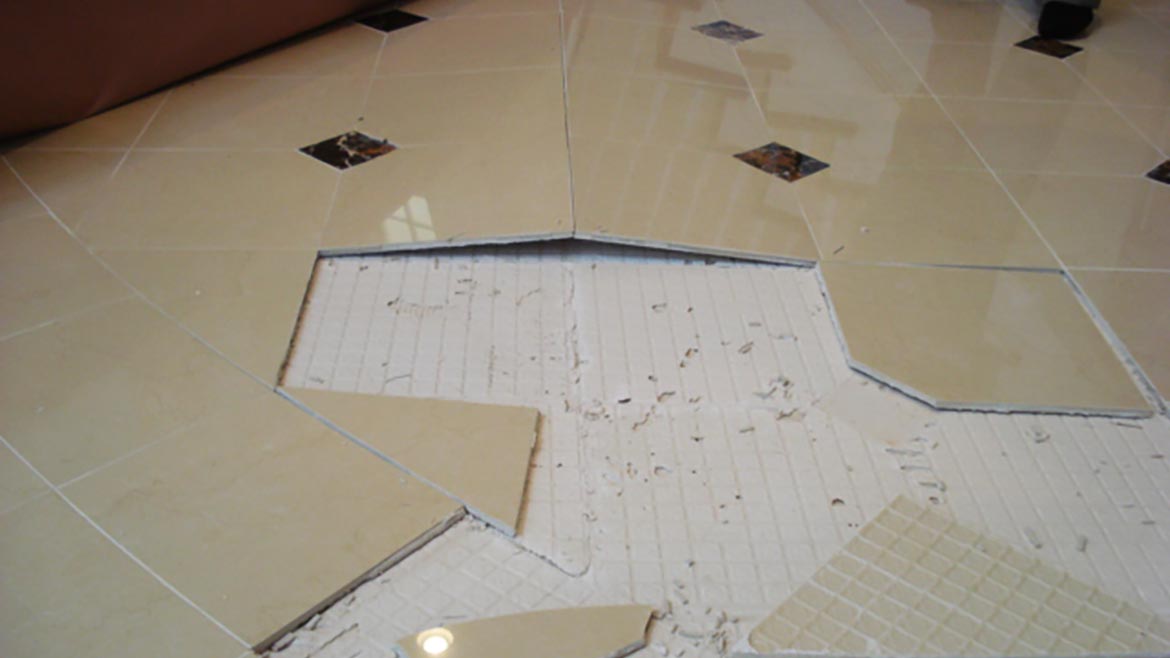
Here is an example of excellent mortar coverage exceeding the required 80% in a dry area, but unfortunately the mortar did not contact or transfer to the back of the tile which will fail. Photo: Scott Carothers.
The American National Standard Institute (ANSI) A108.5 (Setting of ceramic tile with dry-set mortars) may help us understand the difference. Section 2.2.3, in part, states, “Thoroughly embed all tile or tile assemblies into place to obtain maximum contact of mortar on the back of each tile, or back of each tile and back mounting material. Contact area shall not be less than 80%, or as specified in the contract documents, whichever is greater. Contact area on all exterior installations or interior wet installations shall not be less than 95%. The 80% or 95% coverage shall be sufficiently distributed to give full support of the tile with particular attention to all corners and edges of the tile.”
Notice that this installation standard uses the word “contact” to describe the function of the mortar touching two surfaces, being the substrate and the back of the tile. However, the last sentence using the all-encompassing word coverage is inferring mortar coverage and contact.
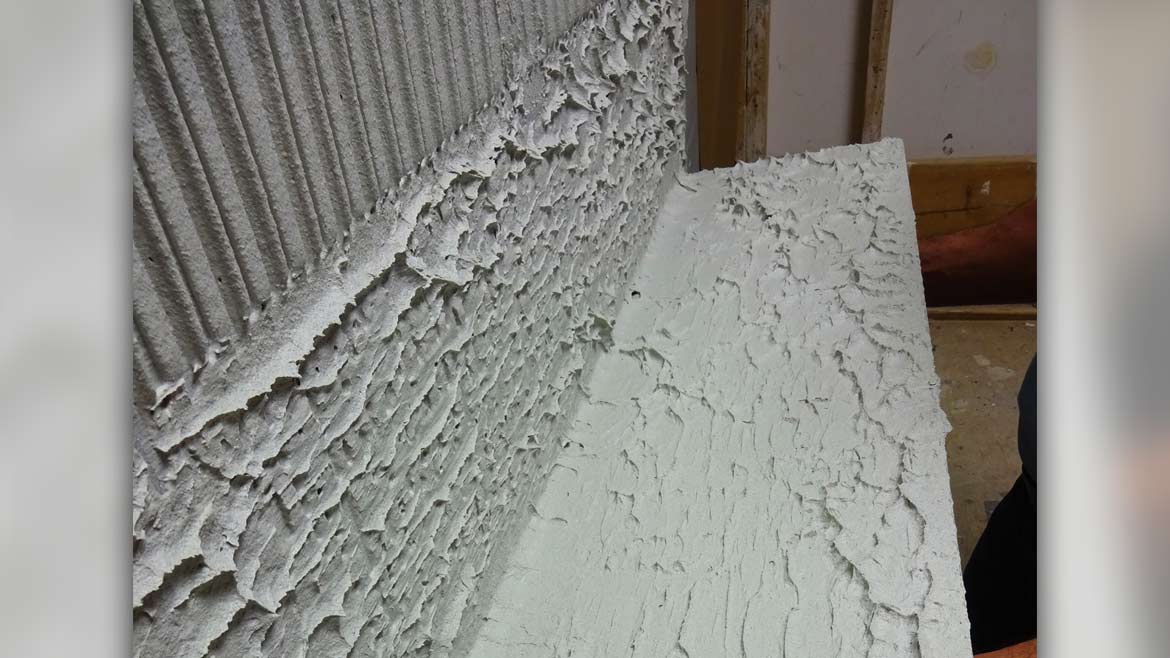
This large format tile installed with properly troweled mortar, yields excellent coverage while also providing exceptional mortar contact and transfer to the back of the tile. Photo: Scott Carothers.
This conversation may sound complicated but not really. The tile industry needs to define these terms to eliminate confusion while the tile installers need to get the required amount of dry-set mortar troweled onto the substrate per the above standard. The National Tile Contractors Association (NTCA) Trowel and Error video is helpful in demonstrating how contact and transfer to the back of the tile is achieved.
Having collapsed mortar ridges is critical to success, but if the mortar does not contact or transfer to the back of the tile, it is not bonded to the substrate and the installation will fail. This lack of bond, which is correctable, can be attributed to spreading the mortar too far in advance, air movement across the troweled mortar, or a substrate that was not properly dampened before the mortar application. When properly troweled mortar is fresh, contact and transfer will occur yielding another high-quality job.
This article was originally posted on www.floortrendsmag.com.
Looking for a reprint of this article?
From high-res PDFs to custom plaques, order your copy today!