Stone World logo
search
cart
facebook twitter linkedin youtube
  • Sign In
  • Create Account
  • Sign Out
  • My Account
Stone World logo
  • NEWS
  • PRODUCTS
    • Machinery
    • Digital Technology
    • Tooling & Accessories
  • MATERIALS
    • Alternative Surfaces
    • Stone
    • Tile
    • Imports & Exports Data
  • FABRICATORS
    • Fabricator How-to
    • Fabricator Case Studies
    • Fabricator of the Year
  • A&D
    • Installation & Technical Tips
    • Outdoor Design
    • Interior Design
    • Hospitality | Commercial Design
    • Mosaics & Decorative Tile
    • Kitchen & Bath
    • Residential
    • Renovation | Restoration
  • MEDIA
    • Videos
    • Podcasts
    • EBOOK
  • EVENTS
    • STONE INDUSTRY EDUCATION
    • Industry Calendar
  • MORE
    • NEWSLETTERS
    • WOMEN SPOTLIGHT
    • MARKET RESEARCH
    • STONE WORLD STORE
  • DIRECTORY
    • TRADE ASSOCIATIONS
    • Stone Suppliers
    • GET LISTED
  • EMAG
    • eMagazines
    • Archives
    • Contact
    • Advertise
  • SIGN UP!
Installation & Technical TipsTile

The Hidden Challenges of Ceramic Tile Patterns
By Scott Carothers
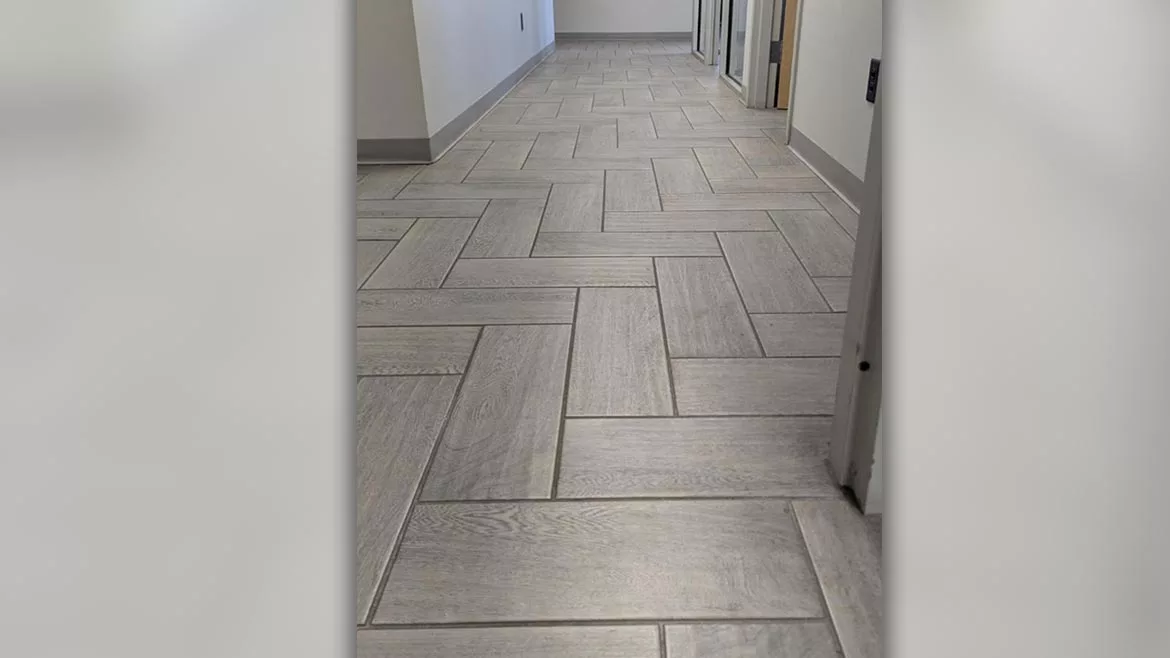
ceramic tile installed in a herringbone pattern

At first glance, this herringbone pattern seems acceptable. However, closer inspection reveals misaligned long-side grout joints that drift rightward, compromising both the pattern's visual integrity and proper installation standards.

Photo: Scott Carothers. 

May 30, 2025

Many installers have found themselves in this situation. The consumer and/or designer have selected a tile for their project based solely on color and design. All is well until the pattern is selected, which in this case is a standard (straight) herringbone. This is where the selection and design issues begin, as we shall see.

ANSI A108T, Standard Terminology of Tile Assemblies, System Modularity states: Tiles of various nominal dimensions are sized so that they may be installed together in patterns with a common specified joint width.

According to ANSI A108.02-4.5.3.1, if the design professional specified a modular pattern utilizing tiles that are not manufactured to be installed in a modular pattern, it is the responsibility of the design professional to verify system modularity and specify the grout joint size for the pattern based on the actual tile size. If the specified grout joint width is not possible due to size variations in the actual tile supplied for installation or because of the site conditions, the tile contractor shall be permitted to reasonably adjust the pattern. Tile shall not be field cut to size to accomplish modular patterns in any circumstance.

For a tile to be installed in a pattern, such as a standard herringbone, the first item to be verified is the size of the narrow end of a rectangular tile in relation to the long side. Place several narrow end tiles perpendicular to the long side until reaching the end of the long-side tile. If the first and last tiles are flush with each end and the tiles in between are tightly stacked, the tile is not modular and should not be considered. If the tiles are placed in a similar fashion to the above and there are equal spaces for grout joint, this tile is modular and can be installed with slight joint width adjustments to accommodate the naturally occurring differences in a calibrated tile. Additionally, the space in between the perpendicular tiles will also be the grout joint size for the project.  

As seen in the attached image and, it appears to be okay, but a closer look demonstrates the problem. The long side grout joints do not align. Since the tile installed here is not modular with the narrow ends being too wide, the grout joints are pushed to the right. In this case, the tile is running or creeping to the right and even the best efforts to bring it back to the layout line are futile. The only adjustment that can be tried is to make the grout joint size on the long side narrower. This may help the long side joint alignment, but the irregular joint sizes will be very evident to the end user and the installation will most likely be considered a failure.

To alleviate this situation, the installer needs to take the lead in this process. When the tile is selected, the installer should “dry lay” the actual tile to be installed on a flat surface, as directed above, for the consumer and/or designer to view. If equal-sized grout joints are seen, the job is good to go only after getting written approval from all involved parties. If not, a different tile needs to be selected. At this point, the installer should not submit to the pressure of those involved saying, “You are the tile professional; you should be able to make this work. Right?” The preliminary legwork may seem beyond the duties of the installer, however, if the installer installs the non-modular tile, he or she will most likely bear the cost of the replacement. Think about it before saying, “Okay, I will give it a shot.”


This article was originally posted on www.floortrendsmag.com.

KEYWORDS: ctef education and training layout

Share This Story

Looking for a reprint of this article?
From high-res PDFs to custom plaques, order your copy today!


Scott carothers 2025

Scott Carothers is the Academic Director of the Ceramic Tile Education Foundation (CTEF) headquartered in Mt. Juliet, Tennessee (Nashville area). In 2007, he was hired and tasked with creating the Certified Tile Installer (CTI) program, and in 2012, he was part of the team that created the Advanced Certifications for Tile Installers (ACT) program.

For eighteen years, he has been providing training and education to others in the tile industry. Carothers has been involved in the ceramic tile industry for over 44 years and was the owner of a successful retail store and installation firm prior to coming to CTEF.

Carothers served as President and Chairman of the Board of the National Tile Contractors Association (NTCA), Chairman of the NTCA Technical Committee, named the NTCA Tile Person of the Year in 2005, and received the NTCA Ring of Honor in 2013. He is a voting member of the American National Standards Institute (ANSI), the Tile Council of North America (TCNA) Handbook, and NTCA Technical Committees.

Scott has authored over 185 articles in tile industry print magazines including Floor Covering Installer, Tile, TileLetter, and eMagazine/Newsletter publications such as Floor Trends & Installation and TIleLetter along with covering numerous topics on the CTEF Blog, thereby sharing his knowledge and installation experience with his readers. Additionally, he recently retired from being a presenter and trainer for the NTCA Workshop and Regional Training programs and the NTCA Technical Hotline.

He may be contacted at scott@tilecareer.com or 864-222-2131.

Recommended Content

JOIN TODAY
to unlock your recommendations.

Already have an account? Sign In

  • customer doing research online

    3 Reasons Why Quick Response Time Results in a Successful Fabrication Shop

    Your fabrication shop can have the best website. The best...
    Fabricator How-to
    By: Anthony Milia
  • Silica

    Renewed National Attention Ignites Over Silicosis Epidemic

    A major investigative report published on March 12, 2026...
    Industry Insights
    By: Jason Kamery
  • shipping containers

    U.S. Countertop Material Imports: February 2026

    U.S. countertop material imports collapsed in February...
    Stone
    By: Jason Kamery
Manage My Account
  • eMagazine
  • Newsletters
  • Online Registration
  • Manage My Preferences
  • Subscription Customer Service

More Videos

Popular Stories

cal osha

Cal/OSHA Standards Board to Vote May 21 on Engineered Stone Ban Petition

shipping containers

U.S. Countertop Materials Imports: March 2026

American Floor Coverings Facility

SFA Connecticut Workshop to Showcase Innovation in Fabrication

Fabricator Focus

From profiles to roundtable discussions, Q&As to best business practices, we're turning a focus on topics and challenges impacting fabricators.

AI Talk Is Everywhere -- Where Does a Countertop Fabricator Begin?

Fabricators Discuss Pros and Cons of Chip Repair

How to Grow a Countertop Fabrication Shop

Events

June 25, 2026

North Carolina Stone Summit

You’ve probably heard a lot lately about how to calculate the profit for each job you produce. You likely have production benchmarks based on square footage since it’s the most common production metric in the industry. Come learn how focusing on these metrics can hurt your profitability and what to do about it.

July 16, 2026

Washington Stone Summit

Join us for "Taking Your Organization to the Next Level," a session dedicated to transforming your business practices. Discover strategies for setting clear agendas, encouraging participation, and driving actionable outcomes. Learn how to foster collaboration and communication, ensuring that every meeting enhances productivity and contributes to your business goals.

View All Submit An Event

Poll

Tariffs and Quartz Imports

If high tariffs are placed on U.S. quartz imports, how will this affect your business?
View Results Poll Archive

Products

Restoration & Maintenance Technical Module

Restoration & Maintenance Technical Module

See More Products
	
3 Reasons Why Quick Response Time Results in a Successful Fabrication Shop

Related Articles

  • marble shower with iron oxide discoloration

    Marble Tile in Showers: A Cautionary Tale

    See More
  • label

    Are Your Boxes of Ceramic Tile Compatible? What to Look for on the Label

    See More
  • educational courses

    The University of Ceramic Tile and Stone’s (UofCTS) Online Sales and Installation Training

    See More

Related Products

See More Products
  • thetilebook

    The Tile Book: HISTORY, PATTERN, DESIGN

  • image10.jpg

    Viewing Stones of North America A Contemporary Perspective

  • Premium Quarry Posters (set of 6)

See More Products

Related Directories

  • Conestoga Ceramic Tile Distributors Inc.

    Trade NamesAPE CeramicsARC Shower PansAscotBarwalt ToolsBati OrientCasa Dolce CasaCasa Vita BellaCotto D'EsteDewaltEbbe DrainsEdilgresEmilEproEuropean Tile MastersFiandreFinPanFlorida TileGazziniHirsch GlassIQ ToolsIdeal Marmi SillsImagery MosaicsImolaItalgranitiJeffrey CourtLaticreteLea...
  • Tile Wholesalers of Rochester Inc.

    Since 1972, Tile Wholesalers has been providing quality products, superior customer service and unmatched expertise to contractors, designers, architects and homeowners throughout greater Rochester. Tile Wholesalers carries the most extensive selection of ceramic, porcelain, natural stone, glass and metal tile in the area. Tile Wholesalers has partnered with over 30 of the most well-respected tile manufactures from around the world, all of whom combine design, quality, availability and value. Stop by their spacious and relaxing showroom for a complete selection, and to meet with one of their knowledgeable design consultants.
  • Metropolitan Ceramics

    Metropolitan Ceramics offers high quality kiln-fired, unglazed ceramic quarry tile and thin brick products for commercial kitchens and other demanding applications. Our durable, low absorption products are offered in a variety of earth tone colors and feature a slip-resisting surface that is ideal for indoor and outdoor use.
×

Our Newsletters are a rock solid source of industry insights!

Stay in the know on the international stone and tile industry trends.

JOIN TODAY!
  • RESOURCES
    • Advertise
    • Contact Us
    • Directories
    • Store
    • Want More
  • SIGN UP TODAY
    • Create Account
    • eMagazine
    • Newsletter
    • Customer Service
    • Manage Preferences
  • SERVICES
    • Marketing Services
    • Reprints
    • Market Research
    • List Rental
    • Survey/Respondent Access
  • STAY CONNECTED
    • LinkedIn
    • Facebook
    • YouTube
    • X (Twitter)
  • PRIVACY
    • PRIVACY POLICY
    • TERMS & CONDITIONS
    • DO NOT SELL MY PERSONAL INFORMATION
    • PRIVACY REQUEST
    • ACCESSIBILITY

Copyright ©2026. All Rights Reserved BNP Media, Inc. and BNP Media II, LLC.

Design, CMS, Hosting & Web Development :: ePublishing