Stone World logo
search
cart
facebook twitter linkedin youtube
  • Sign In
  • Create Account
  • Sign Out
  • My Account
Stone World logo
  • NEWS
  • PRODUCTS
    • Machinery
    • Digital Technology
    • Tooling & Accessories
  • MATERIALS
    • Alternative Surfaces
    • Stone
    • Tile
    • Imports & Exports Data
  • FABRICATORS
    • Fabricator How-to
    • Fabricator Case Studies
    • Fabricator of the Year
  • A&D
    • Installation & Technical Tips
    • Outdoor Design
    • Interior Design
    • Hospitality | Commercial Design
    • Mosaics & Decorative Tile
    • Kitchen & Bath
    • Residential
    • Renovation | Restoration
  • MEDIA
    • Videos
    • Podcasts
    • EBOOK
  • EVENTS
    • STONE INDUSTRY EDUCATION
    • Industry Calendar
  • MORE
    • NEWSLETTERS
    • WOMEN SPOTLIGHT
    • MARKET RESEARCH
    • STONE WORLD STORE
  • DIRECTORY
    • TRADE ASSOCIATIONS
    • Stone Suppliers
    • GET LISTED
  • EMAG
    • eMagazines
    • Archives
    • Contact
    • Advertise
  • SIGN UP!
Installation & Technical TipsTile

Don’t Skip These Steps: How to Successfully Install Cementitious Backer Units Under Tile

By Scott Carothers
commercial tile installation

Photo: peshkov/iStock/Getty Images Plus via Getty Images.

September 13, 2024

The American National Standards Institute (ANSI) specifications are the basis for both the materials used on a project, as seen in ANSI A118, and the installation methods used, as seen in ANSI A108. The manufacturers produce products for the tile industry that either meet or exceed these standards along with installation recommendations.

The rule of three, in this case, applies to the installation of cementitious backer units (CBU), commonly known as cement backer board. There are several installation procedures required for a successful cement backer board floor installation over a wood subfloor, but the critical three include the placement of mortar between the substrate and the underside of the board, proper fasteners, and placement, and applying mesh tape along the edges. 

ANSI A108.11 Interior Installation of Cementitious Backer Units (CBU) provides guidance on the installation of CBUs on a floor installation. 

Section 5.2.1 states, “Install CBU over plywood subfloor as described above in 4.3 (subfloor 19/32in. [16 mm] or thicker plywood) after application of a bedding coat of dry-set cement mortar or adhesive to the subfloor for a minimum thickness of 3/32 in. (2 mm) coverage to provide a uniform support between the cementitious backer unit and the subfloor following the mortar or adhesive manufacturer’s recommendations. CBU shall be placed and secured before setting material films over.”

Section 3.1.1 declares, “For wood framing, use corrosion resistant roofing nails (11 ga. x 3/8 in. HD) such as hot-dipped galvanized, or equal, of sufficient length to penetrate the wood framing a minimum of 3/4 in. (19 mm) or corrosion resistant wood screws (minimum No.8-18 x 3/8 in. HD ribbed wafer). Screw length must provide a minimum of 3/4 in. (19 mm) thread engagement.” 

Section 5.2.2 states, “Stagger CBU joints so as not to coincide with joints in subfloor. CBU must be fastened with galvanized nails, screws, or other manufacturer-approved corrosion-resistant fasteners 8 in. (20 cm) on center in the field and around all edges.”

Section 3.2.1 states, “Tape: Coated glass fiber mesh tape as required for joint treatment by CBU manufacturer.”

Section 5.5.1 asserts, “Fill all joints of CBUs with tile setting material and tape according to manufacturer’s requirements.”
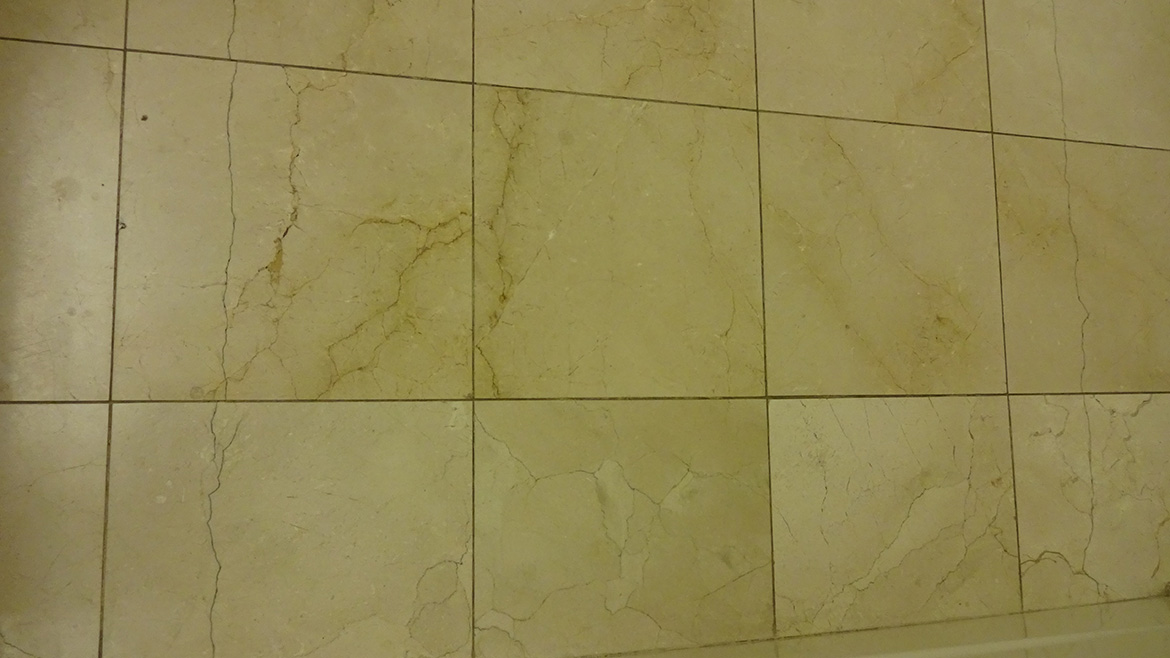
no tape on CBU joints

The cracks seen in this failure image were caused by the installer not applying the manufacturer's required coated glass fiber joint tape to the joints between the backer board. Photo: Scott Carothers.

These last two ANSI standards, which require alkali-resistant (not drywall) tape to be installed on the CBU joints, are critical to a successful CBU installation. Not taping the joints, as seen in the above image, is the reason that the three feet on center parallel cracks in the stone tile caused this failure. The purpose of the tape is to create a monolithic surface for the tile installation. Without the tape, each piece of CBU can move independently (rather than one piece) which results in the crack.

The standards and the manufacturers provide very detailed requirements and guidance for the successful installation of their products. The simple need of the installation community is to follow these directives and success is guaranteed.


This article was originally posted on www.floortrendsmag.com.

KEYWORDS: ctef education and training installation techniques

Share This Story

Looking for a reprint of this article?
From high-res PDFs to custom plaques, order your copy today!


Scott carothers 2025

Scott Carothers is the Academic Director of the Ceramic Tile Education Foundation (CTEF) headquartered in Mt. Juliet, Tennessee (Nashville area). In 2007, he was hired and tasked with creating the Certified Tile Installer (CTI) program, and in 2012, he was part of the team that created the Advanced Certifications for Tile Installers (ACT) program.

For eighteen years, he has been providing training and education to others in the tile industry. Carothers has been involved in the ceramic tile industry for over 44 years and was the owner of a successful retail store and installation firm prior to coming to CTEF.

Carothers served as President and Chairman of the Board of the National Tile Contractors Association (NTCA), Chairman of the NTCA Technical Committee, named the NTCA Tile Person of the Year in 2005, and received the NTCA Ring of Honor in 2013. He is a voting member of the American National Standards Institute (ANSI), the Tile Council of North America (TCNA) Handbook, and NTCA Technical Committees.

Scott has authored over 185 articles in tile industry print magazines including Floor Covering Installer, Tile, TileLetter, and eMagazine/Newsletter publications such as Floor Trends & Installation and TIleLetter along with covering numerous topics on the CTEF Blog, thereby sharing his knowledge and installation experience with his readers. Additionally, he recently retired from being a presenter and trainer for the NTCA Workshop and Regional Training programs and the NTCA Technical Hotline.

He may be contacted at scott@tilecareer.com or 864-222-2131.

Recommended Content

JOIN TODAY
to unlock your recommendations.

Already have an account? Sign In

  • Exports

    U.S. Countertop Material Exports: March 2026

    U.S. exports of natural stone and building stone products...
    Stone
    By: Jason Kamery
  • customer doing research online

    3 Reasons Why Quick Response Time Results in a Successful Fabrication Shop

    Your fabrication shop can have the best website. The best...
    Fabricator How-to
    By: Anthony Milia
  • Silica

    Renewed National Attention Ignites Over Silicosis Epidemic

    A major investigative report published on March 12, 2026...
    Industry Insights
    By: Jason Kamery
Manage My Account
  • eMagazine
  • Newsletters
  • Online Registration
  • Manage My Preferences
  • Subscription Customer Service

More Videos

Popular Stories

cal osha

Cal/OSHA Standards Board to Vote May 21 on Engineered Stone Ban Petition

shipping containers

U.S. Countertop Materials Imports: March 2026

American Floor Coverings Facility

SFA Connecticut Workshop to Showcase Innovation in Fabrication

Fabricator Focus

From profiles to roundtable discussions, Q&As to best business practices, we're turning a focus on topics and challenges impacting fabricators.

AI Talk Is Everywhere -- Where Does a Countertop Fabricator Begin?

Fabricators Discuss Pros and Cons of Chip Repair

How to Grow a Countertop Fabrication Shop

Events

June 25, 2026

North Carolina Stone Summit

You’ve probably heard a lot lately about how to calculate the profit for each job you produce. You likely have production benchmarks based on square footage since it’s the most common production metric in the industry. Come learn how focusing on these metrics can hurt your profitability and what to do about it.

July 16, 2026

Washington Stone Summit

Join us for "Taking Your Organization to the Next Level," a session dedicated to transforming your business practices. Discover strategies for setting clear agendas, encouraging participation, and driving actionable outcomes. Learn how to foster collaboration and communication, ensuring that every meeting enhances productivity and contributes to your business goals.

View All Submit An Event

Poll

Tariffs and Quartz Imports

If high tariffs are placed on U.S. quartz imports, how will this affect your business?
View Results Poll Archive

Products

Restoration & Maintenance Technical Module

Restoration & Maintenance Technical Module

See More Products
	
3 Reasons Why Quick Response Time Results in a Successful Fabrication Shop

Related Articles

  • outside corner cuts

    How To Successfully Make Tile Outside Corner Cuts

    See More
  • Textured light brown floor tiles

    How to Successfully Achieve Credit Card Widths on Joints and 50% Offset Requirements on Tile Installations

    See More
  • marble shower with iron oxide discoloration

    Marble Tile in Showers: A Cautionary Tale

    See More

Related Directories

  • Imagine Tile

    Imagine Tile’s patented glazing technology uses natural minerals/ores to reproduce high-resolution graphic imagery in durable ceramic and porcelain tile. From custom color-matching and unique patterns to the replication of encaustic design, these custom tiles can be installed just like any other tile, offer ease of maintenance and are eco-friendly too!
  • Dallas Specialty & Mfg. Co.

    Dallas Specialty & Mfg. Co. pioneered the first 40 Mil. PVC shower pan liner in the U.S. and Canada under the trade marked name PERMA-GARD, in addition we created the PVC Gasketed Drain allowing tile contractors to easily install their own shower drain without having to call a plumber, Dallas Specialty also pioneered the first weep hole protector for drains.
  • Marmo Meccanica NA

    Marmo Meccanica designs and builds edge polishers and straight belt polishers and bridge saws for marble, granite, natural and synthetic stone and ceramic materials. Its specialization in these two segments of machinery and the diversification of its products guarantee and offer technologically advanced machines, constantly updated and customizable.
×

Our Newsletters are a rock solid source of industry insights!

Stay in the know on the international stone and tile industry trends.

JOIN TODAY!
  • RESOURCES
    • Advertise
    • Contact Us
    • Directories
    • Store
    • Want More
  • SIGN UP TODAY
    • Create Account
    • eMagazine
    • Newsletter
    • Customer Service
    • Manage Preferences
  • SERVICES
    • Marketing Services
    • Reprints
    • Market Research
    • List Rental
    • Survey/Respondent Access
  • STAY CONNECTED
    • LinkedIn
    • Facebook
    • YouTube
    • X (Twitter)
  • PRIVACY
    • PRIVACY POLICY
    • TERMS & CONDITIONS
    • DO NOT SELL MY PERSONAL INFORMATION
    • PRIVACY REQUEST
    • ACCESSIBILITY

Copyright ©2026. All Rights Reserved BNP Media, Inc. and BNP Media II, LLC.

Design, CMS, Hosting & Web Development :: ePublishing