Stone World logo
search
cart
facebook twitter linkedin youtube
  • Sign In
  • Create Account
  • Sign Out
  • My Account
Stone World logo
  • NEWS
  • PRODUCTS
    • Machinery
    • Digital Technology
    • Tooling & Accessories
  • MATERIALS
    • Alternative Surfaces
    • Stone
    • Tile
    • Imports & Exports Data
  • FABRICATORS
    • Fabricator How-to
    • Fabricator Case Studies
    • Fabricator of the Year
  • A&D
    • Installation & Technical Tips
    • Outdoor Design
    • Interior Design
    • Hospitality | Commercial Design
    • Mosaics & Decorative Tile
    • Kitchen & Bath
    • Residential
    • Renovation | Restoration
  • MEDIA
    • Videos
    • Podcasts
    • EBOOK
  • EVENTS
    • STONE INDUSTRY EDUCATION
    • Industry Calendar
  • MORE
    • NEWSLETTERS
    • WOMEN SPOTLIGHT
    • MARKET RESEARCH
    • STONE WORLD STORE
  • DIRECTORY
    • TRADE ASSOCIATIONS
    • Stone Suppliers
    • GET LISTED
  • EMAG
    • eMagazines
    • Archives
    • Contact
    • Advertise
  • SIGN UP!

Educating your builder/remodeler customers on stone installations
By Arthur Mintie, CSI
May 3, 2007
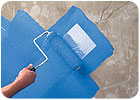
In the floor covering sector, residential remodeling with natural stone has outpaced all other options in terms of annual growth rate for three consecutive years. It is imperative to the stone industry that remodelers, and even new builders, are educated on the proper techniques and methods for successful installations. To repair hairline cracks on a concrete substrate, use an anti-fracture membrane to help reduce the transmission of the cracks through to the stone finish.


Despite continually reading about the projected downturn in new home starts, the remodeling sector appears to be maintaining its strength. In the floor covering sector, residential remodeling with natural stone has outpaced all other options in terms of annual growth rate for three consecutive years - becoming increasingly more important as distributors, contractors and dealers key in on the much larger profit margins that stone offers. As the stone sector continues to grow, builders and remodelers are being asked to install these finishes in more applications than the usual bath, kitchen backsplash or countertop. It is imperative to the stone industry that remodelers, and even new builders, are educated on the proper techniques and methods for successful installations. If this takes place, all of us grow exponentially.

Due to the increased use of stone in homes, builders have had to adjust the way that their homes and structures are designed and built beneath the stone application. Traditionally, it has been taken for granted that the structure beneath the stone areas could be the same construct that is beneath the hardwood, resilient or carpeted areas. With the increase in popularity in large-format stone and longer spans for larger rooms, failures can occur if the structures are not designed properly. Usually, builders rely on their in-house design team, architects or even the lumber and framing supply houses to provide them with the plans and designs for the construction of their homes. While this may be suitable for most of the areas that receive the common flooring types (carpet and wood), the areas that receive stone must be designed to a more rigid standard.
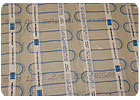
A popular feature today is the use of electric radiant floor warming in conjunction with stone. When combined with radiant floor warming, stone offers one of the most durable, beautiful and comfortable floor systems available for residential or commercial applications.

Structural requirements for stone installations

Before any work starts, the surface must be rigid enough to accept the stone finish. The Ceramic Tile Handbook published by the Tile Council of North America explains that it is the responsibility of the project architect or engineer to determine if the substrate meets the proper stiffness and deflection criteria. The substrate needs to be built in accord with applicable building codes for the structures intended use and meet the maximum allowable deflection for the finish and the installation system that will be installed.

Deflection is the potential movement that the installation can experience when subjected to load and use. Stone requires a very rigid substrate in order to function correctly. Typically, substrates must meet the industry-standard maximum allowable deflection rating of L/720 for stone applications. Some adhesive manufacturers will allow an L/480 deflection standard for stone applications.

It is important for builders to keep in mind that these maximum allowable deflection standards are very different from the L/360 design standard that is called out in most building codes. The building code requirement applies to a uniformly applied load across the spans. This is distinctly different than the concentrated 300-pound load that is required for tile and stone substrates. An example: A person is walking over a structure with heels. This exerts a tremendous, concentrated force down to a small area. A person weighing 150 pounds concentrating his/her weight load to a small heel is distinctly different than the same 150 pounds being uniformly distributed over the span of an entire floor. Appliances that sit on “legs” or wheels will also concentrate their weight load.

Some other things to keep in mind are: What will the areas that receive the stone finish be used for? How many people will be using the area? The more people that will use an area, the more rigid the structure needs to be. A floor that is designed at a 40-pound total live and dead load may be suitable in areas for a family of four or five people. However, what if they intend to entertain a lot? Those same areas may have 20 to 30 people on the structure regularly. What may have been rigid enough for a normal-sized family is now being pushed beyond its deflection limits - and, can cause cracking grout, or even worse, cracking tiles and stones.

For best results, a suitable, high-quality latex fortified thin-set mortar should be used to install stones on floors and walls.

Proper preparation

With all stone installations, proper surface preparation is probably the most important phase of the work, but often the most overlooked. Even when it needs to be specifically addressed, not enough time or resources are generally allocated to ensure that it is done correctly. This is especially true in remodeling work. There are a few common requirements for all surface types relative to floor preparation. These are generally related to the cleanliness of the substrate (and its rigidity, as we have already discussed).

All substrates must be free of any bond-breaking or bond-inhibiting materials. These may include sealers, waxes, curing compounds, form release agents, paint, dirt, grease, oils, old carpet adhesives and other contaminants. They must be completely removed prior to the commencement of the installation. One of the best ways to remove these contaminants is by mechanical abrasion. Usually, the contaminants have penetrated into the substrate’s pores and will block the adhesives’ ability to create a mechanical bond or attachment to the surface. It is not a good idea to use chemicals or acid to strip or to remove contaminants. These chemicals or acids may penetrate into the substrate and will be virtually impossible to remove.

Share This Story

Looking for a reprint of this article?
From high-res PDFs to custom plaques, order your copy today!

Arthur Mintie is Director of Technical Services at Laticrete International, Inc. He can be reached at amintie@laticrete.com or 1-800-243-4788.

Recommended Content

JOIN TODAY
to unlock your recommendations.

Already have an account? Sign In

  • customer doing research online

    3 Reasons Why Quick Response Time Results in a Successful Fabrication Shop

    Your fabrication shop can have the best website. The best...
    Fabricator How-to
    By: Anthony Milia
  • Silica

    Renewed National Attention Ignites Over Silicosis Epidemic

    A major investigative report published on March 12, 2026...
    Industry Insights
    By: Jason Kamery
  • shipping containers

    U.S. Countertop Material Imports: February 2026

    U.S. countertop material imports collapsed in February...
    Stone
    By: Jason Kamery
Manage My Account
  • eMagazine
  • Newsletters
  • Online Registration
  • Manage My Preferences
  • Subscription Customer Service

More Videos

Popular Stories

cal osha

Cal/OSHA Standards Board to Vote May 21 on Engineered Stone Ban Petition

shipping containers

U.S. Countertop Materials Imports: March 2026

kitchen

Building a Reputation on Strong Craftsmanship and Customer Service

Fabricator Focus

From profiles to roundtable discussions, Q&As to best business practices, we're turning a focus on topics and challenges impacting fabricators.

AI Talk Is Everywhere -- Where Does a Countertop Fabricator Begin?

Fabricators Discuss Pros and Cons of Chip Repair

How to Grow a Countertop Fabrication Shop

Events

June 25, 2026

North Carolina Stone Summit

You’ve probably heard a lot lately about how to calculate the profit for each job you produce. You likely have production benchmarks based on square footage since it’s the most common production metric in the industry. Come learn how focusing on these metrics can hurt your profitability and what to do about it.

July 16, 2026

Washington Stone Summit

Join us for "Taking Your Organization to the Next Level," a session dedicated to transforming your business practices. Discover strategies for setting clear agendas, encouraging participation, and driving actionable outcomes. Learn how to foster collaboration and communication, ensuring that every meeting enhances productivity and contributes to your business goals.

View All Submit An Event

Poll

Tariffs and Quartz Imports

If high tariffs are placed on U.S. quartz imports, how will this affect your business?
View Results Poll Archive

Products

Restoration & Maintenance Technical Module

Restoration & Maintenance Technical Module

See More Products
	
3 Reasons Why Quick Response Time Results in a Successful Fabrication Shop

Related Articles

  • Understanding and avoiding efflorescence

    See More
  • Exterior stone paver applications

    See More
  • Tips for writing successful installation specifications

    See More
×

Our Newsletters are a rock solid source of industry insights!

Stay in the know on the international stone and tile industry trends.

JOIN TODAY!
  • RESOURCES
    • Advertise
    • Contact Us
    • Directories
    • Store
    • Want More
  • SIGN UP TODAY
    • Create Account
    • eMagazine
    • Newsletter
    • Customer Service
    • Manage Preferences
  • SERVICES
    • Marketing Services
    • Reprints
    • Market Research
    • List Rental
    • Survey/Respondent Access
  • STAY CONNECTED
    • LinkedIn
    • Facebook
    • YouTube
    • X (Twitter)
  • PRIVACY
    • PRIVACY POLICY
    • TERMS & CONDITIONS
    • DO NOT SELL MY PERSONAL INFORMATION
    • PRIVACY REQUEST
    • ACCESSIBILITY

Copyright ©2026. All Rights Reserved BNP Media, Inc. and BNP Media II, LLC.

Design, CMS, Hosting & Web Development :: ePublishing