Stone World logo
search
cart
facebook twitter linkedin youtube
  • Sign In
  • Create Account
  • Sign Out
  • My Account
Stone World logo
  • NEWS
  • PRODUCTS
    • Machinery
    • Digital Technology
    • Tooling & Accessories
  • MATERIALS
    • Alternative Surfaces
    • Stone
    • Tile
    • Imports & Exports Data
  • FABRICATORS
    • Fabricator How-to
    • Fabricator Case Studies
    • Fabricator of the Year
  • A&D
    • Installation & Technical Tips
    • Outdoor Design
    • Interior Design
    • Hospitality | Commercial Design
    • Mosaics & Decorative Tile
    • Kitchen & Bath
    • Residential
    • Renovation | Restoration
  • MEDIA
    • Videos
    • Podcasts
    • EBOOK
  • EVENTS
    • STONE INDUSTRY EDUCATION
    • Industry Calendar
  • MORE
    • NEWSLETTERS
    • WOMEN SPOTLIGHT
    • MARKET RESEARCH
    • STONE WORLD STORE
  • DIRECTORY
    • TRADE ASSOCIATIONS
    • Stone Suppliers
    • GET LISTED
  • EMAG
    • eMagazines
    • Archives
    • Contact
    • Advertise
  • SIGN UP!

Italian limestone sets a backdrop for artwork
April 2, 2003


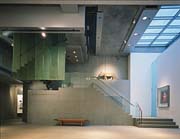
Recently, the American Folk Art Museum expanded its presence from the Lincoln Center in New York, to a building all its own in another part of the city. And when this occurred, it marked the first art museum to be built from the ground up in New York since 1966. The museum -- which holds a 4,000-piece collection spanning three centuries of American folk art, such as quilts and weathervanes -- is an 8-level, 85-foot-tall structure.

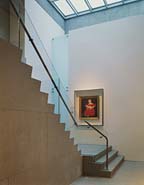
Since the building itself is significant, the design set by Tod Williams Billie Tsien Architects, also in New York, had to make the same impact. While the 29,000-square-foot building's exterior has a metallic facade, visitors are greeted with about 4,000 square feet of Pietre Piasentina limestone upon entering the ground floor. The floors, main staircase, caf?ountertops as well as a donor wall -- an 11- x 13-foot wall engraved with names of contributors to the museum -- are clad with limestone, which gives the stone a significant presence in the building.

"We chose the limestone because the coloring was quite nice," said Philip Ryan, assistant project architect at Tod Williams Billie Tsien Architects. "The veining in it is controllable, and we could get good sizes and thicknesses, with 4-inch-thick pieces being the largest."

Walker Zanger of Sylmar, CA, supplied the stone, in varying finishes. The floor was done in a flamed finish, the donor walls and countertops were honed and the walls had a thermal finish. "Because of its presence in the building, the challenge we faced was really to select the right stone," said Ryan. "[Members of the firm] went to Italy to pick the portions of stone, and we decided the limitations for the veining in the stone, and the coffee-like stains the stone has. It was crucial to set parameters in order to find a stone we could live with."
Jamie Haskel of Walker Zanger concurred that the architects knew exactly how they wanted the stone to appear in the museum. "The [architects] really had an eye for what they wanted in the stone," said Haskel. "Much of the stone was in standard paving dimensions, but the donor walls were 1 1¿inch-thick slabs -- in sizes that ranged up to 4 x 7 feet, 2 inches -- which is a little uncommon for the material. Walker Zanger's Italian office had a lot of dialogue with the architects, to keep communication open - which is so important for high-profile jobs."

Once Walker Zanger received the containers of stone, there was no room to unload them on-site. Instead, the stone was taken to the warehouse of Port Morris Tile & Marble in the Bronx, NY, who delivered it by truck, and then installed the stone. "The floors were installed with a mud-bed, while the walls were installed using a brass wire and plaster anchoring system," said John Bertone, Jr. of Port Morris Tile & Marble. "We used sand and cement with Laticrete grout products."

About six to eight teams of three workers installed the stone over a four-to five-month period. "The only difficulty we had were the details around the stairs and stair walls," said Bertone. "We had to do a lot of coordination by hand - while we did the stair treads with mud-bed, the risers were anchored. We did a lot of field visits to work out the details, because everyone had to remain within the set tolerances."

In addition to the limestone, a 3-inch aggregate made up of Haverstraw traprock is also prevalent in the concrete found throughout the building. "All the concrete walls were finished with a bushhammer to expose the bluish-gray aggregate," said Ryan. "The limestone is a warm, brownish-gray tone, so it also went well with the concrete in the building," said Ryan.

When the museum opened in December 2001 - after being worked on since October 1999 - the stone fit into the design as well as the architects had anticipated. "We had wanted to maximize the spatial and functional use of the space," said Ryan. "The reaction to it has been very positive. It has gotten a lot of press, as there has been a renewed awareness in architecture since September 11 - it is a real gem on the street."

Since opening, the museum has won the National AIA award, a New York City AIA award, and World Architecture magazine honored it with its "Best Building in the World," the "Best Building in North America," and the "Best Cultural Building" awards.

Share This Story

Looking for a reprint of this article?
From high-res PDFs to custom plaques, order your copy today!

Recommended Content

JOIN TODAY
to unlock your recommendations.

Already have an account? Sign In

  • customer doing research online

    3 Reasons Why Quick Response Time Results in a Successful Fabrication Shop

    Your fabrication shop can have the best website. The best...
    Fabricator How-to
    By: Anthony Milia
  • Silica

    Renewed National Attention Ignites Over Silicosis Epidemic

    A major investigative report published on March 12, 2026...
    Industry Insights
    By: Jason Kamery
  • shipping containers

    U.S. Countertop Material Imports: February 2026

    U.S. countertop material imports collapsed in February...
    Stone
    By: Jason Kamery
Manage My Account
  • eMagazine
  • Newsletters
  • Online Registration
  • Manage My Preferences
  • Subscription Customer Service

More Videos

Popular Stories

cal osha

Cal/OSHA Standards Board to Vote May 21 on Engineered Stone Ban Petition

shipping containers

U.S. Countertop Materials Imports: March 2026

American Floor Coverings Facility

SFA Connecticut Workshop to Showcase Innovation in Fabrication

Fabricator Focus

From profiles to roundtable discussions, Q&As to best business practices, we're turning a focus on topics and challenges impacting fabricators.

AI Talk Is Everywhere -- Where Does a Countertop Fabricator Begin?

Fabricators Discuss Pros and Cons of Chip Repair

How to Grow a Countertop Fabrication Shop

Events

June 25, 2026

North Carolina Stone Summit

You’ve probably heard a lot lately about how to calculate the profit for each job you produce. You likely have production benchmarks based on square footage since it’s the most common production metric in the industry. Come learn how focusing on these metrics can hurt your profitability and what to do about it.

July 16, 2026

Washington Stone Summit

Join us for "Taking Your Organization to the Next Level," a session dedicated to transforming your business practices. Discover strategies for setting clear agendas, encouraging participation, and driving actionable outcomes. Learn how to foster collaboration and communication, ensuring that every meeting enhances productivity and contributes to your business goals.

View All Submit An Event

Poll

Tariffs and Quartz Imports

If high tariffs are placed on U.S. quartz imports, how will this affect your business?
View Results Poll Archive

Products

Restoration & Maintenance Technical Module

Restoration & Maintenance Technical Module

See More Products
	
3 Reasons Why Quick Response Time Results in a Successful Fabrication Shop

Related Articles

  • Stone Forms a Backdrop for Winemaking Excellence

    See More
  • Limestone sets standard for future of campus

    See More
  • Limestone serves as backdrop for sculpture gallery

    See More
×

Our Newsletters are a rock solid source of industry insights!

Stay in the know on the international stone and tile industry trends.

JOIN TODAY!
  • RESOURCES
    • Advertise
    • Contact Us
    • Directories
    • Store
    • Want More
  • SIGN UP TODAY
    • Create Account
    • eMagazine
    • Newsletter
    • Customer Service
    • Manage Preferences
  • SERVICES
    • Marketing Services
    • Reprints
    • Market Research
    • List Rental
    • Survey/Respondent Access
  • STAY CONNECTED
    • LinkedIn
    • Facebook
    • YouTube
    • X (Twitter)
  • PRIVACY
    • PRIVACY POLICY
    • TERMS & CONDITIONS
    • DO NOT SELL MY PERSONAL INFORMATION
    • PRIVACY REQUEST
    • ACCESSIBILITY

Copyright ©2026. All Rights Reserved BNP Media, Inc. and BNP Media II, LLC.

Design, CMS, Hosting & Web Development :: ePublishing