A discussion held during a recent stone industry event organized by Stone World and the Natural Stone Institute turned to the hot topic of understanding the makeup of quartzite, meeting customer expectations about the material and how to cut it
Effectively installing the proper slope to drain as well as meeting the flatness requirement of the ANSI standard is challenging. Here, CTEF’s Scott Carothers walks us through the steps required to successfully install tile to achieve both.
Not all tile is created equal. This is not to infer that we are talking about the size, shape or thickness, but rather the durability of the tile in extreme environments.
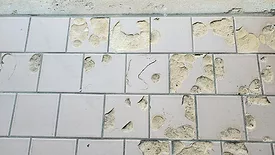
Almost everyone who has installed or helped to install porcelain or glass mosaic tile has had to correct the age-old problem known as thin-set mortar squeeze-up between each tile.
Grout goes in the grout joints and sealant goes in the locations designated as movement accommodation joints by the design professional or engineer, but sometimes it doesn’t work out as planned.
Many times, when ceramic tile is installed, we, as installers, may not use all of the tile industry standards to our best advantage. These standards can be the installer’s best friend when assisting the consumer, whether residential or commercial, in deciding the grout joint size and pattern.