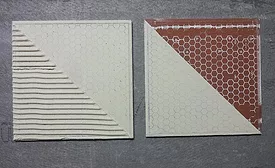
The standards found in the ANSI (American National Standards Institute) A108.02 document provide the installation method standards used to provide a good looking and long-lasting tile project. When they are followed, the job is headed for success, but when they are not followed, it may be doomed from the beginning.
The tile industry has established installation standards in the American National Standards Institute (ANSI) documents to guide all involved: the design professional, the general contractor and the tile installer.
When the time comes to physically look at a potential job, there are many aspects of the project that must be reviewed, including the condition of the walls.
Many times, a jobsite is not well maintained or kept clean which can be an image and possibly a safety issue, but more importantly, when tile is being installed, the substrate must be clean.
The American National Standards Institute (ANSI) specifications provide several industry standards that are there to help the installer obtain good site conditions.
The virtues of porcelain slabs are numerous, which has led to its growing popularity. The material is light, thin and tough, making it suitable for nearly any interior project from bathroom sinks and vanities to shower trays, kitchen countertops and bathtubs.
In the beginning, there was Thin Porcelain Panels. Between 2000 and 2001, Thin Porcelain Tile (TPT) was born. One version was created in 2001 by engineer, Franco Stefani, of the Systems Group, innovator of the ceramic industry.
 RSS
RSS