Championing Community and Education in the Stone Industry
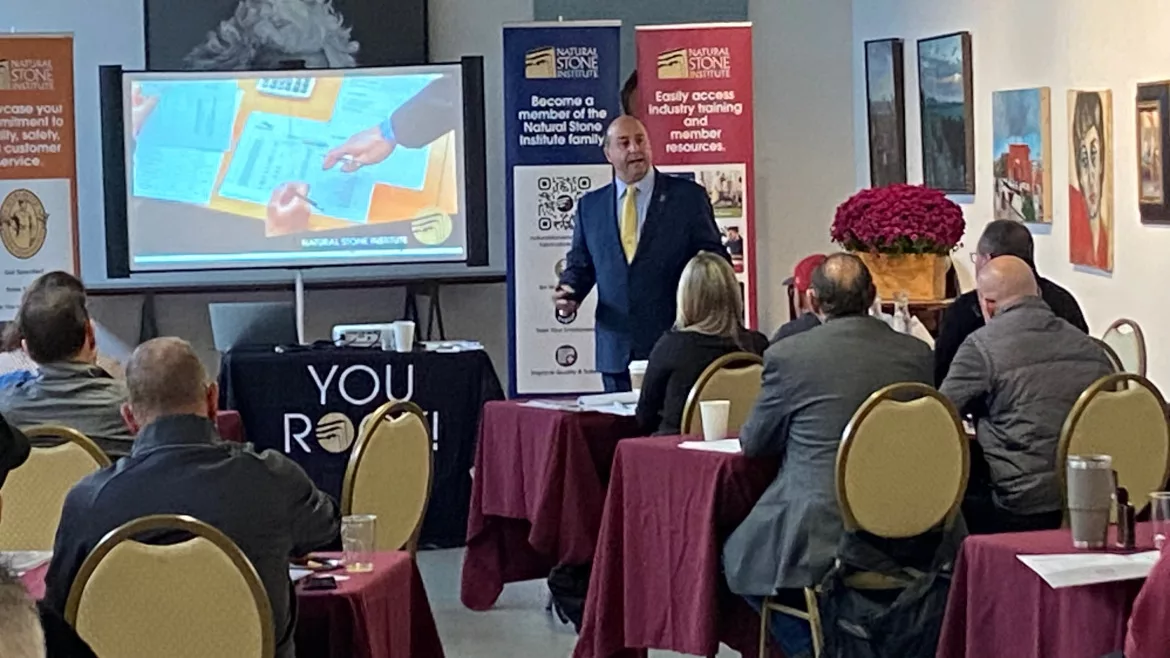
Tony Malisani’s roots in the stone industry run deep. As a third-generation stone professional and past president of the Natural Stone Institute, he is both a leader and an advocate for advancing the craft. With his son now working alongside him, the Malisani family represents four generations in the business—a legacy built on a foundation of craftsmanship and community.
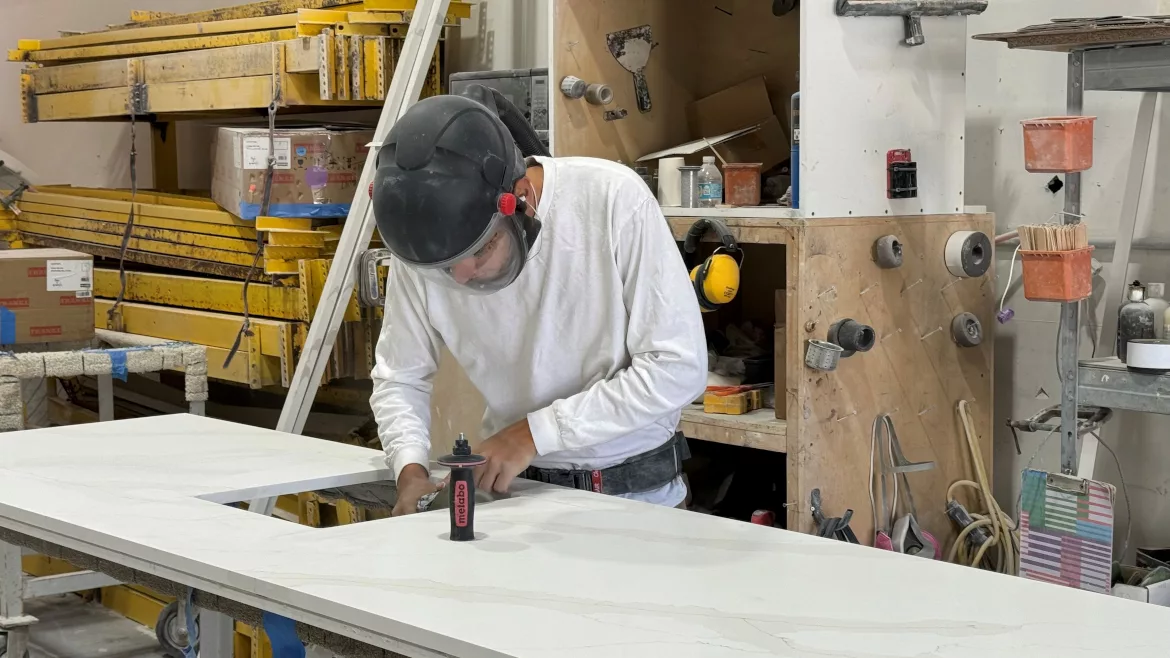
“My grandfather immigrated to Great Falls, Montana, after being recruited by a terrazzo company looking for workers,” said Malisani. “He saw more opportunity in the U.S., worked for a terrazzo contractor, and eventually started his own company. Over the years, family members have come and gone, but we’ve always focused on cutting, polishing, shaping, and installing hard materials—tile, stone, and terrazzo.”
Today, Malisani’s company continues that tradition while adapting to a changing industry. He has also dedicated decades to industry education, serving on panels, leading seminars, and mentoring fabricators across the country.
“I probably learn more from the people who attend my sessions than they learn from me,” said Malisani. “It’s been about 20 years of educating, and I enjoy it every time.”
His path to industry leadership began with a chance to combine work and family. “My wife was deployed to Fort Bragg, and I saw an opportunity to visit her while attending a two-day seminar at David Allen Company,” said Malisani. “That was my introduction to the association, and I quickly became involved—first sitting on panels, then joining the board, and eventually serving as president in 2014.”
Malisani is a familiar face at trade shows and educational events, often leading panels or on-site training sessions for fabricators. He says that connecting with people in person is key to building community and improving standards across the industry.
“I enjoy the on-location programs we do, especially in partnership with Stone World,” said Malisani. “When you visit fabricators in their own communities, you see their processes, learn from them, and build real networks. You get to watch how towns and businesses evolve—how people start communicating, networking, and making friends in the industry. And when you need help, those friends are essential.”
For Malisani, these relationships are more than professional; they are the backbone of a healthy trade. “We talk a lot about strategic plans and flexing labor, but nothing replaces being able to call someone and say, ‘I’m up to my elbows in alligators, can you give me a hand?’” he said. “It helps everyone, and it keeps quality standards high.”
He is also a champion for collaboration, even among competitors. “Not everybody does things the same way,” said Malisani. “Trade shows are full of impressive machines, but those aren’t the only ways to get things done. The heart of this business is problem solving, whether it’s developing a new surface texture or figuring out how to miter a difficult material. Some of the best ideas come from talking to other fabricators.”
Earlier this year, Malisani was honored as a Coverings Champion for his contributions to the industry. The award came as a surprise, and Malisani remains humble about the recognition.
“I actually wasn’t planning to attend the show this year because we were so busy at home,” he said. “But I got an email letting me know I’d been nominated and selected as a Coverings Champion. It’s an honor, but as I told Michelle from the education side, this is just what I do. I’m here to help, so I help. There are probably others who do even more, but it’s always nice to be recognized.”
Malisani is quick to encourage the next generation to get involved, sharing advice for young fabricators and industry newcomers.
“Contact the Natural Stone Institute and let them know you want to help,” said Malisani. “There are always opportunities—panels, technical committees, safety, and more. We need volunteers to make these organizations work, and we could always use fresh perspectives.”
He also urges young professionals not to hesitate when it comes to sharing and learning. “Sometimes it can be intimidating, but the best thing you can do is get involved—and bring others from your organization with you,” he said. “That’s how you learn best practices and pass them on. That’s what keeps the industry strong.”
For Malisani, it all comes back to community and a commitment to quality. “When you share knowledge, you make the entire industry better,” he said. “That’s what I care about most.”
Looking for a reprint of this article?
From high-res PDFs to custom plaques, order your copy today!