Technical Focus
Benefits of ventilated wall systems using porcelain tile
While ventilated wall systems have a long, rich history within the European and Asian building communities, the concept is relatively new for the U.S. However, if the U.S. is as serious about green building as recent endeavors indicate, the ventilated wall system is the way of the future. Combining the system with an inherently “green” product such as porcelain tile only heightens the excitement surrounding this technology.
A ventilated wall system can be a solution for a multitude of problems that face the architectural community, from energy usage to tedious installations. Before we dive into the benefits of a porcelain cladding system, it is important to understand exactly what the system is comprised of and how it can be used.
The concealed system has become popular within the architecture and design community because it allows for a seamless design on the exterior of the building, with the anchor system concealed behind the porcelain tile. A ventilated wall system is comprised of three major components:
- An external cladding layer of large-format porcelain with open joints
- An aluminum substructure secured by brackets to the building
- A thermal insulation layer (comprised of waterproofed insulation) fastened to the building’s exterior wall
This versatile system is suitable for external brick or concrete walls, newly built or existing buildings. The system can easily be installed on standard vertical surfaces, as well as sloping and curved surfaces.
Believe it or not, porcelain is an ideal surfacing choice for ventilated walls. It is available in multiple finishes — matte, polished, glazed — as well as countless color combinations and styles ranging from stone to marble to granite to travertine. Abrasion, freeze-thaw, fading, graffiti and harsh weather conditions become non-issues. Large-format porcelain offers excellent performance – both technical and aesthetic.
Benefits of a porcelain cladding system
When considering a new product or technology, what are the important factors to consider? What are the benefits to this new product or system that like products or systems do not offer? With a ventilated wall system, many may be surprised to find that a porcelain cladding system could offer significant benefits and advantages over other cladding products. Some of the main benefits of a porcelain cladding system include: Energy Efficiencies, Cost Savings, Unlimited Design Capabilities, Installation Efficiencies, Better Sound Insulation, Eliminates Condensation Effect, Water Tightness and Thermal Stability. While there are details to support each of these benefits, a select few warrant a more detailed review.
Energy Efficiency: In terms of energy, the first response of architects is to optimize the shell of the building. It must be able to prevent heat loss, keeping heat produced by the heating system inside the building in the winter, and the cool air produced by the air conditioning system inside in the summer.
The amount of heat lost in one square meter of the building’s shell is referred to as transmittance (U, U=1/R). An efficient shell achieves maximum assembly U values, which account for not only the insulation, but also any bridging that may occur. Upgrading an existing building by adding an outer shell to form a ventilated wall has the effect of considerably reducing its transmittance. The continuous wrap of insulation not only raises the thermal resistance of the shell, but also reduces the effect of existing thermal bridges.
Testing of ventilated wall systems has shown a 20% or better energy performance compared to traditional systems. The system’s efficiency also depends on various factors such as local climate, normal wind load in the area, thermodynamic characteristics of the outside wall where the system is anchored, and height and shape of the building.
When researching systems, be sure the system addresses the 2010 and 2012 IECC codes (International Energy Conservation Codes). It is extremely important to ask the manufacturer for U and R Factor compliance.
Installation Efficiency: The simplicity of the anchor and bracket structure coupled with the pre-plotted design of the aluminum framework minimizes installation time. The use of porcelain also reduces time and labor costs compared to some other products. The mesh backing applied to each piece provides an added measure of safety to the installation. In the event of breakage or defacement, individual tiles can be easily replaced.
Sound Insulation: While a properly installed cladding system can absorb outside noises and create better acoustic insulation, it is critical to be sure the system is in compliance with International Building Codes (specifically Chapter 14). The IBC details specific requirements for buildings with beds/bedrooms, i.e. dormitories, hotels, etc. The manufacturer of the system should always be consulted for verification of compliance.
Thermal Stability: Further to the energy efficiencies obtainable using a ventilated wall systems, the system should address the 2010 and 2012 IECC (International Energy Conservation Codes). Manufacturers should be consulted for compliance to IECC requirements.
Installing a porcelain cladding system
A facade must meet many requirements, ranging from the observance of technical norms to the solution of static and functional problems as well as desired energy savings. However, it is also true that aesthetic and creative factors are the most visual elements of a building and are often uppermost in the mind of the designer. Technical criteria must, therefore, run parallel to aesthetic criteria, allowing creativity to range without excessive constraints.
Few manufacturers offer a completely turn key solution for the ventilated wall system, however those that do will offer engineering services to the architect, ensuring the layout of the exterior design and installation are completed properly. Research manufacturers offer this service to guarantee a successful project.
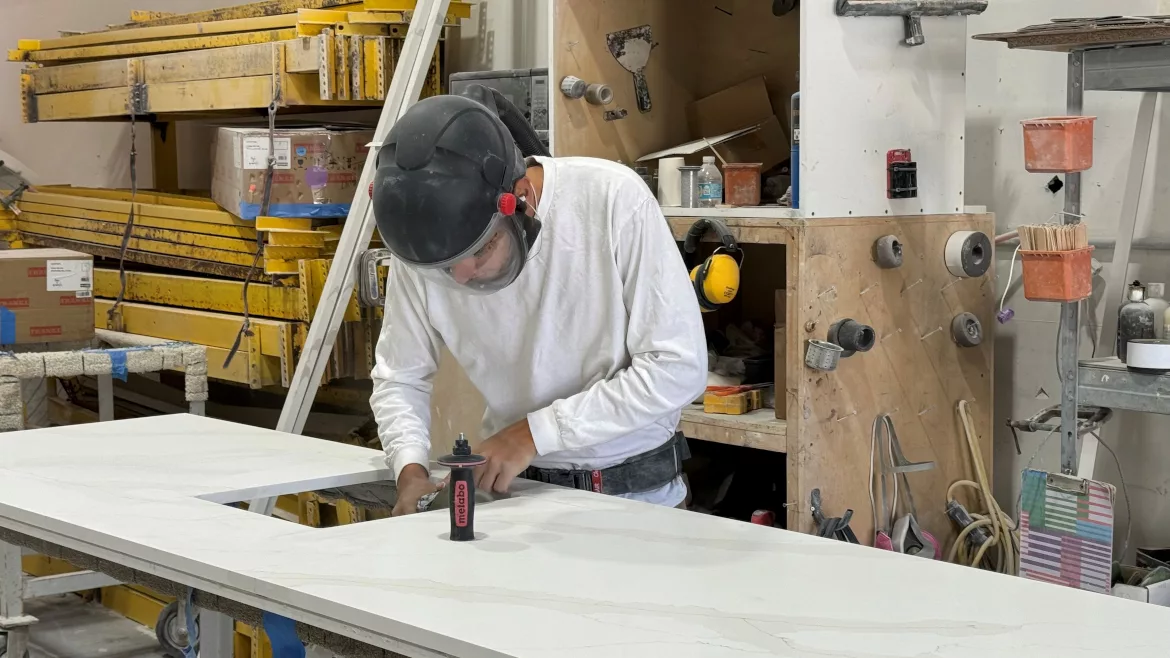
Preparation of the tile: To allow the tile to “interface” properly with the substructure so that it is long lasing and strong, specific points are identified on the back of the tile. The location of these areas varies according to the requirements of the design. Once they are identified, holes are drilled to allow the anchor system to embed itself in to the back of the tile. Brackets are applied to allow the connection of the tile and the bearing substructure.
Substructure secured to the exterior: Most substructures include a grid of aluminum vertical risers and horizontal runners that form the bearing structure that will secure the tile panels. First, the vertical risers are secured via brackets bolted to the building exterior, and then horizontal runners are affixed to the vertical risers using aluminum alloy rivets. It is important to minimize the number of penetration points in the exterior when securing the substructure to the building.
Thermal insulation applied: A fireproof insulation panel, specifically designed for use in ventilated cladding systems, is fastened to the building structure. The insulation is typically secured using pre-gauged retainers and/or mechanical fasteners.
Porcelain cladding panels installed: The pre-fitted anchor system and bracket allow for the tile panel to be securely attached to the substructure. The bracket shape should exactly complement that of the horizontal runners, and feature a screw adjustment system that allows the tile to be perfectly aligned in the vertical plane during installation. A second headless screw allows the slab to be locked to the runner, avoiding any horizontal movement due to side winds on the facade or thermal expansion.
A ventilated cladding system is always the result of a carefully calculated design that leads to the selection of the desired tile elements and their dimensions. Porcelain tiles, complete with fitted anchors, can be cut and preassembled in the factory, making installation faster. If dimensions are to be determined on site, the assembly can occur there — with tools provided by the manufacturer or installer.
Understanding the value of a ventilated cladding system, combining the sustainability attributes with unlimited design capabilities; this technology will prove to be an extremely valuable alternative to green building for many years to come.
Looking for a reprint of this article?
From high-res PDFs to custom plaques, order your copy today!