CNC Technology Brings New Era of Stone Fabrication
Collaboration between architects, designers and fabricators can lead to detailed stone designs with the assistance of state-of-the-art CNC machines
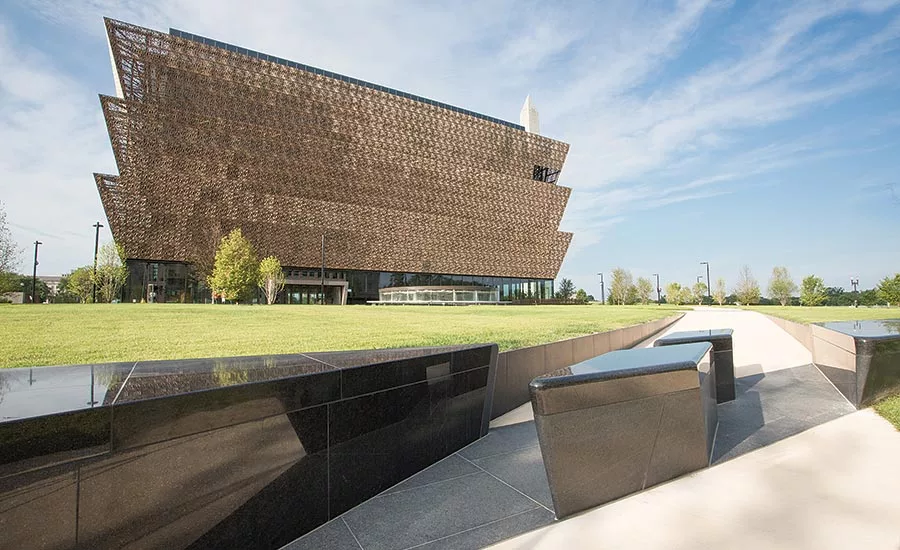
The National Mall’s newly opened museum, the National Museum of African American Culture and History (NMAACH), relied on CNC technology to produce a landscape encouraging visitors to gather and reflect.
Photos by OLIN/Sahar Coston-Hardy
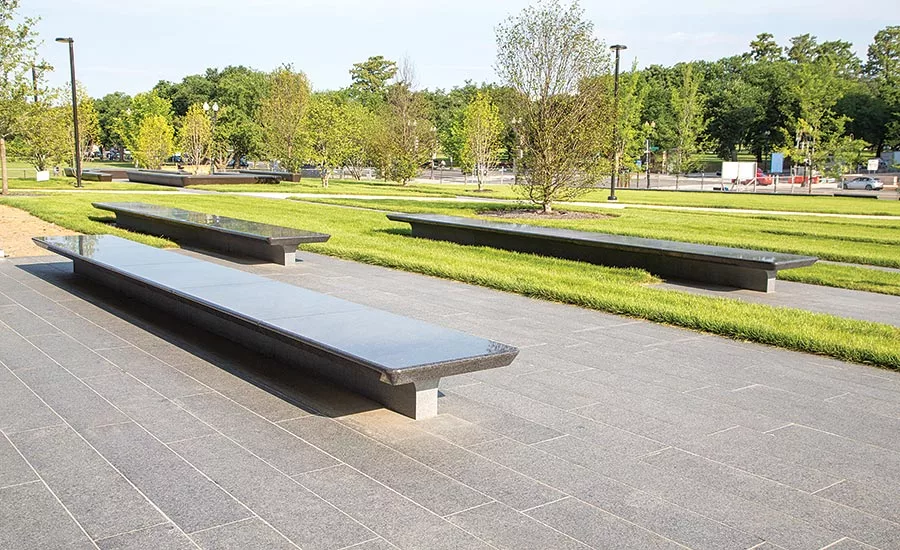
The NMAACH features approximately 37,000 square feet of granite in a variety of landscape elements, including these benches of Mesabi Black®.
Photo by OLIN/Sahar Coston-Hardy
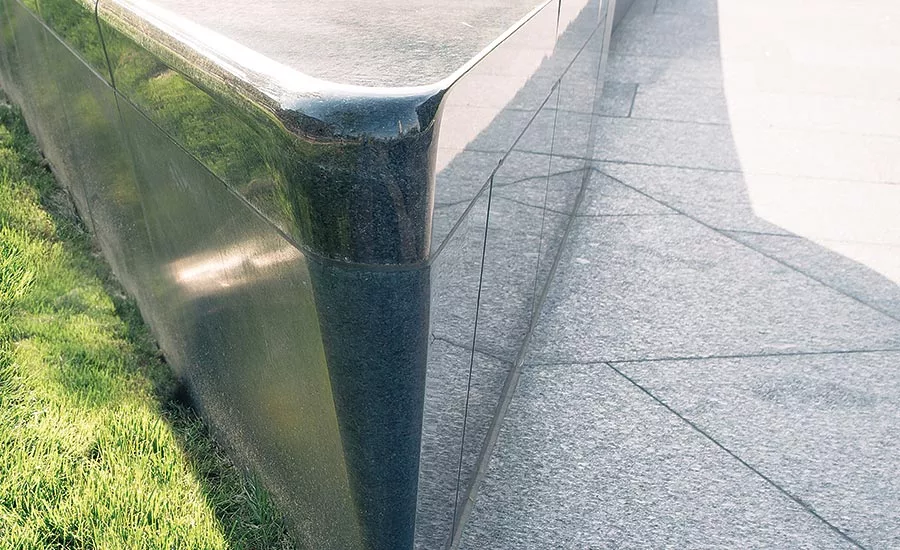
The National Mall’s newly opened museum, the National Museum of African American Culture and History (NMAACH), relied on CNC technology to produce a landscape encouraging visitors to gather and reflect.
Photo by OLIN/Sahar Coston-Hardy
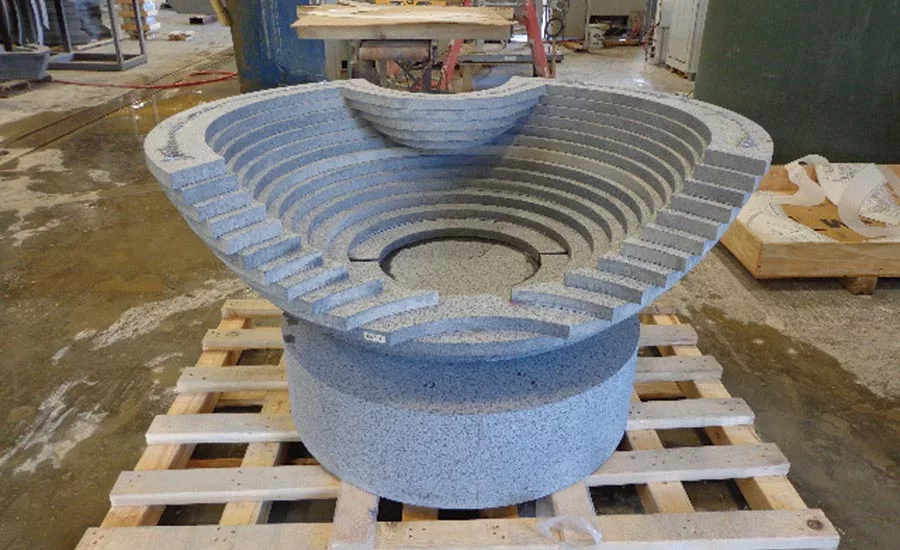
CNC machining formed the wall’s cap pieces, which were finished by hand to create the bullnose.
Photo by OLIN/Sahar Coston-Hardy
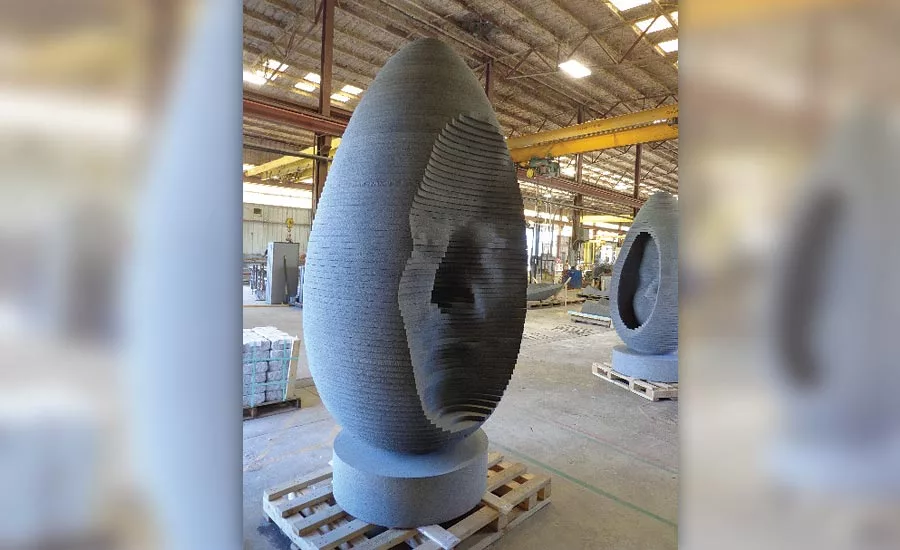
The granite fabricator used the designer’s electronic files to create the cutting information for fabricating the pieces of each egg sculpture of the Riverside Roundabout.
Photo by OLIN/Sahar Coston-Hardy
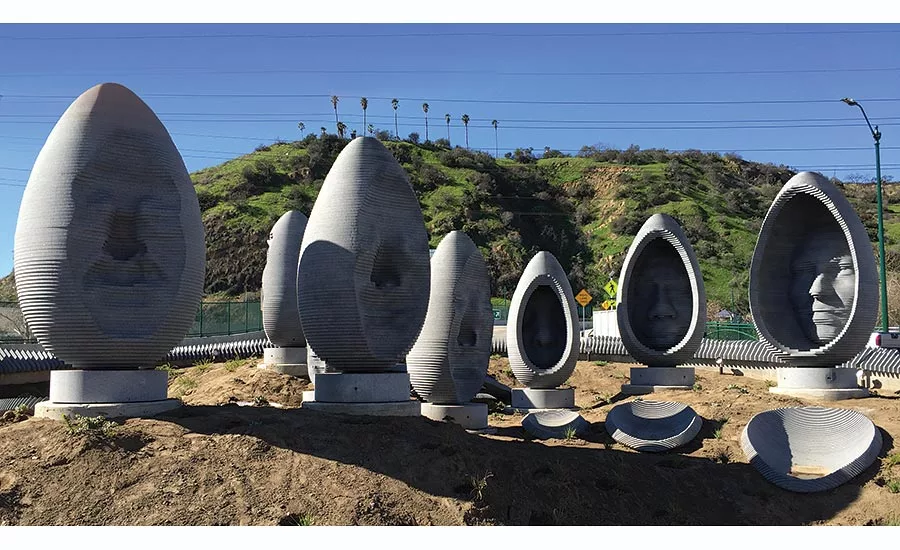
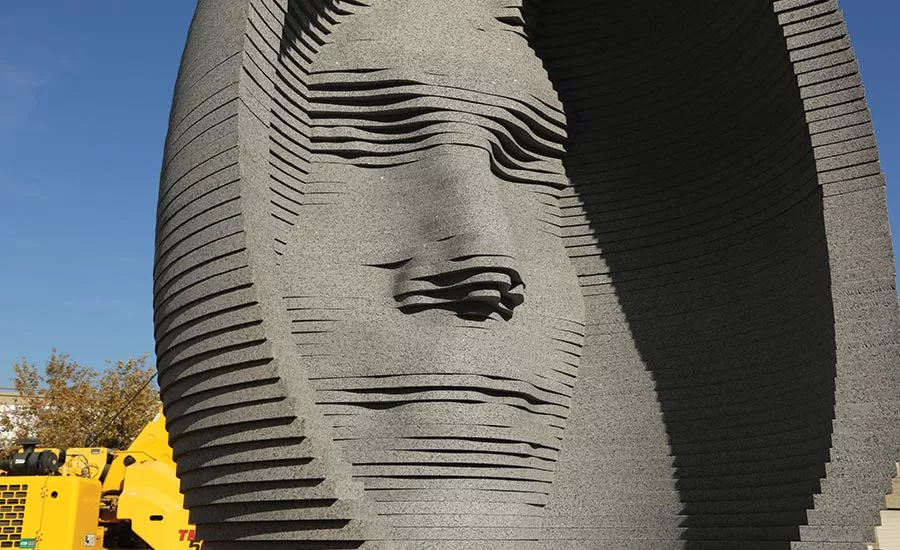
Nine egg-shaped sculptures of Academy Black® provide an artistic element to the city’s first modern roundabout.
Photo by OLIN/Sahar Coston-Hardy

At Philadelphia’s Dilworth Park, Mesabi Black® provided an ideal background to the almost bluish tones of City Hall’s granite, limestone and marble exterior.
Photo by OLIN/Sahar Coston-Hardy

Exceptional fabrication with CNC technology achieved the precisely shaped stones meeting the specifications needed for proper drainage at Dilworth Park.
Photo by OLIN/Sahar Coston-Hardy
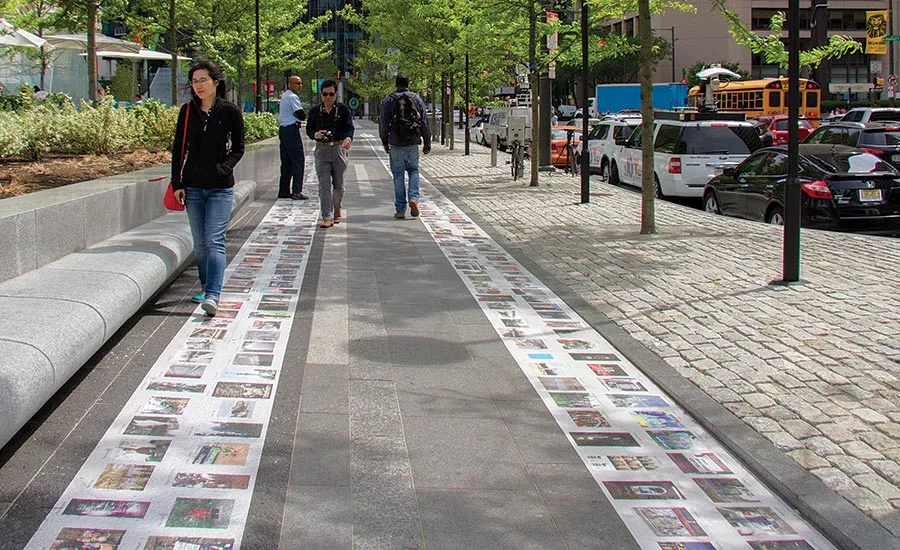
Nearly 100,000 square feet of finely carved and crafted granite masonry was used throughout Dilworth Park’s exterior.
Photo by OLIN/Sahar Coston-Hardy
Computer Numerical Control (CNC) technology has made its mark on stone design and fabrication, providing numerous benefits to those who take advantage of its capabilities. With computers controlling the machines, stone fabricators produce intricate inspiring creations with exact precision once thought impossible or too costly to achieve. As a result, architects and designers are expanding their creative limits and experiencing many benefits, including:
- Increased freedom of design
- Control of the design concept from development through fabrication
- Quality control
- Accuracy of stone shaping and the final fit and finish
Despite CNC’s benefits, many design professionals hold misperceptions about the process. Chief among the misconceptions is that CNC is only used for granite slabs. It’s often difficult to imagine a computer-controlled machine handling a large block of stone and producing the result of a finely trained sculptor with a chisel in hand. Quite the opposite, CNC machines can accept both slabs and cubic stones of all sizes with ease, depending on the type of machine the fabricator chooses. Not all fabricators with CNC capability will have the machine capacity to manufacture cubic shapes.
Another misperception is that the CNC process isn’t budget friendly. Although CNC technology is advanced, it’s not cost-prohibitive. Historically, large-profiled stone components and cubic free-form shapes were labor intensive to produce. Today’s designs, in most cases, begin as a digital project in one of the many CAD or digital design tool software packages. Using this “master model” format, the fabricator realizes lower costs since much of the drafting work required for the old manual method is eliminated. What’s more, CNC achieves a very fine tolerance, reducing the need for multiple or follow-up processes. Fabrication and lead time are reduced and custom designs are easier on the budget.
Realizing CNC benefits to projects, designers are choosing the technology for many high-profile projects across the country. From East to West Coast, these projects showcase examples of intricate stonework, shaped with precision.
CNC simplifies complex paver project
CNC technology played an essential role in the redesign of a key landmark in Philadelphia’s Center City District. The aging Dilworth Plaza received a new look — featuring nearly 100,000 square feet of beautiful, finely carved and crafted masonry. The result is a vibrant, open civic space for Philadelphians and visitors to enjoy, appropriately renamed Dilworth Park due to its key feature — 7,000 square feet of green space.
The granite masonry used throughout the park’s exterior includes paving, walls and benches fabricated with CNC technology. The 14 large curvilinear benches along the plaza area are constructed of granite veneer and capstones of solid granite. In total, 6,500 square feet of Woodbury granite was used for the benches. According to the design team, the benches and their smooth curvilinear forms are designed to respond to the changes in grade upon entering the plaza. CNC technology made it possible to use the same files from design through fabrication, which eliminated the need to re-work each piece – saving time and reducing the potential for errors.
Installation of the pavers proved complicated because of the stone’s location on top of the city’s transportation system. Essentially, the park is a roof and is in a nearly completely flat elevation. Designers had to determine the best way to channel storm water from one end of the park to the other. As such, the stonework had to maintain sufficient tolerance to achieve the required drainage characteristics. Exceptional fabrication with CNC technology achieved the accurately shaped stones meeting the specifications needed for drainage.
Precisely crafted gathering location
Farther south along the East Coast, the Smithsonian Institution’s new National Museum of African American Culture and History (NMAACH) relied on CNC technology to produce beautiful stone elements for its landscape design. Located on a 5-acre site on the National Mall between the National Museum of American History and the Washington Monument, the NMAACH is the only museum dedicated to documenting the history, life and culture of African Americans. As such, the museum features a distinguished design among the National Mall structures – in both structure and landscape.
According to the landscape architecture firm for the project, the landscape is “designed to encourage visitors to extend the museum experience outside and to linger and reflect on the important narratives being told within.” To encourage visitors to extend their experience outside, a granite wall encompassing the site’s perimeter was constructed, and this perimeter wall has become a popular gathering spot on the National Mall.
CNC technology was essential for creating the intricately crafted cubic wall of Mesabi Black® granite encompassing the site’s perimeter. Most of the walls feature a highly polished finish. However, a combination of polish coping and Diamond® 8 facing was selected for the museum’s north wall, which serves as the museum’s main entrance. The north wall spans approximately 340 feet across the front of the museum, running parallel to Constitution Avenue. The less reflective Diamond 8 finish was selected due to concerns over too much reflection off the wall at the highly traveled entrance.
Fabrication of the granite pieces for the north wall proved particularly challenging because of the wall’s slight radius and continuous bullnose. The fabricator had to produce each of these stones at precisely the same thickness to ensure an exact alignment at installation, and CNC proved essential to the process.
The fabricator also used its CNC machine to mill the wall’s cap pieces and then finished them by hand to create the bullnose. With multiple workers applying a bullnose to hundreds of pieces, accomplishing the precision required for alignment requires an exceptional level of coordination and craftsmanship.
In total, approximately 37,000 square feet of granite was used for the NMAACH landscape, including the wall facing and coping, paving, steps, curbs, benches and bollards. Many of the stones for the project were modeled in 3D software, which allowed the fabricator to coordinate with the landscape architect and ensure the designs met expectations. Due to the project’s complex nature, an extensive amount of coordination between the fabricator’s drafting team and the architect ensured the 3D models were accurate prior to fabrication. Once the design team approved the fabricator’s drawings and models, the fabricator converted the models into a file for use on a 5-axis CNC machine.
Artistic sculptural element
Across the country on the West Coast, the Riverside Roundabout in Los Angeles is the city’s first modern roundabout, created to help control smog and exhaust impacts on surrounding residents. The roundabout’s centerpiece relied on CNC technology for the production of a striking sculptural element. Designed by Greenmeme Art & Design Studio, nine egg-shaped stone sculptures constructed of Academy Black® granite from California provide an artistic element to the typical concrete and asphalt urban experience. The sculptures measure 8 to 12 feet tall and feature the faces of individuals from the community.
A significant amount of coordination between the architect and granite supplier and fabricator ensured the artistic vision came to life. The granite fabricator and supplier used the designer’s electronic files to create the cutting information needed to fabricate the sculptural pieces. Greenmeme’s detailed drawings provided piece-numbered assembled egg sculptures. Each piece was laid out in slab form per the design. The granite supplier selected and cut the slabs with CNC cutting equipment to provide full utilization of the slab. Sculpture pieces were then epoxied together per the design drawings. Cleveland Marble of Los Angeles was the installer on the project.
The roundabout also serves as a storm water bioretention landscape, with the capacity to capture and treat a 10-year rainfall event (500,000 gallons) off an adjacent bridge and roads. The system also includes a 25,000-gallon cistern supplying a water feature, as well as a solar tracking photovoltaic system powering irrigation, lighting and the artwork. A 100% sustainable project, all parts of the granite slabs were used to create the eggs, with the remaining parts of the slab creating a stone border around the roundabout.
Communication is key
No matter the type of CNC project, careful coordination and communication between the fabricator and the team realize the vision and intent of the design. The architect’s early involvement with the stone fabricator helps ensure a successful outcome for a CNC project.
The fabricator and designers should be sure to discuss stone sizing limitations due to material selection. In addition, the team should address the equipment’s work envelope and what sizes the machines can process. The ability to work together to resolve any issues will ensure the overall design concept is met.
With CNC fabrication gaining acceptance across the country, use of the technology is only expected to increase in coming years. The result will allow manufacturers to produce more efficient, precise and creative designs for a new era in stone fabrication.
Looking for a reprint of this article?
From high-res PDFs to custom plaques, order your copy today!