Stonework in the modern era: an architect¿s perspective

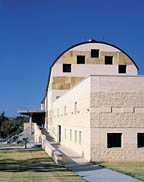
photo copyright Craig Blackmon, AIA
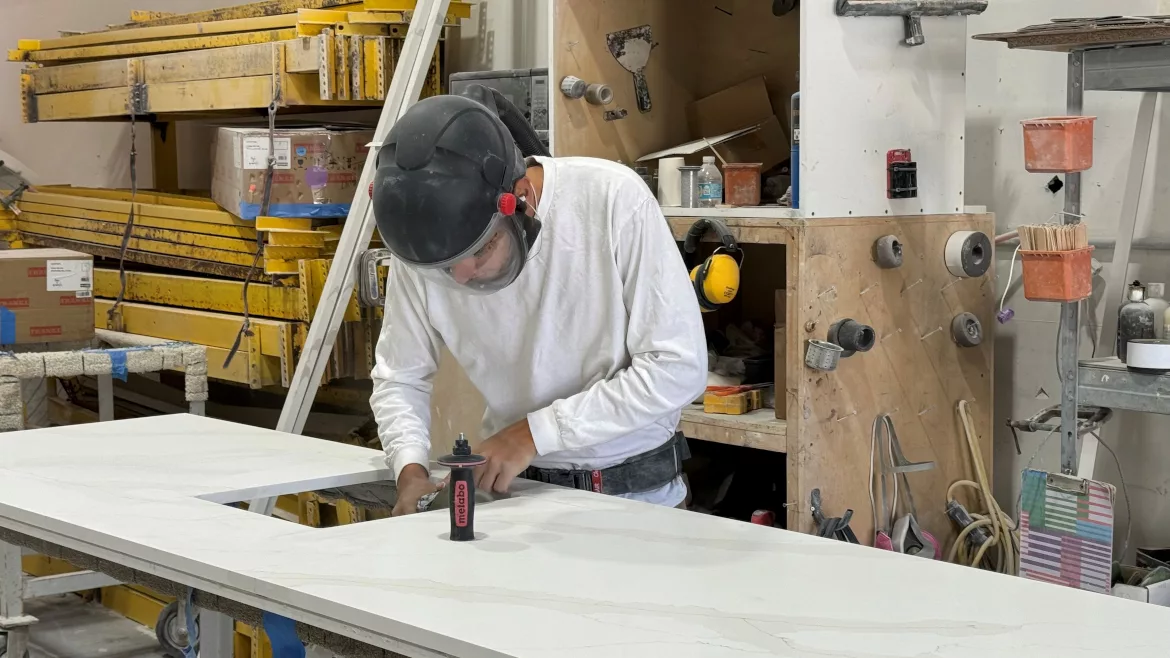
The stone industry has had to live up to these principles because, like other areas of commerce at the end of the 20th century, it came under the influence of the global marketplace. To contend with these conditions, it had to specialize, to continue replacing muscle with machines, and to renew investment in operations. The latest improvements in stone-processing equipment whittle away at production costs and reduce material waste with little impact on the quality of the final product. As equipment becomes ever more sophisticated, less finishing work is accomplished by hand. Today, many fabricators, instead of working as craftsmen, are now dealers in the material, marketing wares from an increasing number of sources. A greater variety of stone from locations around the world is now available, though the selection of affordable sizes and shapes is more limited. Thin-cut stone is today¿s common product; it is readily obtainable, reasonably priced and it can be delivered quickly almost anywhere.
In Roman times, hundreds of tons of stone were exported to meet demands from abroad. Today, dispatching stone worldwide has taken on unprecedented magnitude. With the new global marketplace, it is often the case that stone blocks are quarried on one continent, cut and fabricated on another, and installed on a third. Europe¿s two most active ports of entry for stone - Carrara, Italy, and Antwerp, Belgium - each handle more than 300,000 tons of stone blocks a year. The sources of granite, in the order of importance at these ports, are India, South Africa and Brazil. All of this material leaves the European ports as slabs, processed material, or in original block form. Material movement is increasing at an exponential rate because the cost of fuel, transportation and labor in these distant places of origin is minimal compared to other expenses involved in making new buildings.
Although architects, owners and contractors may benefit from this exchange at this moment, the economic and cultural climate that makes it possible may not last beyond the current era. Moreover, fabricating and installing material away from its place of origin diminishes the intrinsic value of the end product. A stone¿s geographic starting point, whether it is in Brazil or around the corner, is still important for rooting a building to its surroundings.
Looking out the window of an airplane as it flew low across Vermont a few years ago, I was surprised to see numerous abandoned stone quarries; almost every fifth mountain seemed to have a pit on its slopes. Most date from the early 1800s, when large tracts of land were being cleared for farming, and towns and villages were springing up to support commerce. They were left behind when the population moved west in search of easier land to cultivate and a better life. In fact, there are deserted stone operations in almost every region of the country, with enough usable material to serve America¿s stone needs far into the future. They are a magnificent resource, with potential to benefit not only regional architecture but also the environment. In the course of the last 15 years, a New York fabricator I know has returned to four previously abandoned sites. The material processed from these locations was economical and in close proximity to the constructed buildings.
Environmental advancements are being implemented in the stone industry, namely the introduction of equipment that minimizes waste and spoil piles, the reduction in the amount of energy needed to produce a finished piece of building material and the re-opening of abandoned quarries. The average cost to quarry a ton of stone, including differences in yield for various operations ranges from $50 to $200 a ton. By comparison, the cost of one cubic yard (one and a half tons) of concrete priced by a New York distributor is $63.50; one ton of flat glass is $300; one ton of aluminum, priced on the London Metal Exchange, is $1,569; and one ton of acrylic is $1,600. In comparison to other products, stone has a modest initial preparation cost, reflecting availability and the minimal amount of energy needed to bring it to the start of the fabrication process.
Many factors contribute to the suitability of a building material for a project and its effect on the environment. Determining a material¿s degree of sustainability is an elusive task, partly because there is no standard measurement from one type of product to the next and each individual element of a building should be evaluated with all the others that make a final structure. Even so, if continued care is given to stone¿s fabrication, handling and installation, it could be among the group of materials that play a role in sustainable development, since it is one that offers the opportunity to create environmentally sound and resource-efficient buildings. Achieving structures supportive to the environment that use available materials efficiently is an emerging national goal, and many architects acknowledge the merit of a judicious process for selecting building products. Stone could be high on the list of environmentally appropriate choices if its application were well-considered.
The economics for using stone are customarily evaluated in relation to the longevity of the building it encloses. The life expectancy of stone is at least 100 years, whereas many of the buildings financed and developed during the last four decades were built to last for only one or two generations. Stone was considered a luxury and precluded from use on these projects because the expense of quarrying, cutting, finishing, transporting and installing it was prohibitive compared to the short anticipated life span of these buildings. Some governmental and civic structures, planned for lengthy occupancy, were the only buildings worthy of the use of the material.
For the last decade, the early obsolescence of buildings has come under close scrutiny because of heightened public and government interest in conserving environmental resources and preserving older structures. A greater number of century-old buildings are occupied today than at any time in our nation¿s history. All indications are that this phenomenon will continue; more old buildings are being used for a variety of purposes, other than originally intended, in every part of the country.
With longer life expectancies for buildings, stone could be regarded as a less expensive product in terms of economic development, one that plays a complementary role in safeguarding the environment and as a material needing minimal long-term maintenance. Buildings are a monetary and environmental investment. The relationship of the initial cost to the long-term value of a building can be enhanced when durable materials are used for construction. An old structure will qualify economically for reuse when at least 25% of its existing value is equivalent to new capital outlays for construction. Not only does the value of a building increase when durable materials are used, but keeping an older building in use can add to its worth beyond the combined initial outlay and maintenance costs. Changing attitudes about the life span of buildings, including financing and sustainable materials, could dramatically affect the utilization of stone.
Looking for a reprint of this article?
From high-res PDFs to custom plaques, order your copy today!