Stone World logo
search
cart
facebook twitter linkedin youtube
  • Sign In
  • Create Account
  • Sign Out
  • My Account
Stone World logo
  • NEWS
  • PRODUCTS
    • Machinery
    • Digital Technology
    • Tooling & Accessories
  • MATERIALS
    • Alternative Surfaces
    • Stone
    • Tile
    • Imports & Exports Data
  • FABRICATORS
    • Fabricator How-to
    • Fabricator Case Studies
    • Fabricator of the Year
  • A&D
    • Installation & Technical Tips
    • Outdoor Design
    • Interior Design
    • Hospitality | Commercial Design
    • Mosaics & Decorative Tile
    • Kitchen & Bath
    • Residential
    • Renovation | Restoration
  • MEDIA
    • Videos
    • Podcasts
    • EBOOK
  • EVENTS
    • STONE INDUSTRY EDUCATION
    • Industry Calendar
  • MORE
    • NEWSLETTERS
    • WOMEN SPOTLIGHT
    • MARKET RESEARCH
    • STONE WORLD STORE
  • DIRECTORY
    • TRADE ASSOCIATIONS
    • Stone Suppliers
    • GET LISTED
  • EMAG
    • eMagazines
    • Archives
    • Contact
    • Advertise
  • SIGN UP!

Part II- Delivering to the jobsite
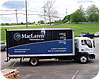
November 1, 2008
Photo by Michael Reis -- When it comes to delivering stone materials to the jobsite for installation, a lot of shops have gone well beyond the basic pick-up truck and A-frame.


Jack Ryals, Jackson Stoneworks, LLC, Gainesville, FL: I thought it would be interesting to read about how other companies set up their installation trucks. We use Isuzu NPR diesel trucks with a 15-foot box and a power tailgate. What hand tools are recommended for the installers? What supplies are recommended? We are in the process of building in shelving for storage of tools, supplies, sinks, bowls, etc. and would like to do a better job on this truck than on our others. A list of tools and supplies would be a helpful start.

Paul Michalec, Advanced Stone Tech, Galesville, MD: In answering this, you need to consider how much square feet of material will be loaded onto the truck each day. You can create a mammoth, 12-job flatbed with a boom system to be the “delivery slave” of an install force, which gets a little tricky in the engineering of the rack system. I’ll assume your needs are for a basic install truck for the everyday job scenario of one to three jobs per day. This is what most of us need, and it is pretty much run-of-the-mill, standard stuff.

But you still need to consider your local state Department of Transportation (DOT) laws for gross vehicle weight rating (GVWR), driver logs, weigh station responsibility, etc. The Isuzu with a 15-foot box may be a little overkill for your needs. It might expose your trucks to DOT rules, fuel tax, etc. -- which can be an operations nightmare in itself. I like to stay around a 12-foot box size, with the smallest chassis I can get away with to meet the hauling demands necessary.
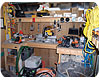
Photo by Michael Reis -- At MacLaren Fabrication, Inc. of West Chester, PA, trucks are well equipped to deal with adjustments and other conditions at the jobsite.

Mark Mihalik, SFA, Counter-parts, LLC, Delaware: We only use box trucks for installs. Half of our install trucks are subject to DOT, and the others are [under the limits for added DOT regulations]. If the GVWR in the truck is over 10,000 pounds, you must have DOT decals, medical cards, logs, etc.

We have two GMC 15-foot express vans (Box trucks), and the GVWR for one is exactly 10,000 pounds, and the other is 9,900. They don’t require the [added DOT regulations] because they are not over 10,000 pounds. Both have great headroom for tall pieces.

Remember, if your 9,900-pound vehicle is going down the road sagging, and it exceeds its GVWR, the DOT guys can still flag your truck and weigh it. If its overweight with a couple slabs of stone, you’re in trouble.

Jack Ryals, Jackson Stoneworks, LLC, Gainesville, FL: As I mentioned, Jackson Stoneworks uses Isuzu NPR Diesel 15-foot box vans for kitchen and bathroom countertop installations with a 2- or 3-man install team. Typical installations measure 100 to 200 square feet of stone, with the exception of a few larger and smaller jobs. A steel A-frame is loaded into the center aisle with a forklift at our factory, and it is unloaded individually by hand using the power tailgate at the jobsite. We plan to build a 2-foot-wide cabinet at the front of the van, leaving about 12 feet of usable space for the stone and accessories in the box van. Our vans have a GVWR of 14,500 pounds, and they are equipped with extra springs to handle the stone weight. We estimate that a 300-square-foot job is 50% larger than our norm and will add 5,000 to 6,000 pounds, plus the tools.

Most jobs require storage for the following items:

  • one or two sinks
  • four to six lavatories
  • industrial vacuum
  • battery-powered drill
  • battery-powered saw
  • seam setter
  • rolling granite cart
  • rolling slab cart
  • two Makita grinders
  • polishing pads
  • Alpha saw
  • plumbing tools
  • cabinet (wood) tools
  • case of silicone sealants
  • case of paintable caulks
  • color-matching kit
  • slab-carrying grips
  • slab clamps
  • F-clamps
  • 2-foot level
  • 6-foot level
  • Luan strips for templates
  • wedges
  • gallon cans of denatured alcohol, acetone
  • paper towels
  • portable saw horses
  • portable lights
  • two 100-foot extension cords
  • sealer


Specially designed slab carriers are increasing in use. At Southside Granite of Dothan, AL, finished stone pieces are delivered using F. Barkow slab carriers on a dual-wheel, two-door extended cab chassis.

What have I forgotten that’s required on every installation truck?

Antonio Almonte, SFA, River City Stone Inc., Winnipeg, Manitoba, Canada:

Some other considerations are:

  • polyesters
  • epoxies
  • 10- to 12-inch miter saw with diamond blade
  • portable rail saw
  • angle iron (to clamp to fragile stones for carrying into the house)
  • sink support rail system (either with suction cups or the vacuum super rails)
Clyde M. Kingry, Southside Granite Co., Dothan, AL: One thing we have in our truck is a 6-foot folding lunchroom table to use as a lightweight fabrication table on the job. When the surface gets cut up, we throw it away and get another one. It’s easy to set up and take down, plus it’s not heavy and doesn’t take up much room . . . and they’re relatively cheap.

Our trucks have F. Barkow slab carriers on a dual-wheel, two-door extended cab chassis.

Share This Story

Looking for a reprint of this article?
From high-res PDFs to custom plaques, order your copy today!

Recommended Content

JOIN TODAY
to unlock your recommendations.

Already have an account? Sign In

  • customer doing research online

    3 Reasons Why Quick Response Time Results in a Successful Fabrication Shop

    Your fabrication shop can have the best website. The best...
    Fabricator How-to
    By: Anthony Milia
  • Silica

    Renewed National Attention Ignites Over Silicosis Epidemic

    A major investigative report published on March 12, 2026...
    Industry Insights
    By: Jason Kamery
  • shipping containers

    U.S. Countertop Material Imports: February 2026

    U.S. countertop material imports collapsed in February...
    Stone
    By: Jason Kamery
Manage My Account
  • eMagazine
  • Newsletters
  • Online Registration
  • Manage My Preferences
  • Subscription Customer Service

More Videos

Popular Stories

cal osha

Cal/OSHA Standards Board to Vote May 21 on Engineered Stone Ban Petition

shipping containers

U.S. Countertop Materials Imports: March 2026

kitchen

Building a Reputation on Strong Craftsmanship and Customer Service

Fabricator Focus

From profiles to roundtable discussions, Q&As to best business practices, we're turning a focus on topics and challenges impacting fabricators.

AI Talk Is Everywhere -- Where Does a Countertop Fabricator Begin?

Fabricators Discuss Pros and Cons of Chip Repair

How to Grow a Countertop Fabrication Shop

Events

June 25, 2026

North Carolina Stone Summit

You’ve probably heard a lot lately about how to calculate the profit for each job you produce. You likely have production benchmarks based on square footage since it’s the most common production metric in the industry. Come learn how focusing on these metrics can hurt your profitability and what to do about it.

July 16, 2026

Washington Stone Summit

Join us for "Taking Your Organization to the Next Level," a session dedicated to transforming your business practices. Discover strategies for setting clear agendas, encouraging participation, and driving actionable outcomes. Learn how to foster collaboration and communication, ensuring that every meeting enhances productivity and contributes to your business goals.

View All Submit An Event

Poll

Tariffs and Quartz Imports

If high tariffs are placed on U.S. quartz imports, how will this affect your business?
View Results Poll Archive

Products

Restoration & Maintenance Technical Module

Restoration & Maintenance Technical Module

See More Products
	
3 Reasons Why Quick Response Time Results in a Successful Fabrication Shop

Related Articles

  • Part II - tooling and accessories: Fabricating Technology Roundup

    See More
  • Fabricator Forum: Delivering stone to difficult jobsites

    See More
  • Safely handling slabs in the warehouse and jobsite

    See More
×

Our Newsletters are a rock solid source of industry insights!

Stay in the know on the international stone and tile industry trends.

JOIN TODAY!
  • RESOURCES
    • Advertise
    • Contact Us
    • Directories
    • Store
    • Want More
  • SIGN UP TODAY
    • Create Account
    • eMagazine
    • Newsletter
    • Customer Service
    • Manage Preferences
  • SERVICES
    • Marketing Services
    • Reprints
    • Market Research
    • List Rental
    • Survey/Respondent Access
  • STAY CONNECTED
    • LinkedIn
    • Facebook
    • YouTube
    • X (Twitter)
  • PRIVACY
    • PRIVACY POLICY
    • TERMS & CONDITIONS
    • DO NOT SELL MY PERSONAL INFORMATION
    • PRIVACY REQUEST
    • ACCESSIBILITY

Copyright ©2026. All Rights Reserved BNP Media, Inc. and BNP Media II, LLC.

Design, CMS, Hosting & Web Development :: ePublishing