Stone World logo
search
cart
facebook twitter linkedin youtube
  • Sign In
  • Create Account
  • Sign Out
  • My Account
Stone World logo
  • NEWS
  • PRODUCTS
    • Machinery
    • Digital Technology
    • Tooling & Accessories
  • MATERIALS
    • Alternative Surfaces
    • Stone
    • Tile
    • Imports & Exports Data
  • FABRICATORS
    • Fabricator How-to
    • Fabricator Case Studies
    • Fabricator of the Year
  • A&D
    • Installation & Technical Tips
    • Outdoor Design
    • Interior Design
    • Hospitality | Commercial Design
    • Mosaics & Decorative Tile
    • Kitchen & Bath
    • Residential
    • Renovation | Restoration
  • MEDIA
    • Videos
    • Podcasts
    • EBOOK
  • EVENTS
    • STONE INDUSTRY EDUCATION
    • Industry Calendar
  • MORE
    • NEWSLETTERS
    • WOMEN SPOTLIGHT
    • MARKET RESEARCH
    • STONE WORLD STORE
  • DIRECTORY
    • TRADE ASSOCIATIONS
    • Stone Suppliers
    • GET LISTED
  • EMAG
    • eMagazines
    • Archives
    • Contact
    • Advertise
  • SIGN UP!

Is your workplace clean?
By Daniel Samaniego
May 1, 2010
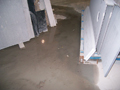
A muddy floor is a serious slip-and-fall risk in a stone fabrication shop - for your employees as well as your customers.


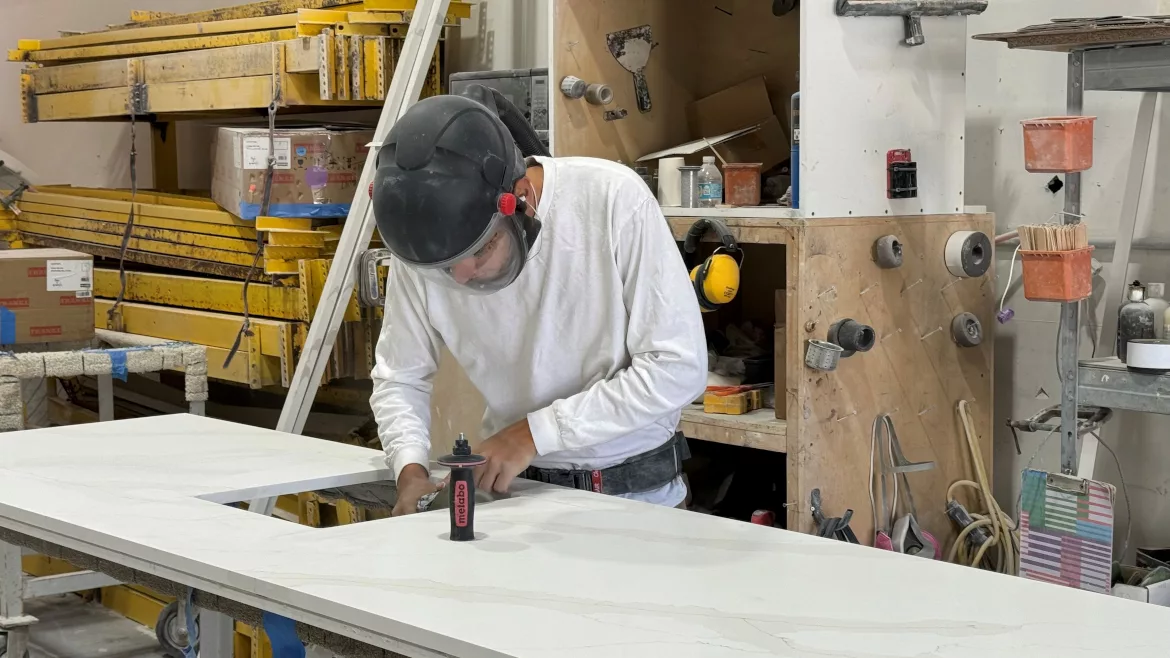
Marble and granite fabrication shops are places where cleanliness is always a challenge, but it is possible to keep these locations in excellent condition, more importantly, less prone to accidents or employee health issues. Our employees, customers and visitors will be the direct beneficiaries if we create a cleanliness culture in our workplace.

When you think of the negative mental impact that comes from walking through a muddy or dusty workplace, that depressive condition could influence the decision-making of your customers.
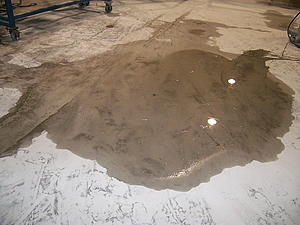
Slippery areas of the shop should be immediately cleaned, and the source of the water should be addressed.

Customers who are spending thousands of dollars on stonework for their design may well want to see the shop in which it will be fabricated, and we need to look at the fabrication shop as an extension of the showroom. Is everything clean and organized? Are loose scraps discarded in the shop and in the yard? What about our offices? Are we giving to our customers a good message? Remember that a customer's first impression is a lasting impression.

Dust control

Much publicity has been given to the dangers connected to the dust that is produced during stone processing. If a shop is unable to work 100% wet, then the dust needs to be controlled to not only ensure the health of your employees, but also your machinery. Simply using fans is not enough; controlling this dust requires one or more pieces of the following machinery - water curtains, filters, dust collectors, ventilation, vacuums and specialized, directed blowing systems. Many of these systems have been developed specifically for the stone industry.
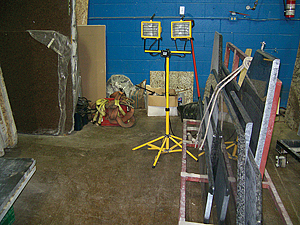
Cleanliness also means keeping everything organized and storing everything in a designated space. Nothing should be abandoned.

Waste and garbage

When dealing with scraps of marble, granite and other materials, waste should be sent to a designated Dumpster or other receptacle, and under no circumstances should it be mixed with normal garbage. Recycling is a compromise that all shops need to make, and we need to set an example for our employees and customers.

Hazardous garbage is not only limited to the fabrication shop, as it also includes toner and printer cartridges, batteries, oil/lubricants, computers, screens, printers and propane tanks. When disposing these items, you have two options: call a specialized company to pick up hazardous material or drop it off at the nearest municipal recycling center.

Being eco-friendly is no longer a novelty for a stone fabrication shop; for many customers, it is expected. A fabrication shop should maintain a list of all the measures it takes to minimize its impact on the environment, and it could even be included in your customer literature. You might be surprised how effective it could be.
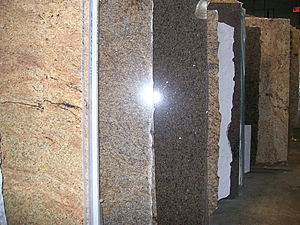
Pictured is a good example of organization. Having your slab inventory in proper order offers the customer a clean and safe environment to select material.

Water recycling

Many shops have also become more conscientious in terms of their water recycling as a means to be eco-friendly, while also keeping a clean workplace and reducing water bills. There are a range of systems out there for shops of all sizes, from three-man shops to large-scale production shops. However, it is critical that shop employees do not dump consumable liquids - coffee, soda, juice, etc. - into the water recycling system.

Depending on the pH of the water, it may be necessary on occasion to add either a bleach tablet to the clear water tank or to completely shock the system - a gallon in the collection pit in the floor, a gallon in the trenches and a gallon in the clear water tank. This may be necessary a couple times per quarter. Many factors are involved that may precipitate the need to add bleach. Stagnant water can be one, along with heat and humidity in the shop and other trace liquids accidentally introduced to the system.

Regular pH tests are recommended for any closed loop system for the benefit of the water quality, workers’ skin and machinery components.

If you see an influx of mosquitoes in your workplace, it may be a sign that there is a problem with your water treatment system, and this will only increase in warm weather.

Clean workstations

Far too many shop floors are littered with items such as discarded paper, masking tape, steel wool, razor blades, cups and other garbage. In order to eliminate littering among shop employees, assign a specific work area to each employee. Place a garbage can at each workstation, and make sure each employee knows that it is their responsibility to empty it on a regular basis. Having demarked work areas helps establish individual responsibilities.

A bench fabricator uses blade discs, grinding wheels or diamond cups with pneumatic/electric tools, and this work requires adequate space, cleanliness and proper lighting. Make sure that your fabricators have all of this in place on a consistent basis.

Moreover, it is the responsibility of the manager/owner to regularly evaluate the overall process. Once a plan for workplace cleanliness is in place, the manager/owner needs to regularly meet with all employees and listen to ideas. If your workers feel they are part of a team where their voices are heard, overall wellness and productivity will be increased.        

Share This Story

Looking for a reprint of this article?
From high-res PDFs to custom plaques, order your copy today!


Daniel Samaniego has a background as a stone machinery technician and industrial safety specialist. He lives in Toronto, Ontario, Canada.

Recommended Content

JOIN TODAY
to unlock your recommendations.

Already have an account? Sign In

  • customer doing research online

    3 Reasons Why Quick Response Time Results in a Successful Fabrication Shop

    Your fabrication shop can have the best website. The best...
    Fabricator How-to
    By: Anthony Milia
  • Silica

    Renewed National Attention Ignites Over Silicosis Epidemic

    A major investigative report published on March 12, 2026...
    Industry Insights
    By: Jason Kamery
  • shipping containers

    U.S. Countertop Material Imports: February 2026

    U.S. countertop material imports collapsed in February...
    Stone
    By: Jason Kamery
Manage My Account
  • eMagazine
  • Newsletters
  • Online Registration
  • Manage My Preferences
  • Subscription Customer Service

More Videos

Popular Stories

cal osha

Cal/OSHA Standards Board to Vote May 21 on Engineered Stone Ban Petition

shipping containers

U.S. Countertop Materials Imports: March 2026

kitchen

Building a Reputation on Strong Craftsmanship and Customer Service

Fabricator Focus

From profiles to roundtable discussions, Q&As to best business practices, we're turning a focus on topics and challenges impacting fabricators.

AI Talk Is Everywhere -- Where Does a Countertop Fabricator Begin?

Fabricators Discuss Pros and Cons of Chip Repair

How to Grow a Countertop Fabrication Shop

Events

June 25, 2026

North Carolina Stone Summit

You’ve probably heard a lot lately about how to calculate the profit for each job you produce. You likely have production benchmarks based on square footage since it’s the most common production metric in the industry. Come learn how focusing on these metrics can hurt your profitability and what to do about it.

July 16, 2026

Washington Stone Summit

Join us for "Taking Your Organization to the Next Level," a session dedicated to transforming your business practices. Discover strategies for setting clear agendas, encouraging participation, and driving actionable outcomes. Learn how to foster collaboration and communication, ensuring that every meeting enhances productivity and contributes to your business goals.

View All Submit An Event

Poll

Tariffs and Quartz Imports

If high tariffs are placed on U.S. quartz imports, how will this affect your business?
View Results Poll Archive

Products

Restoration & Maintenance Technical Module

Restoration & Maintenance Technical Module

See More Products
	
3 Reasons Why Quick Response Time Results in a Successful Fabrication Shop

Related Articles

  • Is your workplace safe?

    See More
×

Our Newsletters are a rock solid source of industry insights!

Stay in the know on the international stone and tile industry trends.

JOIN TODAY!
  • RESOURCES
    • Advertise
    • Contact Us
    • Directories
    • Store
    • Want More
  • SIGN UP TODAY
    • Create Account
    • eMagazine
    • Newsletter
    • Customer Service
    • Manage Preferences
  • SERVICES
    • Marketing Services
    • Reprints
    • Market Research
    • List Rental
    • Survey/Respondent Access
  • STAY CONNECTED
    • LinkedIn
    • Facebook
    • YouTube
    • X (Twitter)
  • PRIVACY
    • PRIVACY POLICY
    • TERMS & CONDITIONS
    • DO NOT SELL MY PERSONAL INFORMATION
    • PRIVACY REQUEST
    • ACCESSIBILITY

Copyright ©2026. All Rights Reserved BNP Media, Inc. and BNP Media II, LLC.

Design, CMS, Hosting & Web Development :: ePublishing