Stone World logo
search
cart
facebook twitter linkedin youtube
  • Sign In
  • Create Account
  • Sign Out
  • My Account
Stone World logo
  • NEWS
  • PRODUCTS
    • Machinery
    • Digital Technology
    • Tooling & Accessories
  • MATERIALS
    • Alternative Surfaces
    • Stone
    • Tile
    • Imports & Exports Data
  • FABRICATORS
    • Fabricator How-to
    • Fabricator Case Studies
    • Fabricator of the Year
  • A&D
    • Installation & Technical Tips
    • Outdoor Design
    • Interior Design
    • Hospitality | Commercial Design
    • Mosaics & Decorative Tile
    • Kitchen & Bath
    • Residential
    • Renovation | Restoration
  • MEDIA
    • Videos
    • Podcasts
    • EBOOK
  • EVENTS
    • STONE INDUSTRY EDUCATION
    • Industry Calendar
  • MORE
    • NEWSLETTERS
    • WOMEN SPOTLIGHT
    • MARKET RESEARCH
    • STONE WORLD STORE
  • DIRECTORY
    • TRADE ASSOCIATIONS
    • Stone Suppliers
    • GET LISTED
  • EMAG
    • eMagazines
    • Archives
    • Contact
    • Advertise
  • SIGN UP!

Lueders limestone adds character to University sanctuary

By Jennifer Richinelli
March 14, 2007
The design of the Texas Hillel - also known as the Topfer Center for Jewish Life - combines brick and Lueders limestone to create a warm welcoming environment. The building sits close to the campus of the University of Texas in Austin, TX.


Kevin Alter of Alterstudio Architects, the architect for the project, explained that most of the buildings on this street are very heavy solid buildings. “They look like bunkers,” he said. “There is no particular relationship to the street. With this building, we tried to be different. All of the students walk right past it, so we thought that we’d make a building that was proud and exciting.”

Steeped in heritage, it was important that the new home for the Texas Hillel - also known as the Topfer Center for Jewish Life - would serve as a warm retreat for students at the University of Texas at Austin. Additionally, the design also needed to meet practical requirements. With these objectives in mind, the design team utilized a palette of red brick and Lueders limestone to build the new Jewish student community center, which opened in February of 2006.

“There had been a building here since the 1950s, but there were some problems,” said Project Architect Kevin Alter of Alterstudio Architects, who also heads the university’s school of architecture. “It was about a 7,500-square-foot building. We tore it down and built a new one.”

Alter explained that Hillel is a Jewish organization that is always associated with a university. “It’s quite extraordinary,” he said. “Its focus is as a Jewish student union. There are cultural things, and it usually has a religious ceremony on Friday nights.

“In Judaism, there are three main movements - Orthodox, Conservative and Reform,” Alter went on to explain. “All three groups come together for dinner after the service, which is geared towards students. On High Holidays, they have a large service for each separate movement. The groups range from 10 [people], which is technically the minimum amount required, to 30 or 40 that come to the service. They have about 400 to 500 people on High Holidays.”

According to the architect, one of the main problems with the original building was space. “The Conservatives got to have services in the chapel, the Orthodox were in the library, and the Reform movement was in a rump room,” he said. “We wanted to make all the groups feel equal.

The new design

Alter said that the primary design objective for the new 18,000-square-foot center was for the main area of the building to feel like a home away from home for the students - somewhere to invest in everyday life.

“When I was talking with the Rabbi, there were two tasks that he gave me,” said the architect. “To make Judaism seem a part of every day life - not just for special services - and that he didn’t want it to feel like his mother’s living room with the plastic on the couch. Also, he wanted us to make a building that would encourage people to come in.”

Less than 10% of the 50,000 student body is Jewish, and most of the Jewish students weren’t involved in Hillel, according to Alter. “We wanted to bring them closer and bring them in,” he said. “The building is on San Antonio Street - one block west of campus. It is called ‘Religious Row’ because there are about eight different religious institutions there. They are all set up right next to the school.”

The architect explained that most of the buildings on this street are very heavy, solid buildings. “They look like bunkers,” he said. “There is no particular relationship to the street. With this building, we tried to be different. All of the students walk right past it, so we thought that we’d make a building that was proud and exciting. Something that is part of the everyday life of the school, but also welcoming rather than a bunker or monument.”

According to Alter, there is no overall symbolism to the building. “The building, in a way, wasn’t so important,” he said. “We didn’t want to make an object so important, but wanted to make an invitation to come in. In the front, there is a porch with a wooden overhang. It’s always in the shade and gets a breeze. There’s also a little coffee shop inside. The ‘sign’ of the building is actually the students themselves.”
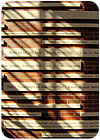


Rather than creating a plaque for a donor wall, names were carved into pieces of Lueders limestone, which were attached to the brick wall - making for a unique design.

Choosing materials

When it came time to select building materials for the new design, masonry and Lueders limestone, which is quarried in the region, were favorites. “The original building was brick,” said Alter. “We were uncomfortable with tearing down a building that had been there for 50 years. We wanted to reuse the original masonry, but it was too expensive. We used a brick that was pretty much an exact match though. The idea of brick was to keep the heritage and memory of the old building alive. Lueders limestone is very beautiful.”

The architect explained that many buildings on the campus of the University of Texas at Austin feature Lueders limestone. For the Hillel’s design, limestone was chosen as accent pieces.

“We inset limestone in the walls for special things,” said Alter. “We thought we would use some limestone and do it well.”

Varying lengths of limestone pieces were used to decorate both exterior and interior walls. “The limestone starts outside and helps with the transition of the building,” said the architect. “The building is all about trying to connect from the inside to the outside. The transition is very casual, and that for me is a very nice thing.”

Alter explained that he didn’t want to create a donor wall that looked like a plaque, so strategically placing the different-sized limestone pieces with donor names carved into them on the wall was something a little more unique. “Using the limestone a little more discreetly, I hope that it is appreciated more and that people appreciate that the donor wall is not just stuck on the wall. It’s decorative at the same time and part of the design.”

The brick and limestone give the building texture and help to achieve the inviting atmosphere that was desired. “The brick has a lot of variegation,” said Alter. “You can see how they were stacked in the kilns. I like that when you get closer, you can see that the brick has a lot of variation and then you look at the limestone and see the [imprints of] little shells. I love that kind of serendipity.”

Installing the limestone

The limestone used for the project was quarried and fabricated by Delta Stone and supplied and installed by Looking Good Masonry of Austin, TX. “We went out [to the site] and jointly field measured [with Delta Stone],” said Louis Hayn of Looking Good Masonry. “They brought the slabs and we did some onsite cutting as well.”

The installer explained that the limestone strips, which measured approximately 2 ½, 5 ½ and 8 inches, varied in size to line up with the brick coursing. Installing the stone pieces was done simultaneously with the brick.

“It went hand-in-hand,” said Hayn. “We laid up the brick and when it came time to stick in a piece of stone, we did.” The pieces were installed with split-tail stainless steel anchors.

The most challenging aspect of the limestone installation was protecting the finished work after it was completed, according to the installer. “Because of all the construction that was going on and the brick that went on top of it, we covered [the limestone] with wood boxes and left them in place until [the job was finished],” he said.

It only took Looking Good Masonry several days to install the limestone, while the brick masonry took approximately seven weeks, with about seven to eight workers on the job. “We do a lot of cut stone, so this was a simple little deal,” said Hayn.

In total, construction of the new Texas Hillel was completed in about a year. “This was a little bit of a labor of love,” said Alter, adding that talks about the new design began in 1999, but were held up at times due to funds. But, in the end, the project was a success. The building received a 2006 AIA Austin Merit Award and 2006 Texas Society of Architects Design Award.

Share This Story

Looking for a reprint of this article?
From high-res PDFs to custom plaques, order your copy today!


Jenniferrichinelli 200px

Launching her career with BNP Media in 1996, Jennifer Richinelli is the Editor-in-Chief of Stone World, a leading publication serving the global stone and tile industry. With a strong background in journalism and trade publishing, she oversees the magazine’s editorial direction, delivering in-depth coverage of industry trends, innovative technologies, architectural applications and breaking industry news.

Throughout her career, Jennifer has built a reputation for connecting industry professionals with valuable insights, highlighting the work of fabricators, designers, architects and other industry leaders. Known for her thoughtful editorial voice and commitment to quality content, Jennifer continues to play a vital role in shaping conversations within the stone industry while fostering a platform that celebrates craftsmanship, innovation and design excellence.

In 2010, the Spanish Ceramic Tile Manufacturers’ Association (ASCER) awarded Jennifer with the International Journalism Award for her extensive coverage of the Spanish tile industry. Additionally, she was the recipient of the 2026 Coverings Champions People’s Choice Award.

email: richinellij@bnpmedia.com | office: (201) 245-5204

Recommended Content

JOIN TODAY
to unlock your recommendations.

Already have an account? Sign In

  • customer doing research online

    3 Reasons Why Quick Response Time Results in a Successful Fabrication Shop

    Your fabrication shop can have the best website. The best...
    Fabricator How-to
    By: Anthony Milia
  • Silica

    Renewed National Attention Ignites Over Silicosis Epidemic

    A major investigative report published on March 12, 2026...
    Industry Insights
    By: Jason Kamery
  • shipping containers

    U.S. Countertop Material Imports: February 2026

    U.S. countertop material imports collapsed in February...
    Stone
    By: Jason Kamery
Manage My Account
  • eMagazine
  • Newsletters
  • Online Registration
  • Manage My Preferences
  • Subscription Customer Service

More Videos

Popular Stories

cal osha

Cal/OSHA Standards Board to Vote May 21 on Engineered Stone Ban Petition

shipping containers

U.S. Countertop Materials Imports: March 2026

kitchen

Building a Reputation on Strong Craftsmanship and Customer Service

Fabricator Focus

From profiles to roundtable discussions, Q&As to best business practices, we're turning a focus on topics and challenges impacting fabricators.

AI Talk Is Everywhere -- Where Does a Countertop Fabricator Begin?

Fabricators Discuss Pros and Cons of Chip Repair

How to Grow a Countertop Fabrication Shop

Events

June 25, 2026

North Carolina Stone Summit

You’ve probably heard a lot lately about how to calculate the profit for each job you produce. You likely have production benchmarks based on square footage since it’s the most common production metric in the industry. Come learn how focusing on these metrics can hurt your profitability and what to do about it.

July 16, 2026

Washington Stone Summit

Join us for "Taking Your Organization to the Next Level," a session dedicated to transforming your business practices. Discover strategies for setting clear agendas, encouraging participation, and driving actionable outcomes. Learn how to foster collaboration and communication, ensuring that every meeting enhances productivity and contributes to your business goals.

View All Submit An Event

Poll

Tariffs and Quartz Imports

If high tariffs are placed on U.S. quartz imports, how will this affect your business?
View Results Poll Archive

Products

Restoration & Maintenance Technical Module

Restoration & Maintenance Technical Module

See More Products
	
3 Reasons Why Quick Response Time Results in a Successful Fabrication Shop

Related Articles

  • Illinois fabricator pursues alternative avenues

    See More
×

Our Newsletters are a rock solid source of industry insights!

Stay in the know on the international stone and tile industry trends.

JOIN TODAY!
  • RESOURCES
    • Advertise
    • Contact Us
    • Directories
    • Store
    • Want More
  • SIGN UP TODAY
    • Create Account
    • eMagazine
    • Newsletter
    • Customer Service
    • Manage Preferences
  • SERVICES
    • Marketing Services
    • Reprints
    • Market Research
    • List Rental
    • Survey/Respondent Access
  • STAY CONNECTED
    • LinkedIn
    • Facebook
    • YouTube
    • X (Twitter)
  • PRIVACY
    • PRIVACY POLICY
    • TERMS & CONDITIONS
    • DO NOT SELL MY PERSONAL INFORMATION
    • PRIVACY REQUEST
    • ACCESSIBILITY

Copyright ©2026. All Rights Reserved BNP Media, Inc. and BNP Media II, LLC.

Design, CMS, Hosting & Web Development :: ePublishing