Common fabricator issues with resin-coated slabs

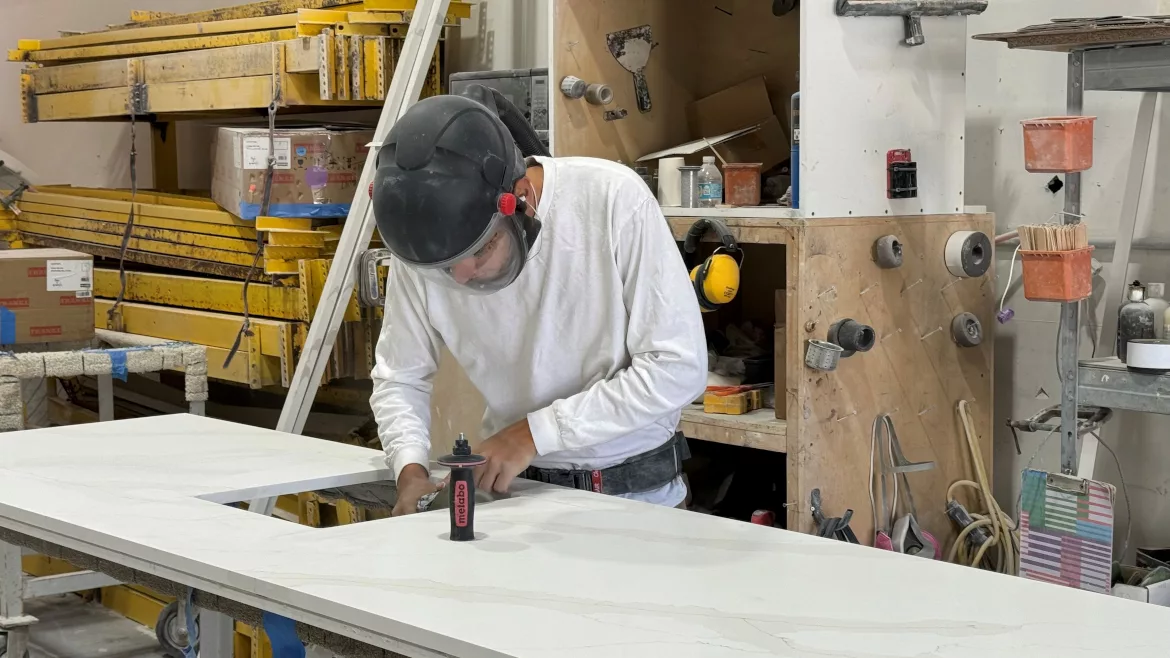
Over the past few years, more and more fabricators around the country have begun using epoxy-resined slabs from all over the world. This process, introduced in the market around 10 years ago, has become more common, and has tremendously increased the quality of the available slabs. However, there are certain issues that fabricators must consider when working with resin-treated stone.
Epoxy resin is a two-part adhesive used at the manufacturing level to fill the micro-fissures of a stone material, repair small cracks and enhance the overall look of a particular granite. Such a “system†usually is a bi-component adhesive, clear in color and with a very low viscosity. The epoxy is poured on the whole surface of the slab, left to cure, and then removed from the surface using the standard abrasives normally used for polishing granite.
To understand what causes the color enhancing of the granite, we need to digress a little bit and see what, in reality, give us the perception of color in our everyday life. The world as we see it, is not colored per se.
The color that our eyes perceive is (most of the time) a reflection of the light from the object itself. Every material absorbs a certain amount of light and reflects part of it. The part that is reflected is composed of one or more of the basic colors present in the visible light spectrum. You will perceive a black color when all the light is absorbed, and you will see a white color when almost all the light is reflected. The amount and the kind of light reflected is a particular property of the molecular composition of the material.
Now, if we add to a particular substance, we can temporarily or permanently change the way the material is composed and the way the light is reflected. A classical example is when the material is wet. Water is completely transparent to light and so perceived without color, but when poured on an absorbent material, the material itself looks “darker.†That means that the water molecules filled in the microscopic spaces and gaps in the material and changed the way the light was absorbed and reflected.
Matching the edge to the surface
The effect that water has on a slab occurs when an epoxy resin system is applied to a granite slab. The resin itself would be perceived completely trans-parent, but the molecular interaction and the filling of all the voids in the surface has the effect of darkening the color, thus giving a “wet†effect.This happens on the surface, and only where the resin was applied. When a fabricator cuts a slab to size and starts profiling the edge, he will soon find out that this part of the granite has not been touched by the epoxy resin, and it is considerably lighter in color.
Using the same exact epoxy resin on the edge, thus, would be the most logical solution. Unfortunately, this is not feasible, due to the particularly long hardening time of the resin.
Different fabricators may have experimented with in-house solutions to this problem. Some have tried linseed oil; others even went further and applied used motor oil to darken and match the color. Besides the fact that this practice could be highly toxic and not recommended for a kitchen countertop, this solution is also only temporary, and will be removed with time.
The only other solution available on the market right now is to find the right color enhancer that will deepen the color of the edge to the same darker shade of the surface. To truly solve the problem, a good color enhancer must be able to penetrate the polished surface. There are many color enhancers on the market that lack this property and -- although they do an excellent job on rough material (where the surface is very open with large micro-fissures and voids) -- they will only stay on the surface of a highly polished edge, creating more problems than they solve.
Other features, such as ease of use and a long-lasting effect, are also part of the equation that makes such a product an effective problem solver.
There are also some warnings to be considered. The fabricator must make sure that the slab -- and in particular, the edge -- has not been pre-treated with any kind of sealer, as this will prevent the color enhancer to penetrate. Additionally, if you are working with a very low-absorbent material -- such as Tobacco Brown, Violetta, etc. -- the color enhancer should be applied right after the 800 grit and not after the buffer. The surface must be completely dry and clean.
The same color enhancer could also be used in case of light scratches on the surface of the stone, especially if the first few millimeters were removed, and the color was not matched perfectly after re-polishing the piece.
Common sense suggests that users of these enhancers test the product on an inconspicuous area of the slab to make sure that the color change is the same as the initial darkening of the epoxy resin.
Using solvent-based sealers
In the past, there have been concerns regarding the possible use of solvent-based sealer on epoxy resin coated slabs. Although not every sealer is the same (the solvent is usually the difference), there are some solvent-based sealers on the market that are completely safe for use on resin slabs. The best approach is to simply refer to the manufacturer's instructions and recommendations.
Although water-based sealers do not have the same concerns, our in-house testing of a particular solvent-based sealer found it to be more effective than a water-based counterpart when used on epoxy-resined slabs.
Should you be concerned about UV?
There have been different tests conducted on both resined and non-resined slabs to see what effect the sunlight will have on the color. In these cases, UV caused discoloration of the material; however, this method called for 1,000 hours of UV irradiation, something a typical countertop will never be subjected to.
On the resin slab -- being darker with more vibrant color -- the effect of UV was more apparent. Also, with a black material, the color change was such that it degraded the overall beauty and appearance. In cases such as this, an application of a good color enhancer could permanently restore the natural color.
Conclusions
More and more slabs are being resin treated throughout the world. This will not only lower the overall cost of granite, but it will also help customer satisfaction when buying a natural stone countertop. A resin-treated slab means a better finish, less pitting and smoother surfaces. Fabricators nowadays just have to know the possible problems those slabs may have and know how to fix them with inexpensive and simple repairs.Looking for a reprint of this article?
From high-res PDFs to custom plaques, order your copy today!