Indiana limestone unifies medical campus
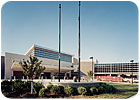
A recent renovation and expansion to the Veterans Affairs Medical Center - Louis J. Stokes Medical Center in Cleveland, OH, included construction of a new 121,000-square-foot Ambulatory Care building. Large panels of Indiana limestone were used for the exterior facade of the new structure to match existing architecture on the medical campus.
Photos by Robert Heine
Photos by Robert Heine

The design team worked closely with Evans Limestone Co., the supplier for the project, to ensure that the limestone's graining remained consistent.
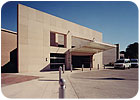
Screen walls - formed by large limestone panels - were built at the north and south entrances of the Ambulatory Care building. “We were able to bring the limestone all the way down to grade - even with the severe climate,†said Project Designer Timothy S. Hunsicker, AIA, principal of CBLH Design, Inc., adding that all of the stone was sealed.
The recent additions to the medical center included an 800-space parking garage followed by a 121,000-square-foot Ambulatory Care building. “We used veneer panels that were 4 inches thick [for the exterior of the structures],†said the project designer. “Some pieces were up to 6 feet in length and 3 feet tall.â€

In addition to the exterior facade of the Ambulatory Care building, Indiana limestone was also used for parts of the interior design. “It was very intentional to have an inside/outside feel,†said the project designer. “The interior panels are very similar in size to the outside [ones].â€
Screen walls, which were clad with the large limestone panels, were built at the north and south entrances of the Ambulatory Care building. “We were able to bring the limestone all the way down to grade - even with the severe climate,†said Hunsicker, adding that all of the stone was sealed.
In addition to the exterior facade of the Ambulatory Care building, Indiana limestone was also used for parts of the interior design. “It was very intentional to have an inside/outside feel,†said the project designer. “The interior panels are very similar in size to the outside [ones]. They measure about 5 or 6 feet long and 30 inches high.â€<

An 800-space parking garage was also recently added to the medical campus. Indiana limestone veneer panels - measuring 4 inches thick and up to 6 feet in length and 3 feet tall - were employed for the structure's exterior design.
Renovating existing architecture
After construction of the new structure was completed, a renovation of the original hospital began. “Once the Ambulatory Care building was finished, they started renovating each floor of the existing hospital,†said Hunsicker. And while there was the desire to use limestone for the renovation, budget became a factor, according to the project designer.For an almost 30,000-square-foot addition to the Intensive Care Unit (ICU), StoneLiteâ„¢ panels from Stone Panels, Inc. of Coppell, TX, were employed for both exterior and interior applications. “We switched because of the weight and cost,†explained the architect. “It's interesting because we switched the product, but wanted to keep the same idea. The panels are lightweight, but still Indiana limestone.â€

For an almost 30,000-square-foot addition to the Intensive Care Unit (ICU) of the existing hospital, StoneLiteTM panels from Stone Panels, Inc. of Coppell, TX, were employed for both exterior and interior applications.
Additionally, the lightweight limestone panels were ideal for the exterior of the ICU addition because they are impervious to water penetration. The fiber-reinforced epoxy skin directly behind the stone provides a waterproof barrier, thereby eliminating the need for a secondary layer of protection.

The lightweight composite wall panels, which are made up of thin Indiana limestone veneer reinforced with an aluminum honeycomb backing, were also used for the interior renovation of the Spinal Cord Injury Unit.
Cleveland, OH
Architect:-CBLH Design, Inc., Cleveland, OH
General Contractors: Panzica Construction, Cleveland, OH (Ambulatory Care addition, parking garage); LDV Inc. (Intensive Care Unit addition); Hambrick Inc. (Spinal Cord Injury Unit renovation)
Stone Suppliers: Evans Limestone Co. (Ambulatory Care addition, parking garage); Stone Panels, Inc., Coppell, TX (Intensive Care Unit addition, Spinal Cord Injury Unit renovation)
Stone Installer: Foti Construction Co., Cleveland, OH
Looking for a reprint of this article?
From high-res PDFs to custom plaques, order your copy today!