Local fieldstone attracts retailers and residents
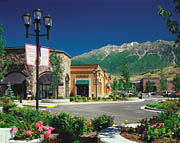
"We were selected because we share with the developer a similar philosophy and desire to create innovative new prototypes," said Rob Anderson of Field Paoli Architects. "The first step was to come up with a site plan concept that incorporated major retailers interested in the site. We had to work closely with the retailers and leasing experts to determine the positioning of each store."
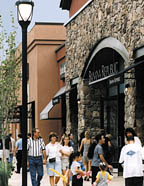
Once the locations of the major retailers were decided and the plan was drawn up, the next item of business was the construction materials. "We wanted something that related to the more traditional architecture in the area," Anderson said. "And we wanted something that would evoke an image of quality as well as give the buildings a substantial and earthy feeling. We chose a fieldstone, a rustic natural quartzite that hasn't been dressed. It was a local material that came from a small supplier in Provo, UT."
Natural stone was not used on all of the stores, however. "Between 12 and 15 stores used stone," Anderson said. "In total, it is a 190,000-square-foot center on 17 acres." According to Anderson, the building materials were alternated throughout the center in order to maintain the specific identities of each store.
"Inherent in doing any retail project are limitations on what the retailers will accept, such as the placement of their buildings and anything that affects their identity as a store," Anderson said. "This is one of the reasons we didn't use stone on all of the buildings. We also like to create variety in a project like this to relieve the monotony and make it more interesting so pedestrians want to approach the building, and once they are there, want to stay. This is part of what distinguishes buying from shopping. Shopping is more of a social experience."
And this shopping "district" was designed to enhance that social experience. In addition to the inclusion of rich materials such as natural stone, a local artist was commissioned to create bronze sculptural elements. "Bronze elements are whimsically incorporated into gateways, water features and building decoration," Anderson said. "These special features enhance the connection to the community and make the Shops at Riverwoods more appealing to local families."
Another aspect of the center that appeals to the community residents is the series of pedestrian pathways that border the site. "The outdoor nature of the district made the setting and pedestrian connections an important part of the retail environment," Anderson said. "To capitalize on those qualities, the street axis was aligned with the mountain views [of the Wasatch Range], and an existing water canal was rebuilt as a natural watercourse to enhance the environment of the district's central plaza."
The retail buildings were also designed to harmonize with the rhythms of the residential neighborhood, according to the architect. "Varied earth-toned colors and curved roof forms were used to create a unique identity that is visible at a distance without conflicting with the residential nature of the community," Anderson said. "Natural materials, including the fieldstone veneers, blend with the natural setting and contribute to the lasting quality of the district."
The quest to subtly add retail space to the residential community in Provo, UT, was a success. The Shops at Riverwoods were so well received that a second phase of the project has been initiated. The new project, the Village at Riverwoods, will continue the theme of harmonizing, featuring a residential community with some retail space.
Looking for a reprint of this article?
From high-res PDFs to custom plaques, order your copy today!