Commercial and Institutional Architecture: Using stone as an educational tool
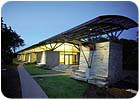
The use of natural stone was a key element to the recent design of the Warren Skaaren Environmental Learning Center at Westcave Preserve in Round Mountain, TX. Jackson & McElhaney Architects were brought on board to create an environmental learning center that incorporated learning opportunities into the design of the architecture, as opposed to static displays or similar methods of learning.


The Warren Skaaren Environmental Learning Center at Westcave Preserve in Round Mountain, TX, serves as a visitor center and classroom space for public and school programs. The building had to be able to accommodate groups of 150 or more students, while also hosting visitor groups of one to 10 people and serving as a community center. The project, designed by Jackson & McElhaney Architects of Austin, TX, was selected as an AIA Committee on the Environment Top Ten Green Project for 2006. Locally quarried limestone from San Jacinto Materials, San Antonio, TX, was a key element in the design of the building.
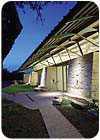
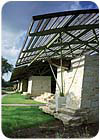
The architects selected Glenrose limestone - from San Jacinto Materials of San Antonio, TX - for the building's exterior veneer, boulder seating and rip/rap retaining walls.
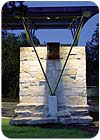
According to the architects, the goal of the project was to create an environmental learning center that incorporated learning opportunities into the design of the architecture, as opposed to static displays or similar methods of learning, and the use of natural stone was key to achieving this goal. The architects wanted to use as much regionally available stone as possible. Moreover, they sought to construct the stone veneer as a teaching reference to abstractly resemble the different geological layering of the stone strata of the local area, and they worked to intersperse fossils in the stone veneer as a teaching tool.

According to architect Michael McElhaney, AIA, it was difficult to integrate the three strata types of stone into a somewhat “natural” appearance, as well as to place the larger boulders at the pylon bases using a forklift.
Architects selected Glenrose limestone for the building veneer, boulder seating and rip/rap retaining walls. The material was selected because its quarry is located close to the jobsite. “It was also used for its richness in depth and color with yellows and tan predominately present,” explained Michael McElhaney, AIA, of Jackson & McElhaney Architects. “The fossils, some of which were found in the Glenrose quarry, were of the same color range.

The stratifying effect used three different ranges of stone sizes for the veneer of the building. Large 24- x 30-inch sizes were used in the lower stratum, medium-sized 12- x 18-inch pieces were used in the middle stratum, and small, thin 1- and 2-inch-thick ledgestones were laid flat in the upper stratum.
“When the Glenrose limestone is lifted out of the quarry, it breaks with a 'ripple face,' which is actually a 'fossilized sandy beach' pattern from an ancient sea bed,” the architect went on to explain. “The other face breaks with a nice, even texture. Both faces are used as the finished stone veneer in different components of the building.”

McElhaney said it was challenging to align the slots through the stone veneered walls with the summer and winter solstices and the equinox.
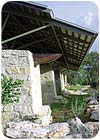
The stratifying effect used three different ranges of stone sizes for the veneer of the building. Large 24- x 30-inch sizes were used in the lower stratum, medium-sized 12- x 18-inch pieces were used in the middle stratum, and small, thin 1- and 2-inch-thick ledgestones were laid flat in the upper stratum. Furthermore, the seating boulders ranged from 3 to 8 feet long and were arranged in a stepped seat or amphitheater style arrangement for outdoor classroom seating.

The locally quarried material was selected for its richness in depth and color, and for its shades of yellow and tan.
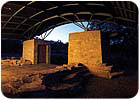
In addition, Oklahoma Sugar Loaf sandstone was utilized for the floor and patio paving in a flagstone pattern. According to McElhaney, the pattern was efficient to use due to the shape and sizes that are common with this stone type.

“When the Glenrose limestone is lifted out of the quarry, it breaks with a 'ripple face,' which is actually a 'fossilized sandy beach' pattern from an ancient sea bed,” said McElhaney. “The other face breaks with a nice, even texture. Both faces are used as the finished stone veneer in different components of the building.”

Overcoming obstacles

According to McElhaney, a few challenges helped make the project “fun and interesting.” Aligning slots through the stone veneer walls with the summer and winter solstices and the equinox; creating a slot in the floor to align with true north, so that a recessed meridian could be constructed to accurately demonstrate the movements of the earth; integrating the three strata types of stone into a somewhat “natural” appearance; and placing the larger boulders at the pylon bases with a forklift, all posed problems for the workers. McElhaney said the challenges were overcome by patience and the successful partnership of owner, contractor and architect.
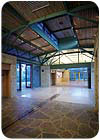
Oklahoma Sugar Loaf sandstone was utilized for the interior flooring in a flagstone pattern. The pattern was efficient to use due to the shape and sizes that are common with this stone type, according to the architect.
The conditioned area of the learning center is about 3,000 square feet with another 4,000 square feet of outdoor classrooms under roofs or trellis. According to the architects, the project has been well received by thousands of visitors since opening, and has received six awards for its architecture and learning components at local, state, national and international levels.

Warren Skaaren Environmental Learning Center, Westcave Preserve: Round Mountain, TX

Architect: Jackson & McElhaney Architects, Austin, TX
Stone Supplier: San Jacinto Materials, San Antonio, TX

Did you enjoy this article? Click here to subscribe to Stone World 

Michelle is the assistant editor of Stone World.

Recent Articles by Michelle Stinnard

You must login or register in order to post a comment.

Multimedia

Videos

Image Galleries

Surfaces 2013 preview

Surfaces 2013 -- to be held in conjunction with StonExpo/Marmomacc Americas -- is slated for January 29 to 31 at the Mandalay Bay Convention Center in Las Vegas, NV. The show, which also includes an extensive educational program that will be held from January 28 to 31, provides a place for thousands of floor covering retailers, distributors, installers, architects, designers and builders from around the world to gather and view the latest products, get vital education, network with other floor covering professionals and conduct business.

More than 600 of the largest manufacturers and suppliers representing products in every major category, including carpet, tile, hardwood, rugs, laminate, resilient and stone, are expected to exhibit at the trade show. Hanley Wood, owner and operator of the exhibition, reports that they have many new exhibiting companies and returning ones who have expanded their booth size. Additionally, Surfaces 2013 will host more than 40 workshops, seminars and mini sessions led by industry experts in the fields of business, sales, marketing, installation and design. Attendees can earn AIA, NKBA, AIBD, IICRC and AIA/CES industry designation. Here is just a small sampling of some of the displays that will be present at Surfaces 2013.

THE MAGAZINE

Stone World Magazine

June 2013 Stone World cover

2013 June

Stone World's June issue highlights a series of stone companies and quarries such as PBA Stone, Mag Ban, Gramil and San Gabriel Black quarry. Also, check out some exclusive coverage from the annual Vitoria Stone Fair, which took place in Espírito Santo, Brazil.

Table Of Contents Subscribe

Contemporary Stone & Tile Design Magazine

CSTD Summer 2013 cover

2013 Summer

The Summer issue of Contemporary Stone & Tile Design highlights some of the top products from Coverings 2013, which took place in April. Also, read about the designing of a custom pool and spa by Rock Solid Tile.

Table Of Contents Subscribe

Green Practices

Are you promoting green practices and the life-cycle of stone in your sales and marketing efforts?
View Results Poll Archive

The Stone World Store

How_To_Polish_&_Restore_Mar.gif
How to Polish & Restore Marble Flooring

This video will show you step-by-step how to resurface and polish marble flooring from grinding and removing lippage and scratches to achieving a highly reflective polish.

More Products

Stone Guide

cover

The directory for Stone, Equipment and Supplies - the single information resource readers turn to.

Visit Stone Guide today!


Stone Industry Education

stone industry educationStone Industry Education is sponsored by Stone World Magazine and Marble Institute of America. The SIE events will help you: strengthen your skills, build your business, and  increase profit in your shop.  Check out stoneindustryeducation.com to register for upcoming fabricator and installer seminars.

STAY CONNECTED

facebook logo Twitter  YouTube