A Passage to India
In my travels as editor of Stone World, I have toured large-scale stoneworking plants in locales around the world. These trips have taken me to classic stoneworking villages in Italy, Spain and Germany as well as relative “newcomers” in Brazil and China. However, in 16-plus years at Stone World, I never had the chance to check out the stone industry in India. That all changed this past June, as I toured a major stoneworking factory in Secunderabad, India, and a quartz surfacing plant in Vishakapatnam, India - both of which are operated by Pokarna Limited. This would be my first chance to see India’s vast collection of stone materials being processed at the source.
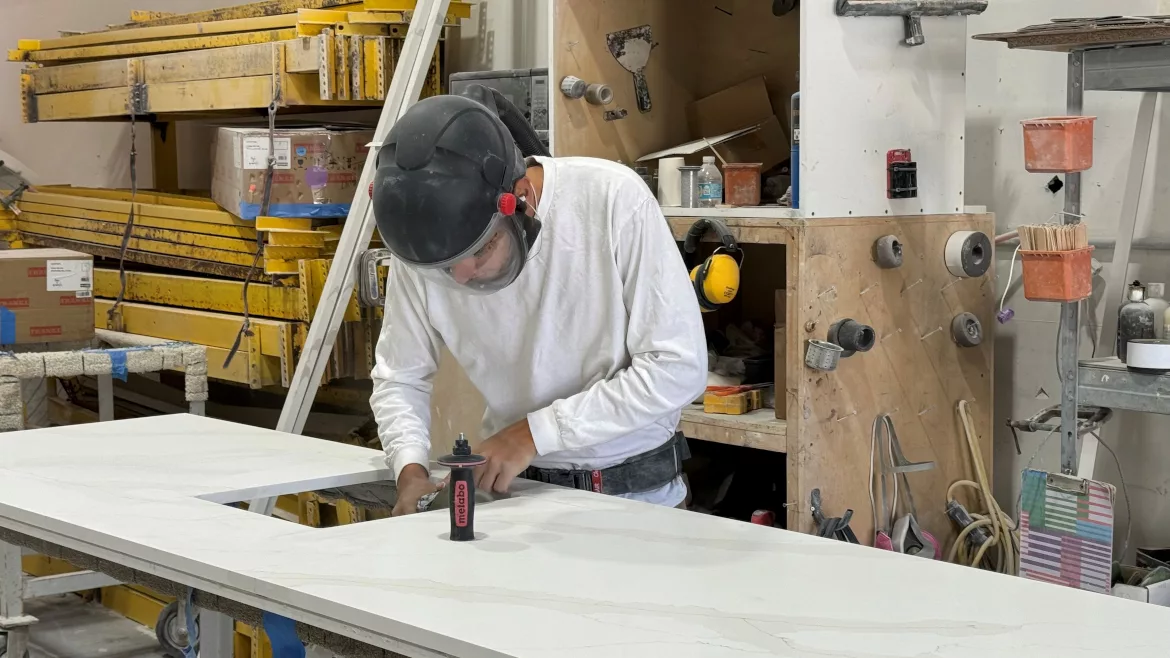
While the manic pace of India’s city streets were somewhat of a culture shock for me, the stone-processing facilities were not. In fact, as soon as I began my tour of the stoneworking factory in Secunderabad (see page 62), I felt like I was on familiar turf. (I’m not sure what it says about me that I am comforted by gangsaws and slab-polishing lines, but that’s what happened.) The modern, state-of-the-art equipment - all imported from Italy - hummed in unison as blocks of local granite were processed into slabs. Going beyond the equipment, the sheer organization of the plant struck me. I knew from past articles I’ve written about Pokarna that they ran an efficient stoneworking operation, but after seeing it in person, I can rank it up there with any of the top facilities I’ve seen in the world.
The quartz surfacing facility (see page 72) was equally well-equipped and organized - perhaps even more considering the fact that the process begins with bags of “ingredients” as opposed to solid granite blocks. Again, everything seemed to operate like clockwork, and the level of organization and quality control was among the best I’ve seen.
Of course, there are plenty of state-of-the-art stone processors in India. On page 80 of this issue, we have a full-length feature on the quarrying and processing operations of P.R.P. Exports. The company extracts material using the most advanced quarrying techniques and equipment available worldwide, and its stone-processing plant utilizes the latest generation of technology from Italy - and investments are ongoing.
In conclusion, I now have a greater appreciation for India’s stone industry, and I can say with certainty that the country has the technology and expertise to match its vast collection of natural resources.
While the manic pace of India’s city streets were somewhat of a culture shock for me, the stone-processing facilities were not. In fact, as soon as I began my tour of the stoneworking factory in Secunderabad (see page 62), I felt like I was on familiar turf. (I’m not sure what it says about me that I am comforted by gangsaws and slab-polishing lines, but that’s what happened.) The modern, state-of-the-art equipment - all imported from Italy - hummed in unison as blocks of local granite were processed into slabs. Going beyond the equipment, the sheer organization of the plant struck me. I knew from past articles I’ve written about Pokarna that they ran an efficient stoneworking operation, but after seeing it in person, I can rank it up there with any of the top facilities I’ve seen in the world.
The quartz surfacing facility (see page 72) was equally well-equipped and organized - perhaps even more considering the fact that the process begins with bags of “ingredients” as opposed to solid granite blocks. Again, everything seemed to operate like clockwork, and the level of organization and quality control was among the best I’ve seen.
Of course, there are plenty of state-of-the-art stone processors in India. On page 80 of this issue, we have a full-length feature on the quarrying and processing operations of P.R.P. Exports. The company extracts material using the most advanced quarrying techniques and equipment available worldwide, and its stone-processing plant utilizes the latest generation of technology from Italy - and investments are ongoing.
In conclusion, I now have a greater appreciation for India’s stone industry, and I can say with certainty that the country has the technology and expertise to match its vast collection of natural resources.
Looking for a reprint of this article?
From high-res PDFs to custom plaques, order your copy today!